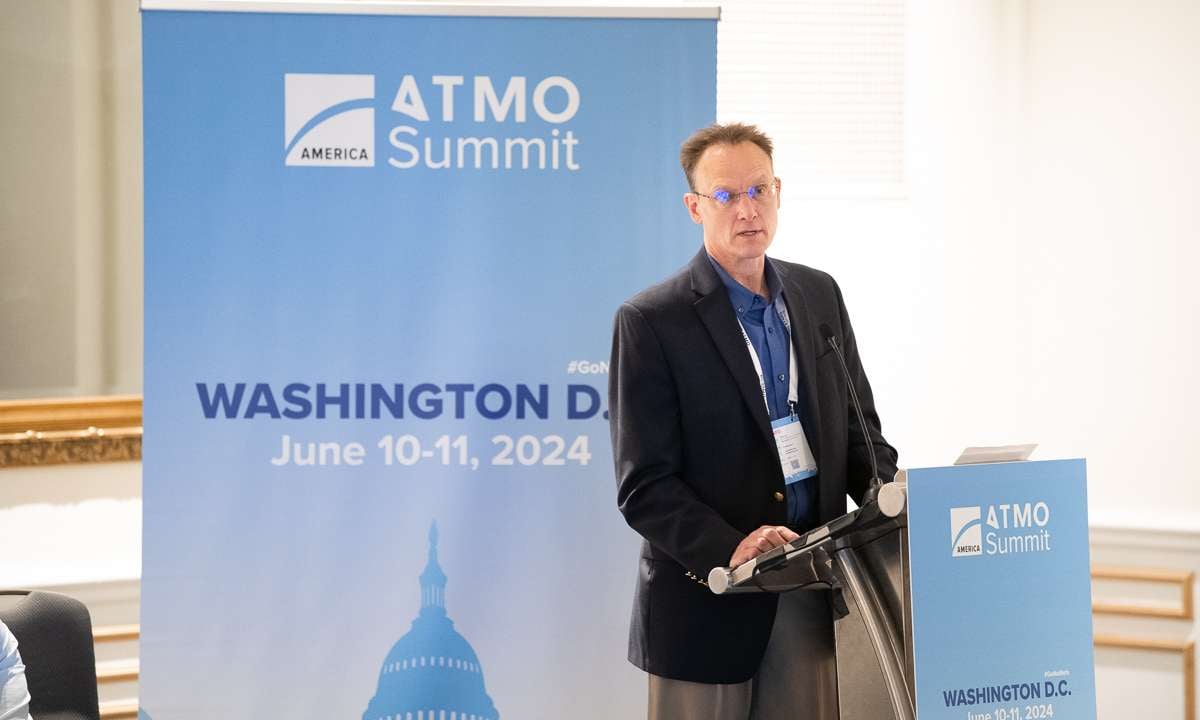
Collaboration among all stakeholders is critical for the successful adoption of large-capacity transcritical CO2 (R744) technologies in industrial refrigeration applications, according to John Collins, Director of Industrial Sales at U.S. OEM Zero Zone.
Traditionally, transcritical CO2 systems have been limited to smaller retail applications. However, over the last decade, the manufacturer has been working to expand the use of the technology into industrial projects with the development of large R744-based packaged systems.
“As the industry moves towards natural refrigeration, customers in the industrial market are demanding large-scale transcritical systems to meet their requirements,” he said. “Collaboration is critical to building cutting–edge systems while meeting customer needs like sustainability, budget constraints and tight project schedule.”
To keep projects moving, all parties – from designers and end users to OEM and the installation team – must work together from concept inception through to implementation, he added.
“As the industry moves towards natural refrigeration, customers in the industrial market are demanding large-scale transcritical systems to meet their requirements.”
John Collins, Zero Zone
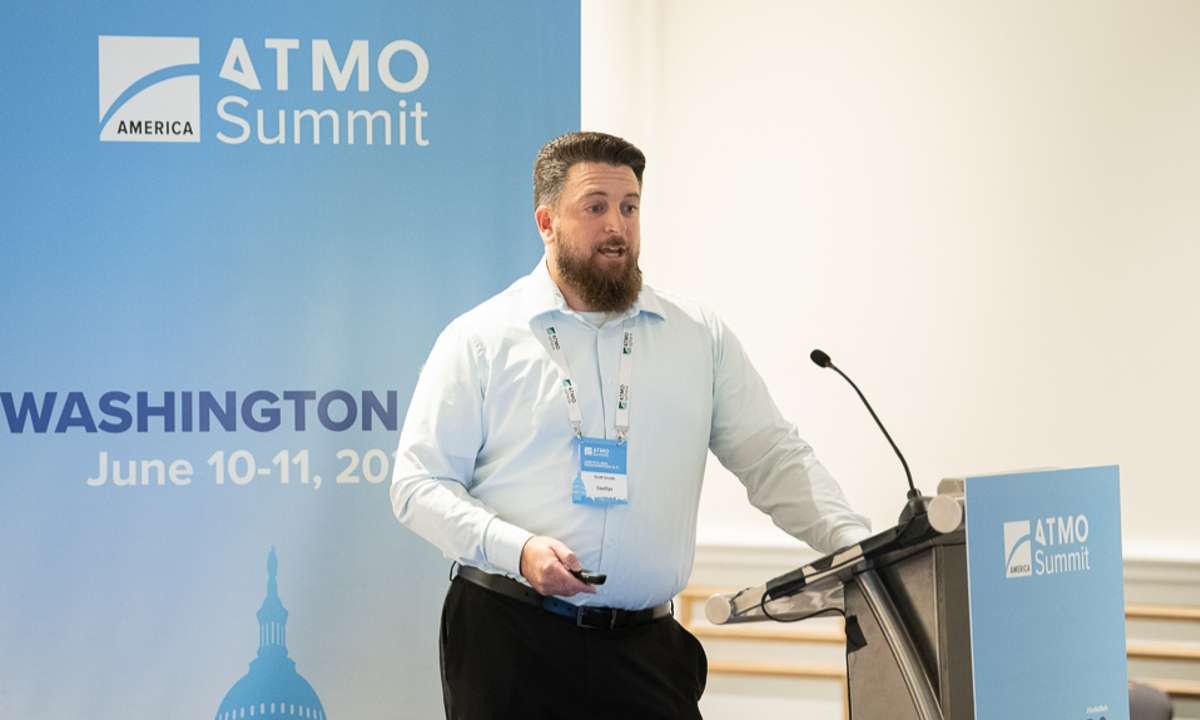
Collins delivered these remarks during his presentation alongside Scott Ercole, Vice President of Technical Sales at U.S. contractor CoolSys, in a Refrigeration Case Studies session at the ATMOsphere (ATMO) America Summit 2024. The conference took place June 10–11 in Washington, D.C., and was organized by ATMOsphere, publisher of NaturalRefrigerants.com.
During their presentation, Collins and Ercole shared details of one of their latest industrial CO2 installations at a 460TR (1.6MW) low-temperature food storage facility in Arkansas.
According to Collins, the project demonstrates how to apply transcritical CO2 refrigeration to large-capacity industrial facilities, something that was once not considered practical.
Designing to extensive specifications
The new 824,000ft2 (76,552m2) facility includes 120,000ft2 (11,148m2) of racked freezer storage space, which is kept at −10°F (−23.3°C) and has a cooling demand of 400TR (1.4MW). The site also features a refrigerated docking area that requires an additional 60TR (211kW) in cooling capacity, explained Ercole during his presentation.
Due to the customer’s capacity requirements, as well as insurance regulations, safety concerns and their 2050 net-zero emissions targets, CO2 was deemed the most appropriate option for the facility’s refrigeration system.
In terms of system design, several environmental and logistical factors influenced the decision-making process, he added.
“The customer has extensive specifications and guidelines,” he said. “They did not want any equipment to go on the roof, and the amount of space they had around the facility on the ground was not a lot. The customer also had a very tight schedule, with nine months from design to start up. All of these factors went into the upfront decision-making process.”
Evaporator coil placement was also difficult due to the design of the fire sprinkler system – specified by insurance regulations – and the end user’s wanting to maximize the amount of rack storage
“It took a lot of coordination with the design team and customer to get that all laid out,” said Ercole. “We had to make sure that we could throw air 250 feet [76.2m] across with coil placements.”
Designing and building such a large-capacity packaged system was also a significant challenge, he explained.
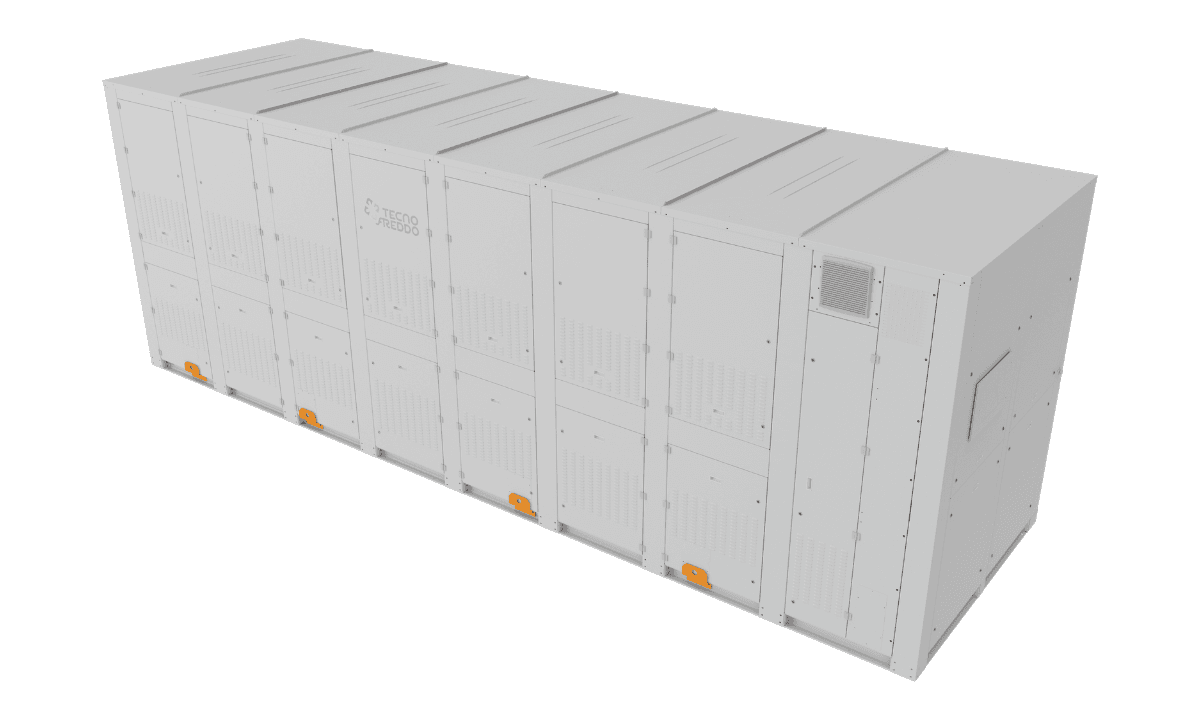
The project team opted for two of Zero Zone’s Genesys CO2 transcritical systems. The two units were ground mounted and placed on either side of the building to be closely located to the freezer, and refrigerated docking bay evaporator coils would be installed.
“Having these distributed systems located around the facility helped reduce fuel piping, wiring and refrigerant charge,” Ercole added.
“Having these distributed systems located around the facility helped reduce fuel piping, wiring and refrigerant charge.”
Scott Ercole, CoolSys
Improved performance and monitoring
To enable the efficient use of transcritical CO2 in the southern U.S. climate, an adiabatic gas cooler was installed. Variable-speed fans and adaptive water control further enhance the efficiency of the gas cooler.
Other system features included multi-stage compression, “generously sized” suction accumulators and fan-speed controls, which help to reduce energy consumption across the system, Ercole said. A heat recovery system was added to one refrigeration rack to supply underfloor heating inside the facility.
Opting for large-capacity reciprocating compressors helped to reduce the overall size of the refrigeration system.
“We were given the ability to select the best components for the application,” said Collins. “We determined that Dorin compressors were the best fit, and they helped us to get more capacity and smaller footprint.”
An integrated control system was installed to monitor equipment performance in real-time and to allow off-site engineers and technical staff to adjust parameters remotely, he added.
Globally, Zero Zone has installed hundreds of CO2 systems globally since it first started working with the technology in 2012. CoolSys, one of the country’s largest service and construction companies, has been installing CO2-based technologies since 2010. As of August 2023, at least 65% of the contractor’s installations used natural refrigerants.
According to Collins, the two companies have formed a good strong working relationship, allowing them to work effectively across system design and build.