In its 2025 refrigeration report, ATMOsphere, publisher of NaturalRefrigerants.com, estimated that there were more than 30 million self-contained hydrocarbon cases installed in food retail stores globally. While hydrocarbons are the dominant refrigerant in the application, that doesn’t mean companies have stopped innovating in this space.
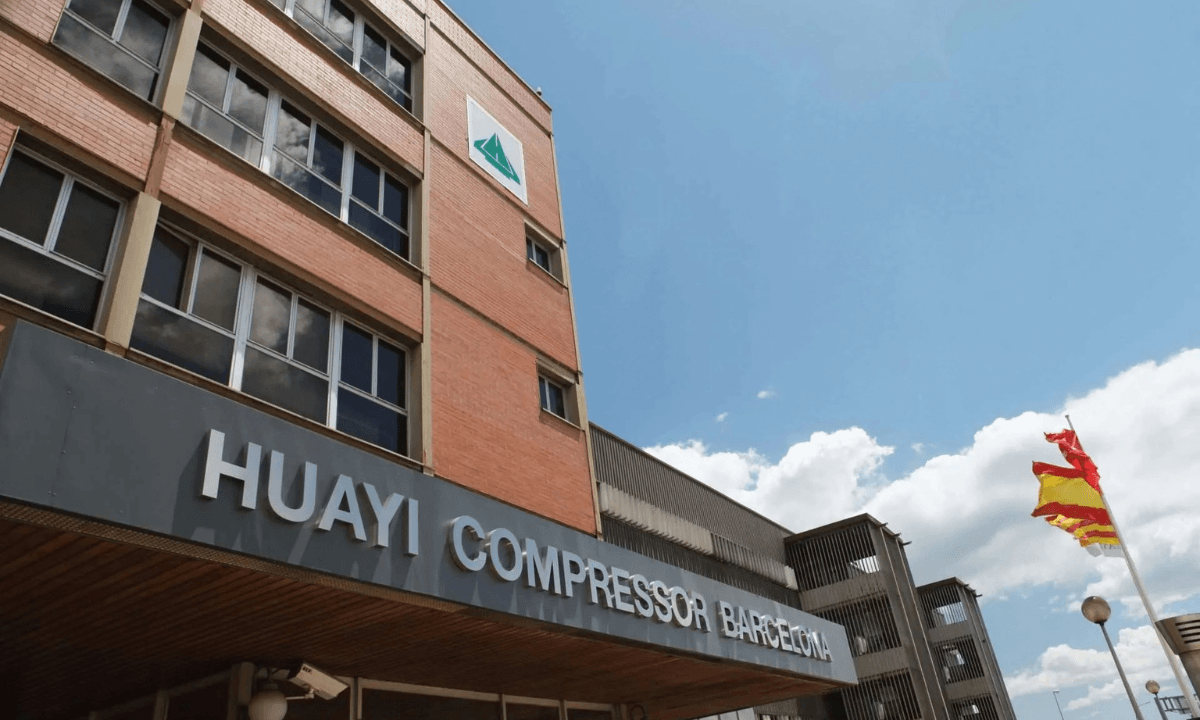
Case in point: Huayi Compressor Barcelona, which is developing more efficient propane (R290) and isobutane (R600a) compressors to cut the energy use of self-contained refrigeration cabinets and freezers. NaturalRefrigerants.com recently spoke to Tao Wen, General Manager at HCB, about the trends influencing its R&D work as well as the current state of the market for self-contained hydrocarbon cases in various markets.
This interview has been edited for length and clarity.

Charge limits for hydrocarbon self-contained refrigeration cabinets are 500g in Europe and the U.S. Are manufacturers taking advantage of these higher charges, or is the preference to stay well under that limit?
Tao Wen: In some cases manufacturers are taking advantage of the new refrigerant charge, but most of them prefer to stay well under the 500g limit. This is mainly for safety reasons but also because manufacturers have redesigned their appliances to reduce the refrigerant charge.
Are hydrocarbons the default refrigerant in this application, or are there still markets where synthetics are dominant?
TW: It is true that R290 is the dominant refrigerant, but still some markets and manufacturers are using synthetic refrigerants, such as A2Ls. This can be because of safety concerns from end users or because manufacturers can use a bigger refrigerant charge for technical considerations.
Europe has shifted to natural refrigerants almost 100%, and this change has been driven by policies like the EU F-gas Regulation. Ecodesign has also played a role, with R600a and R290 helping to reduce energy consumption as they are more efficient than synthetic refrigerants. We see that the Middle East is still one step behind Europe. The use of hydrocarbons there is not that extended yet but is gaining momentum step by step.
At ATMO America 2023 Huayi said it planned to enter the U.S. market. Can you update us on that and share what markets Huayi will enter next?
TW: We have made some progress in the North American market thanks to the switch to hydrocarbons, which offered a good chance to knock at the door of customers who are actually quite conservative and relatively reluctant to be open to new suppliers. The uncertainty of tariffs have delayed our development in the U.S. market. North America is still a target market, and we are also trying to enter Brazil, another relatively closed market because of its tariff and certification barriers.
What trends is Huayi watching and how are these impacting its product roadmap?
TW: With the widespread use of natural refrigerants – most of our development work centers on R600a and R290 – the next step is to improve efficiency. Most of our new developments in fixed-speed and variable-speed [compressors] are focused on increasing efficiency to reduce the appliance’s energy consumption. We are going to launch a new generation of compressors with a COP above 2.00 at low-back pressure ASHRAE [the American Society of Heating, Refrigerating and Air-Conditioning Engineers] conditions.
We are also working on miniaturization to reduce weight, which helps cut costs and is more sustainable because the material content is lower. Using a control board with our variable-speed products gives us more of a chance to optimize the energy consumption according to actual usage scenarios. For this reason, Huayi is working on the flexibility of the control logic’s configuration with customers by means of our programming kit. This will enable them to define the best combinations of parameters to maximize the performance potential of our compressor.
Why did Huayi decide to join the NaturalRefrigerants.com marketplace?
TW: We have been part of it almost since its creation. We value the initiatives of this platform to reinforce environmental protection by promoting natural refrigerants, which perfectly matches our own corporate social responsibility plans. This is also an excellent opportunity to show and promote our products to a wider range of decisionmakers.