The first reporting deadline of energy performance for data centers in the EU for May 2023 through May 2024, including energy expended on cooling, will be due September 15, according to the revised EU Energy Efficiency Directive (EED) published last year.
The revised directive introduced an obligation for the monitoring and reporting of the energy performance of data centers, with a database that will collect and publish data. According to the EU, the energy consumption of a data center includes an “infrastructure layer” that encompasses power, cooling, security and other factors.
The EU has published a document explaining the reporting requirements on the energy performance and sustainability of data centers for the EED. According to the document, from 2010 to 2018 data center energy consumption In the EU increased by 42% and is forecast to further increase by 28.2% by 2030, representing about 3.2% of the EU’s final electricity demand.
The EED requires data center operators, or enterprises with their own data centers with an installed IT power demand of 500kW and above to report on key sustainability metrics and key performance indicators (KPIs), according to a LinkedIn post by Venessa Moffat, Channel Partner Manager, EMEA for EkkoSense, a provider of software for data center optimization and energy management. The annual KPIs include energy consumption, power utilization, temperature set points, waste heat utilization, water usage and use of renewable energy.
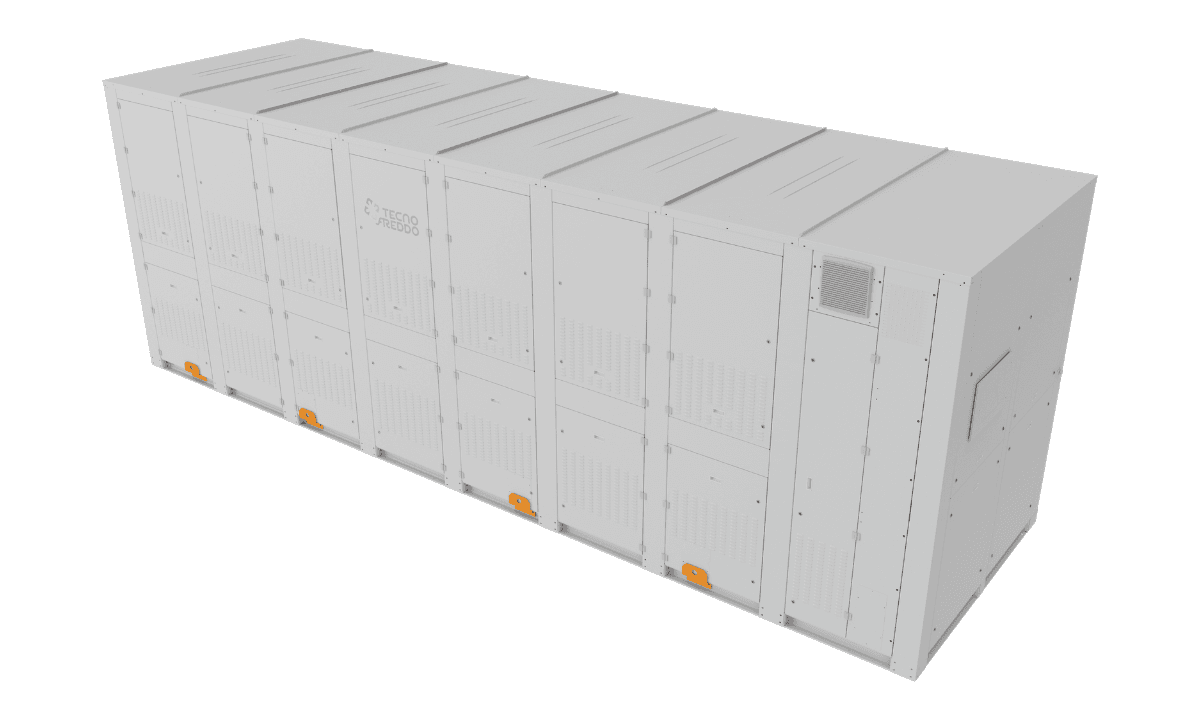
Roughly 40% of power in a data center goes to cooling according to U.S.-Canadian manufacturer of natural refrigerant equipment M&M Carnot, a division of Johnson Controls. M&M Carnot, which manufacturers CO2 (R744)-based data center cooling systems, in 2022 published a white paper to help owners of data centers replace high-GWP refrigerants with CO2 solutions.
In the white paper, M&M Carnot states that a CO2 cooling system is 12 times more economical than a system using HFCs and that it can save up to 90% more in energy consumption than conventional systems. Last year the company announced plans to increase the capacity of its CO2 -based Aquilon and Cumulus data center cooling units.
The revised EED introduced a series of measures to help accelerate energy efficiency, including:
- Establishing a legally binding target to reduce the EU’s final energy consumption by 11.7% by 2030 (relative to 2020).
- Increasing annual energy savings from 0.8% to 1.3% (2024–2025), then 1.5% (2026–2027) and 1.9% from 2028 onwards.
- Requiring large businesses to have an energy management system or to carry out energy audits.
- Promoting local heating and cooling plans in larger municipalities.
- Progressively increasing the efficient energy consumption in the heating or cold supply, including district heating.
ASHRAE recently launched a new Data Center Resources web page to help maintain optimal temperature and humidity levels in data centers. This resource provides data center design and operations professionals with the latest standards, guidelines and best practices, helping them stay compliant while enhancing sustainability.