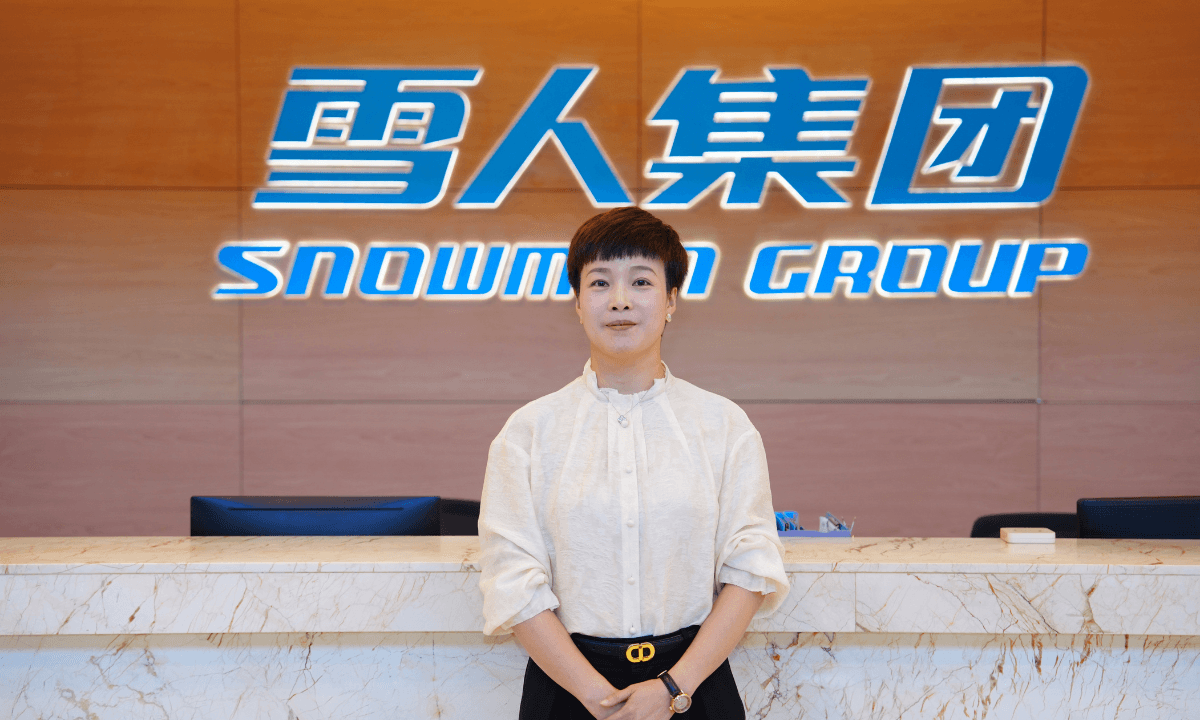
Zack Laws, President and CEO of CO2 Refrigeration Systems (CRS), detailed the growth of CO2 industrial refrigeration in the United States and his company’s work in the sector during a conversation with NaturalRefrigerant.com at the International Institute for All-Natural Refrigeration (IIAR) 2026 conference.
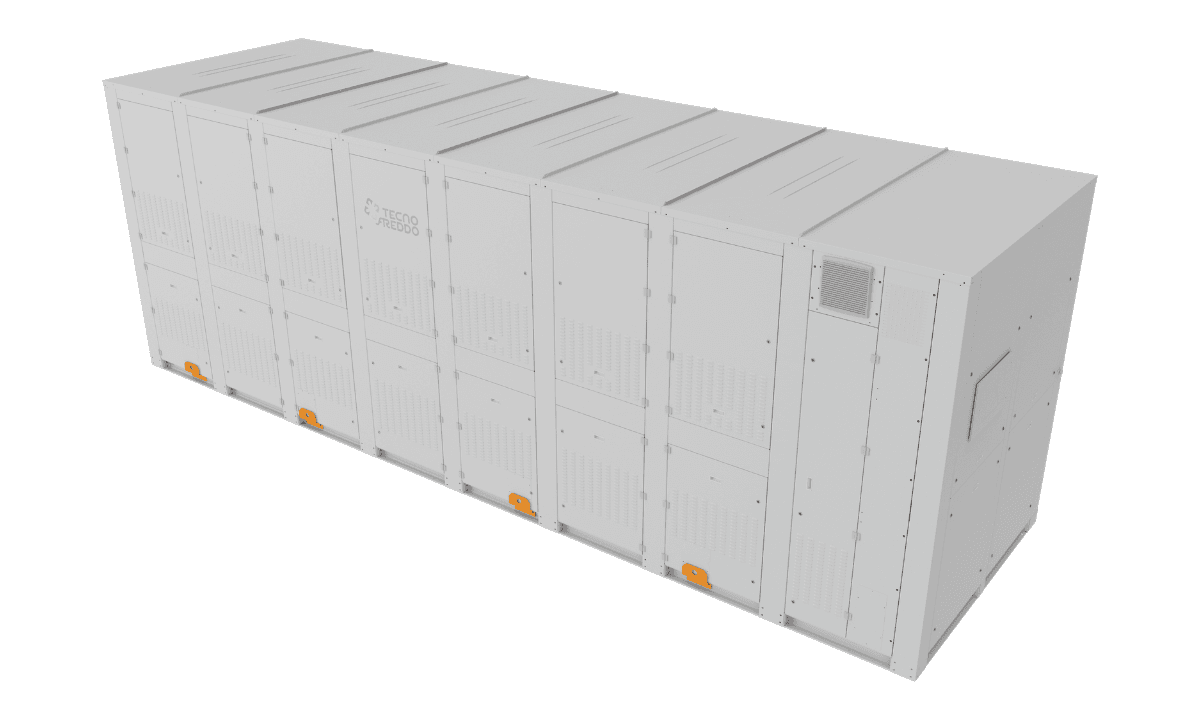
Based in Iowa and founded in 2022, CRS manufactures skid-mounted transcritical CO2 refrigeration units and gas coolers. The conference was held March 15‒18 in San Antonio, Texas.
“We’ve seen more industrial contractors interested in quoting CO2 than ever before in the States,” Laws said. “Going back 24 months most industrial contractors that did ammonia [R717] were not interested in exploring CO2. A year ago they were, and now most do CO2 alongside ammonia, or at least they quote it.”
Laws’s insights correspond with data gathered and published by ATMOsphere in its 2025 market report, “Refrigeration: Commercial and Industrial Refrigeration with Natural Refrigerants.” The number of industrial sites using transcritical CO2 refrigeration systems in the U.S. has grown from 208 in 2023 to 540 in 2025. ATMOsphere is the publisher of NaturalRefrigerants.com.
As a case in point, the projects detailed by Laws represented CO2 refrigeration firsts for both companies ‒ one marking the first installation across an ice cream maker’s operations, including hundreds of distribution centers and warehouses, and the other the first CO2 system within a division of a cold storage company.
Modesto, California: An ice cream supplier for restaurants and other foodservice channels replaced its production plant’s aging synthetic refrigeration system with a 102TR (359kW) CO2 system.
- With a single CRS Switch package containing a CO2 condensing unit and an adiabatic gas cooler, the CO2 system supplies 86TR (302kW) of capacity at 34°F (1°C) for the company’s dock loading area and 16TR (56kW) at −10°F (−23°C) for the ice cream freezer.
- CRS will integrate another Switch package later in 2025 that will provide an additional 190TR (668kW) of cooling capacity for the facility’s 0°F (−18°C) freezer.
- “We ran energy calculations for the freon solution they were considering,” Laws said. “In California’s low-GWP climate, the combination of energy efficiency and longevity made CO2 the clear choice.”
Fort Worth, Texas: At a 130,000ft2 (12,080m2) cold storage facility, CRS installed a parallel compression 372TR (1.3MW) CO2 skid that supplies convertible temperatures.
- The 30,000ft2 (2,790m2) loading dock, with a cooling capacity of 120TR (422kW), operates at 34°F.
- The 100,000ft2 (9,290m2) storage area, with a cooling capacity of 252TR (886kW), allows convertible temperatures from −10 to 45°F (−23 to 7°C) in each of its six different compartments.
- “As part of our sales process, we offer energy analysis, comparing ammonia [R717], CO2 and freon,” Laws said, adding that in this case, CO2 played out favorably for both capital and operating costs.
International experience: “Across the U.S. market, we see contractors dealing with oil management issues in CO2 systems, which lead to improper oil return,” Laws said, adding that this is a problem that CRS’s sister companies in Australia and South Africa have not encountered for roughly a decade.
- “We have come to understand the core reason is improper line sizing,” Laws said. “Compared to ammonia and freon, CO2 piping is tiny, which makes folks uncomfortable. However, oversized pipes can’t maintain the needed velocities to carry oil through a CO2 system.”
- The company’s five-year warranty on its CO2 packages is predicated on CRS reviewing and approving the line sizing, Laws said.
Quotable: “As a manufacturer, we offer an energy guarantee,” Laws said, adding that through its sister companies, CRS can validate performance of wet- and dry-bulb conditions representative of climates across the U.S. “If [the client] has any hesitation behind the numbers we put together, we will stand behind it for two years.”
“We’ve seen more industrial contractors interested in quoting CO2 than ever before in the States.”
Zack Laws, President and CEO of CRS