IV Produkt Launches Air-Handling Unit with Next-Generation ThermoCooler HP, Available with R290
Designed for Northern European heating demands, the system reduces the need for external chillers, boilers or heat pumps, the company said.

Designed for Northern European heating demands, the system reduces the need for external chillers, boilers or heat pumps, the company said.

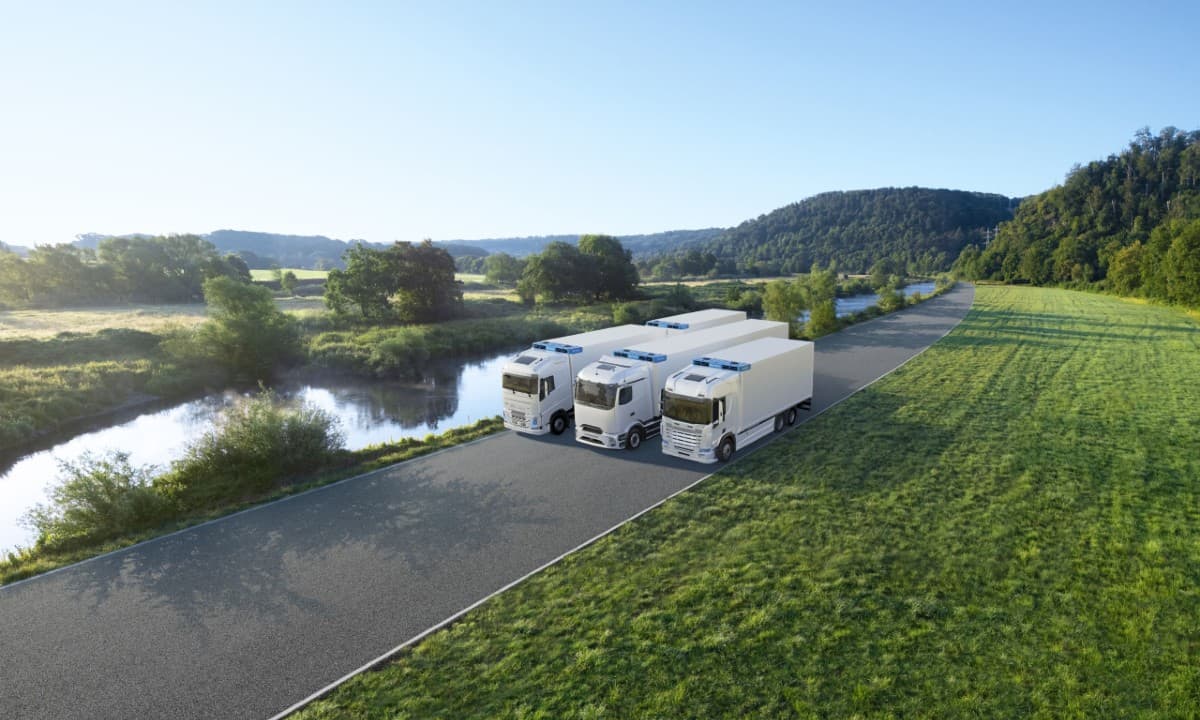
The German bakery wholesale supplier expects to save €4,000 per vehicle annually compared to conventional options.

HVAC&R Manufacturer Samjung Tech built a 10kW prototype with an electrochemical compressor developed in collaboration with Chung-Ang University.

The units, totalling 32.1TR of capacity, support a piecemeal solution for the space- constrained store, according to contractor Turner Piping.

Commissioned in January, Flow’s ANSWR unit delivers 130°F water, operating solely in air-source mode, to heat the 100,000ft>sup>2 facility.

In 2025 CO2 system adoption across commercial and industrial applications grew by 23.5%, while R290 display cases increased by 10%.

The plant’s three integrally geared ammonia compressors are already at an ‘advanced stage’ of manufacturing, Everllence said.

The eight roof-mounted units at the Songdo facility provide a nominal cooling capacity of 93.8kW at an evaporating temperature of −5°C.

Adaptive suction setpoint control cuts peak energy use by 20%, while controlled-atmosphere storage extends fruit storage to 14 months.

The Roxsta G6 unit will blast-freeze steamed dumplings at an evaporating temperature of −42°C at the Bethlehem facility.

Between May 2020 and December 2025, CO2 refrigeration installations tripled, increasing from 220 to 660.

The facility achieves a specific energy consumption of 13kWh per cubic meter per year, despite summer temperatures reaching 42°C.

NaturalRefrigerants.com spoke with leaders at Danfoss, Heatcraft, Hillphoenix Kysor Warren Epta US and Zero Zone about the development of the CO2 CDU market in North America.

The ECO2GIANT unit, developed for Australia, operates in temperatures above 48°C using the company’s FTE 3.0 and ETE technologies.

The manufacturer has adapted its CO2 compressors and GK shell-and-tube gas cooler for marine applications, with optional DNV certification.

Of the more than 40 entries in the IEA’s HTHP Project 68 database, 75% use natural refrigerants, with outlet temperatures up to 300°C.

For food retail applications, the HP Chiller covers cooling capacities from 5‒20kW, while the Tower Chiller offers 18‒41kW capacities.

The Geniox HP DFN unit delivers COPs of up to 16 in heating mode and EERs of up to 9 in cooling mode, according to the company.

The design eliminates booster compressors and associated controls, reducing CAPEX by 18.2% while serving both LT and MT loads, according to TehnoRef4.

The manufacturer analyzed the design for multiple low- and medium-temperature applications using Bitzer’s new Fender simulation tool.

The site’s PUE dropped from as high as 1.8 to generally below 1.5, while adding AI workloads, according to Evocative’s vice president.

Backed by more than 260 installations, the company expects CO2 deployments in the sector to roughly double each year through 2031.

Moving forward, the retailer plans to use CO2 as its refrigeration prototype, with six‒eight new sites expected yearly, according to the procurement director.

The water-to-water units replace legacy gas boilers, upgrading heat recovered from data center cooling to deliver 180°F hydronic and domestic hot water.

Despite a 15‒16% CO2 CAPEX premium, Uncle Giuseppe’s projects a six-year ROI through lower energy and refrigerant costs.

Small New York-based food retail chain DeCicco’s & Sons earned US$66,668 (€62,262) by selling refrigeration carbon credits (RCCs) linked to replacing synthetic refrigeration systems in two stores with natural refrigerant

For 2027 the original 24% phase-down step will apply, based on the country’s 2015 HFC production and import baseline.

‘The waste heat generated by the Kajaani data centers is expected to cover more than 80% of the region’s heating demand,’ the contractor said.

In addition, the retailer will pay a $2.5 million civil penalty for failing to promptly repair R22 refrigerant leaks.

The startup has prototypes installed in four Bristol homes, with commercial availability expected by 2027, according to CEO Russell Murchie.

The panel emphasized that successful projects rely on early municipal planning that aligns power, heat and zoning.

The voluntary labels mark R290 air conditioners and domestic and commercial R600a/R290 refrigerators/freezers.

Japan is the leading adopter of natural refrigerants in the region, with a total of 14,930 food retail stores and industrial sites using CO2-based refrigeration systems.

In 2025 members of the Boston Green Ribbon Commission visited the 30MW CO2 seawater heat pump system in Esbjerg, Denmark.

Following the event, Nivalis Energy Group will make the ECOOLTEC-equipped display vehicle available for test drives.

Danfoss and Dorin currently offer six-cylinder units, with both expecting to introduce eight-cylinder compressors around 2027.

The ground-sourced reversible units can simultaneously provide 660kW of cooling capacity for air-conditioning, says the project manager.

‘With our new semi-hermetic screw compressors, we already have propane delivering hot water up to 70°C and isobutane systems producing 90°C, with testing underway to up to 100°C,’ said Industrial Heat Pump Director Ivan Rangelov.

There were an estimated 6,360 North American supermarkets and industrial sites using R744.

‘Our proposal is to use R290 for medium applications and pair it with CO2 in a cascade for the best of both worlds,’ says a company manager.

The new unit increases heat rejection capacity by up to 50% compared to standard V-shaped units and by up to 100% compared to flat designs, according to Enex

The company doubled its revenue year-over-year ‘largely due to racks,’ according to Luke Redd, Head of Marketing.

The projects include a 102TR system for an ice cream maker in Modesto, California, and a 372TR cold storage facility in Fort Worth, Texas.

Since 2017 the average maximum flow temperature of certified models has increased from 57 to 62°C, reflecting growing propane adoption.

Upgrades include improved evaporation coils and enhanced insulation, the cabinet manufacturer told NaturalRefrigerants.com.

Oasis has a heating capacity of up to 516kW and a cooling capacity of up to 410kW.

ThermBooster generates up to 180°C steam using hydrocarbons or other low-GWP refrigerants, with capacities ranging from 0.4 to 1.5MW.

The inverter-driven units, available in Europe, offer 60, 80 and 110kW capacities, with cascade configurations enabling outputs of up to 880kW.

Modeling indicates that switching refrigeration from R452A to R290 results in saving approximately $1,200 per container per year.

The Paterna facility is “among the first globally” to use CO2 refrigerant for data center cooling, according to the manufacturer.
No products in the cart.