California-based Harvest is ramping up production of its CO2 (R744) air-to-water residential heat pump system, which provides space heating and domestic hot water, thanks to a $1.6 million (€1.5 million) grant from the state of California, according to CEO and Co-Founder Jane Melia.
“With our recently received RAMP [Realizing Accelerated Manufacturing and Production for Clean Energy Technologies] grant from the California Energy Commission, we can move from producing hundreds of units a year to thousands and then tens of thousands,” Melia told NaturalRefrigerants.com.
In addition to the California state funding, Harvest received a $2 million (€1.9 million) grant from the DOE’s Buildings Energy Efficiency Frontiers & Innovation Technologies (BENEFIT) initiative in September, a program aimed at decarbonizing the building’s sector.
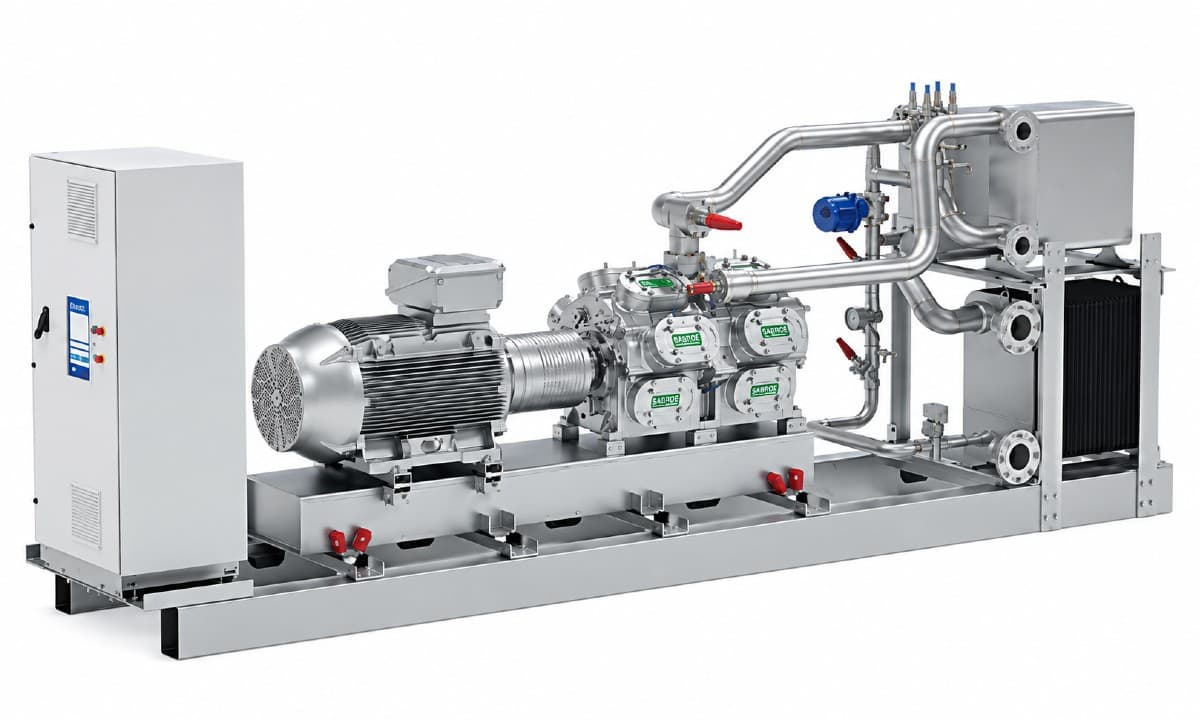
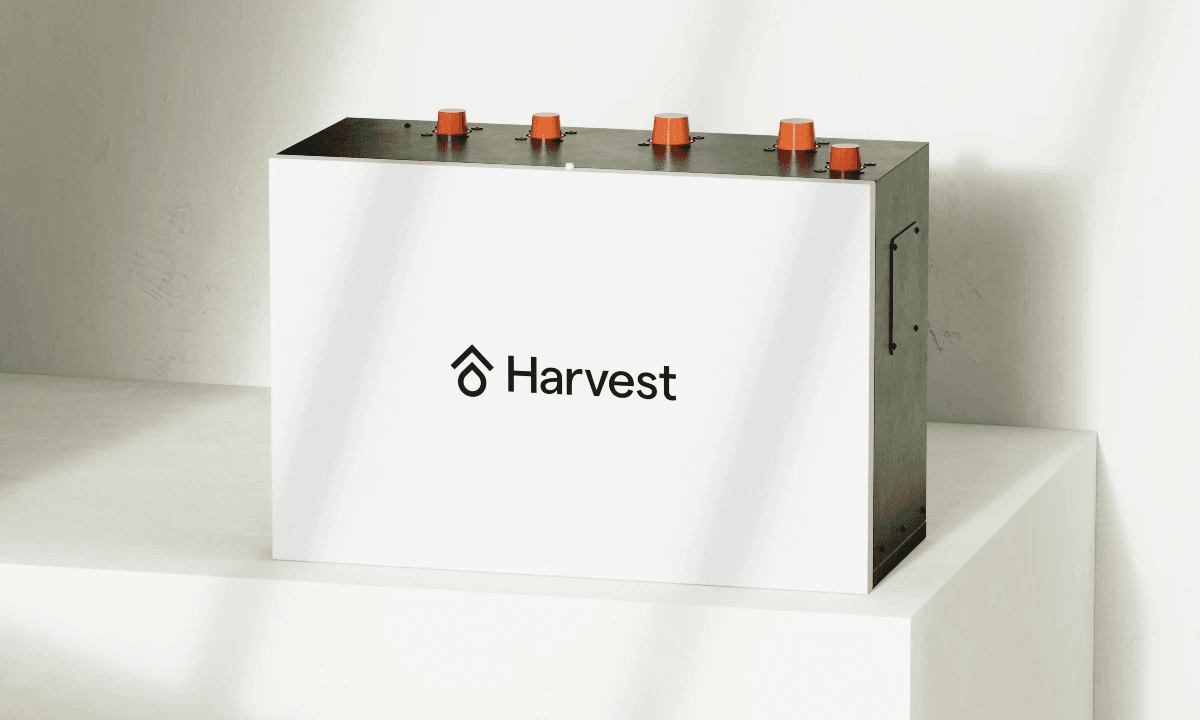
The Harvest system consists of an air-to-water SANCO2 heat pump manufactured by ECO2 Systems and an insulated water tank with a temperature sensor. It can heat water to 145 or 150°F (62°C or 65°C) and can operate in ambient temperatures ranging from −25 to 114°F (−31 to 45°C) and has a COP of 5.5/4.2/2.8 at ambient temperatures of 80°F/47°F/17°F (26°C/8°C/−8°C).
Harvest provides domestic hot water and delivers space heating using the home’s existing HVAC distribution system, including baseboards, forced air, hydronic mini-splits, radiant floors and radiators. It’s controlled by the “Harvest Pod,” which is designed to forecast demand based on weather and user data and to harvest electricity from the grid when it’s cheapest.
“With our recently received RAMP grant from the California Energy Commission, we can move from producing hundreds of units a year to thousands and then tens of thousands.”
Jane Melia, Harvest CEO and Co-Founder
Harvest cuts residential comfort heating and hot water costs by 30% on average over gas appliances, according to Melia. The company determined the savings using data from 15 homes – its installer network is primarily concentrated on the West Coast – that replaced gas appliances with Harvest’s heat pump. Harvest says the system qualifies for numerous energy and decarbonization incentives and pays for itself within five years.
As Harvest prepares to ramp up production, NaturalRefrigerants.com recently spoke with Melia to learn more about the system, its regional applicability, market availability and scalability.
The interview has been edited for length and clarity.
What factors does the Harvest Pod take into account? What are the available heating capacities and configuration options?

Jane Melia: The pod predicts demand based on prior resident behavior and the weather forecast. Using algorithms, it configures how many BTUs the household will need in the next 24 hours and determines when to run the heat pump based on electricity costs, efficiency, thermal loss and emissions. The hot water inlet and outlet at the top of the thermal tank allow stratification of the thermal battery to further increase efficiency, with the controls determining the optimum volume of the tank to fill with hot water.
Our residential unit goes up to 36,000BTU [10.5kW/3TR]. However, we can add a DX [direct exchange] heat pump to the system to increase the heating capacity to 48,000BTU [14kW/4TR].
The heat pump modular package only requires water and an electrical hookup. We initially designed the system for home heating and hot water, which accounts for two-thirds of residential energy use. However, the pod now hooks into an existing AC unit, reversible heat pump, gas furnace or electric resistance booster to control overall HVAC energy consumption.
What is the regional applicability of the CO2 system?
JM: Climates with temperatures dropping below 20 to 25°F [−6.6 to −3.9°C] require a backup heat source: a DX heat pump, gas furnace or electric resistance booster. However, the Harvest Pod optimizes total heat operations based on cost and efficiency.
We have a system installed in Edmonton, Canada, and in the Lake Tahoe region of the Sierra Nevada [U.S.] mountain range. We expect to start a pilot program in Vermont soon, and we are talking with the NYSERDA [New York State Energy Research and Development Authority] to hopefully begin a pilot program there in the next six months.
How many systems have you sold so far?
JM: We’ve sold a couple hundred systems, with sales growing month–to–month. Working with our contract manufacturer in Fremont, California, provides the variability required to increase production.
Does Harvest have plans to enter the apartment complex or multi-tenants sector?
JM: Absolutely, with the shared wall space increasing efficiency. We recently closed a deal with a company we cannot yet name to install the system in 170 new buildings with six residential units per building. The construction breaks ground in the next couple of weeks.
We are also doing two quadplexes for low-income housing in Berkeley, California. In addition, we are speaking to several large property owners with hundreds of thousands of units to reduce heating costs.