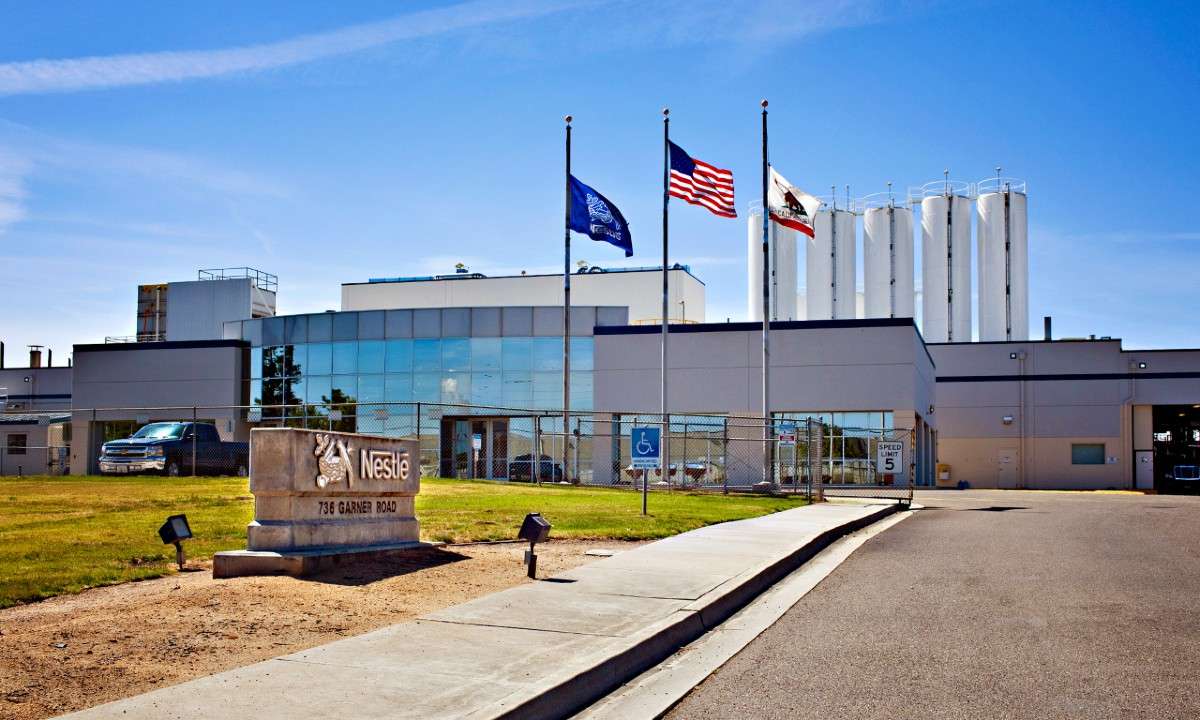
In 2016 Nestlé USA did an inspection of some very questionable refrigeration piping around the condensers at one of its ammonia plants. The issue was addressed but another inspection took place in 2019 and again there was more questionable piping around the condensers. Plant officials said they lacked the resources to do anything about the piping.
Further testing was done, and then “lo and behold, some of it started to leak,” said Kris Hinds, Corporate Engineering Manager, Nestlé USA, who described the incident at an end-users forum at the 2025 IIAR Natural Refrigeration Conference and Heavy Equipment Expo on March 5 in Phoenix, Arizona.
“So now we need to shut it down and fix it,” added Hinds. “Sometimes your shutdowns will schedule themselves.”
This scenario underscores the need for a strong mechanical integrity program that follows the recommendations of the IIAR-6 standard for inspection, testing and maintenance of closed-circuit ammonia (R717) refrigeration systems. “Some people may argue that having a strong [mechanical integrity program] costs more money, Hinds noted. “Well, if we go back to the shutdown, that particular incident cost millions. So not just thousands; it was millions. So I can argue that if you have a strong mechanical integrity program, it’s a cost saver.”
Viewing mechanical integrity this way helps to gain corporate leadership buy-in, he added. “We need to build the case. Leadership changes as well. So we need to have our case ready.”
Nestlé, a Switzerland-based multinational food and drink processing company, owns more than 2,000 brands and operates 344 factories around the world. Its processing plants have been working with natural refrigerants since 1986, replacing systems using high-GWP refrigerants with those using hydrocarbons, CO2 (R744), ammonia or a combination of these, particularly ammonia/CO2 cascade systems.
At the IIAR forum, Hinds focused on use of the “Ammonia Refrigeration Safety Inspection Checklists,” found in Appendix B of the IIAR-6 standard and designed to help end users comply with the standard as part of a mechanical integrity program.
Importance of a safety culture
Among the benefits of a strong mechanical integrity program are enhanced efficiency and productivity, as well as a reduced risk of accidents, compliance with regulations and improved safety culture, Hinds said. “It’s so nice if you have a nice safety culture” at a plant rather than relying on outside help, he added. “Many times I go into a site and the technicians will say, ‘Oh Kris, come look at this.’”
A safety culture also improves employee morale and retention. “If you have this strong safety culture, you want to fix things right,” Hinds said. “Employees tend to want to stick around more.” Moreover, some of Nestlé’s sites are close to residential areas and schools. “So we want to be a good member of the community.”
Qualified inspectors of ammonia plants need to impartially and proficiently apply the safety checklist. “They should have knowledge of the process and not be influenced by the facilities, operations, maintenance or management,” said Hinds. “They should also not present a conflict of interest, and should report any deficiencies.”
However, finding qualified inspectors has been a struggle, and Hinds cited the need to train in-house people. “Some of the contractors I’ve seen, even third party contractors, have done poor safety-checklist inspections. So we need to keep educating ourselves and getting better.”
Hinds noted that the IIAR has good training resources, and some are offered by the Industrial Refrigeration Consortium. “There’s even some YouTube videos out there with some companies showing how they do inspections.”
“I can argue that if you have a strong mechanical integrity program, it’s a cost saver.”
Kris Hinds, Corporate Engineering Manager, Nestlé USA
Nestlé conducts internal training for IIAR-6 checklists and is considering an internal IIAR-6 checklist certification program. It has developed its own Excel-based instructions on how to do inspections on each system component (piping, compressors vessels, etc.) – “what to look for, what good looks like, what bad looks like,” Hinds said. “You have a nice history, electronically, and you can even go back and see if there’s something that’s reoccurring. And then it’s easy to compile the findings.”
Nestlé has also developed a “severity index rating” – zero for emergency/immediate need, one for major problem, two for minor problem and three for no action needed.
Added Hinds: “Some people just say, ‘What is the minimum we need to do?’ And I just think it’s ‘How can we make it the best?’ That’s what our goal should be.”