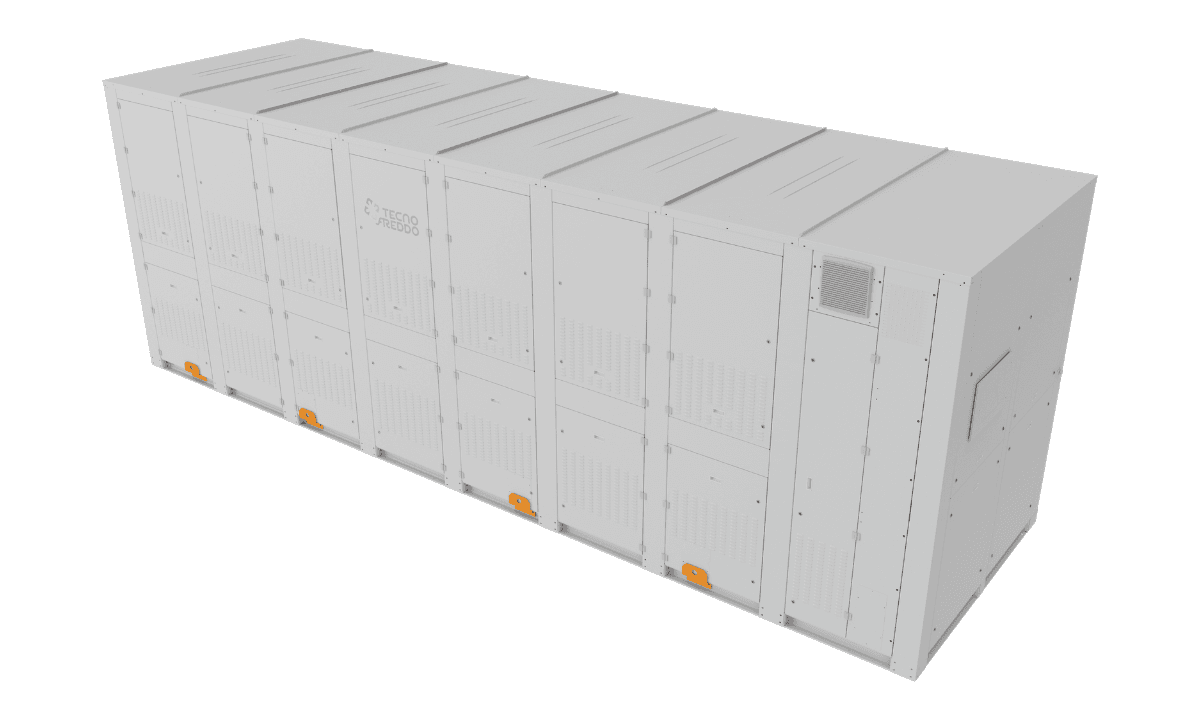
A newly installed propane (R290) chiller at Colorado-based craft brewery New Belgium Brewing has reached an energy efficiency ratio (EER) of 8.85 since coming online in February 2025.
The 30TR (105.5kW) GD-70H-2CNR chiller, manufactured by Oregon-based G&D Chillers, plays a critical role in supporting the brewery’s CO2 recovery system. This system captures the CO2 produced during fermentation and purifies it for reuse during the beer carbonation process.
To assist in this process, the chiller supplies glycol at approximately 28°F (−2.2°C), rapidly cooling the fermentation gas stream to help remove moisture and impurities. This step makes it easier to store the recovered CO2 safely and effectively for future use.
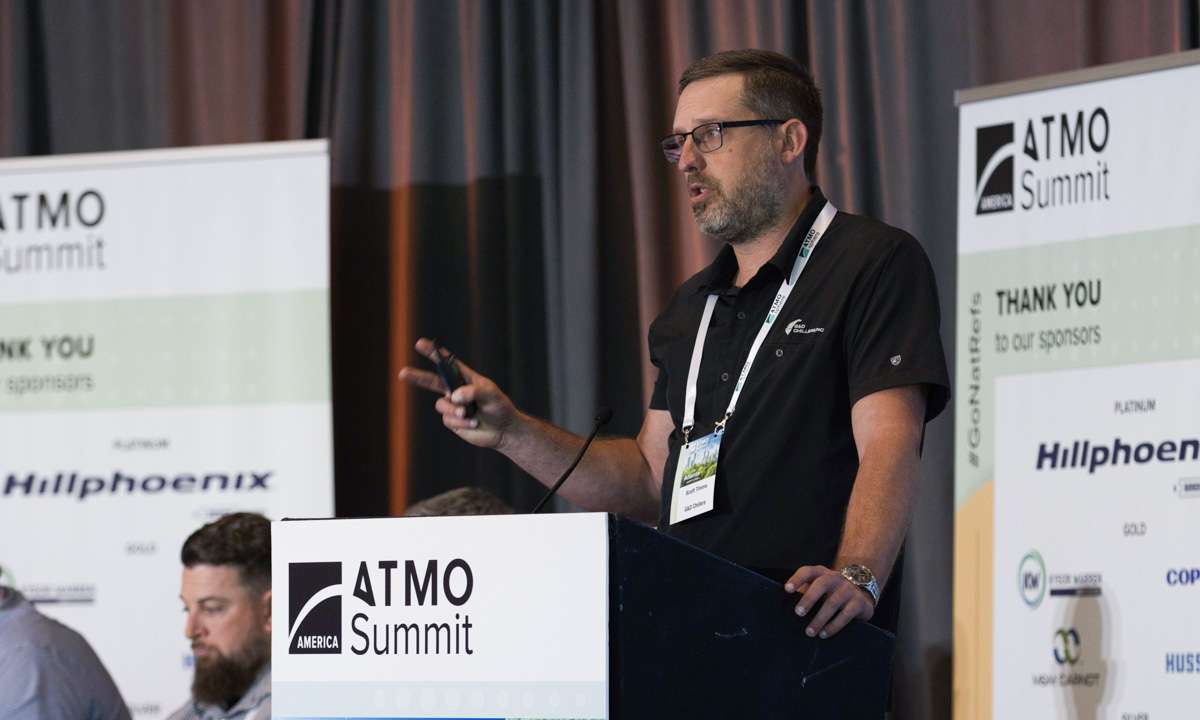
“The GD-70H-2CNR chiller has surpassed expectations,” explained Scott Timms, COO of G&D Chillers, during a presentation at the ATMO America Summit 2025. “We had just shy of 2,300 hours of run time as of the end of May, with 100% uptime so far.”
The system, featuring two 35 horsepower circuits and using just 2.7kg of R290 per circuit, has also outperformed initial projections by 5.4%, based on pre-installation modeling and testing, Timms added.
The chiller’s performance is a crucial part of the brewery’s goal of achieving climate neutrality by 2030, according to Andy Collins, Senior Engineering Manager at New Belgium Brewing.
“The [CO2 recovery] system’s effectiveness in lowering Scope 1 emissions is directly tied to the uptime and performance of the GD-70H-2CNR [chiller],” Collins said in a customer testimonial. “We are satisfied with the unit’s reliability and the support provided by G&D Chillers. We are pleased that our partnership has successfully demonstrated the viability of R290 as an alternative to HFCs in a chiller of this size.”
ATMO America 2025 took place June 11–12 in Atlanta, Georgia, and was organized by ATMOsphere, publisher of NaturalRefrigerants.com.
“We are pleased that our partnership has successfully demonstrated the viability of R290 as an alternative to HFCs in a chiller of this size.”
Andy Collins, Senior Engineering Manager at New Belgium Brewing
R290 benefits
In his presentation, Timms emphasized propane’s strong position as a future-proof refrigerant; it has an ultra-low GWP, contains no PFAS (per- and polyfluoroalkyl substances) and delivers superior energy performance compared to fluorinated gases.
According to G&D Chillers’ internal analysis, R290 is 12% more efficient than R404A, 9% more efficient than R454C and 6% more efficient than R448A. Additional gains may be possible with the integration of high-temperature heat reclaim technologies, Timms added.
Compared to CO2 (R744) – another low-GWP natural refrigerant – propane reduces energy use by up to 50% due to higher efficiency, particularly in higher ambient conditions. It also comes with lower installation and maintenance costs, making it attractive from both an environmental and economic standpoint.
Given these advantages, G&D Chillers views propane as the future of industrial chilling in the U.S., especially across the country’s 1,000 dairy farms and 10,000 craft breweries. The company is currently expanding into new markets, investing in R&D and engaging in policy discussions, with the goal of transitioning its entire chiller lineup to propane by the end of the decade.
Overcoming challenges
As one of the first manufacturers to commercialize propane chillers in the U.S., G&D Chillers has tackled key challenges head-on.
The company cut the refrigerant charge in its R290 units from 6.8kg to just 2.7kg per circuit – compared to 43.5kg in comparable R448A models. Safety is built in with leak detectors and forced ventilation systems that trigger automatic shutdowns if a propane leak is detected.
To ease adoption, G&D designed its systems around conventional refrigeration cycles and standard components familiar to U.S. technicians. The company also offers quarterly training to support installer confidence and competence.
For real scalability, clear regulation is crucial, he added. While outdoor installation of R290 is permitted, there are no formal guidelines or standards, requiring site-specific approvals from local fire authorities. However, support from European partners like Frascold has helped G&D show that R290 is a proven and safe technology abroad.
Cost has also been a barrier, but the situation is improving, Timms noted. Early R290 units were around 35% more expensive than A2L alternatives, but that difference is now down to just 2–3%.
“Moving forward, I expect propane to actually beat the A2L options,” he said.
“Moving forward, I expect propane to actually beat the A2L options.”
Scott Timms, COO of G&D Chillers