North American universities are at the forefront of adopting CO2 (R744) heat pumps for their district energy networks, driven predominantly by long-term cost benefits and emissions reductions, according to Canadian OEM Vitalis.
Matthew Cameron, Strategic Account Manager at Vitalis, highlighted this trend in an interview with NaturalRefrigerants.com at the 2025 AHR Expo, noting that institutions like the University of British Columbia (UBC) are early adopters of the technology due to their longer-term view of investments and focus on sustainability.
“The real value of CO2 systems for large industrial district energy applications lies in their total cost of ownership,” he explained. “So a university – which is in it for the long run – is going to benefit more than a private developer, who may sell its building in a few years.”
Private developers also tend to prefer familiar technologies, he added.
“The real value of CO2 systems for large industrial district energy applications lies in their total cost of ownership.”
Matthew Cameron, Strategic Account Manager at Vitalis
While CO2-based systems currently carry a 15–20% premium over conventional alternatives – due to higher-pressure components and the technology’s relatively early stage of adoption in the region – Cameron expects costs to decline as the market matures.
“As the technology progresses and components become more readily available, the capital cost of CO2 systems will become more on par with traditional systems,” he said. Increasing competition among manufacturers and innovations aimed at improving efficiency and reducing equipment size will also help drive prices down.
As adoption grows, end users will become more familiar and comfortable with CO2 heat pumps, he noted.
“Don’t be afraid to look at new technologies; there are a lot of opportunities out there,” Cameron said.
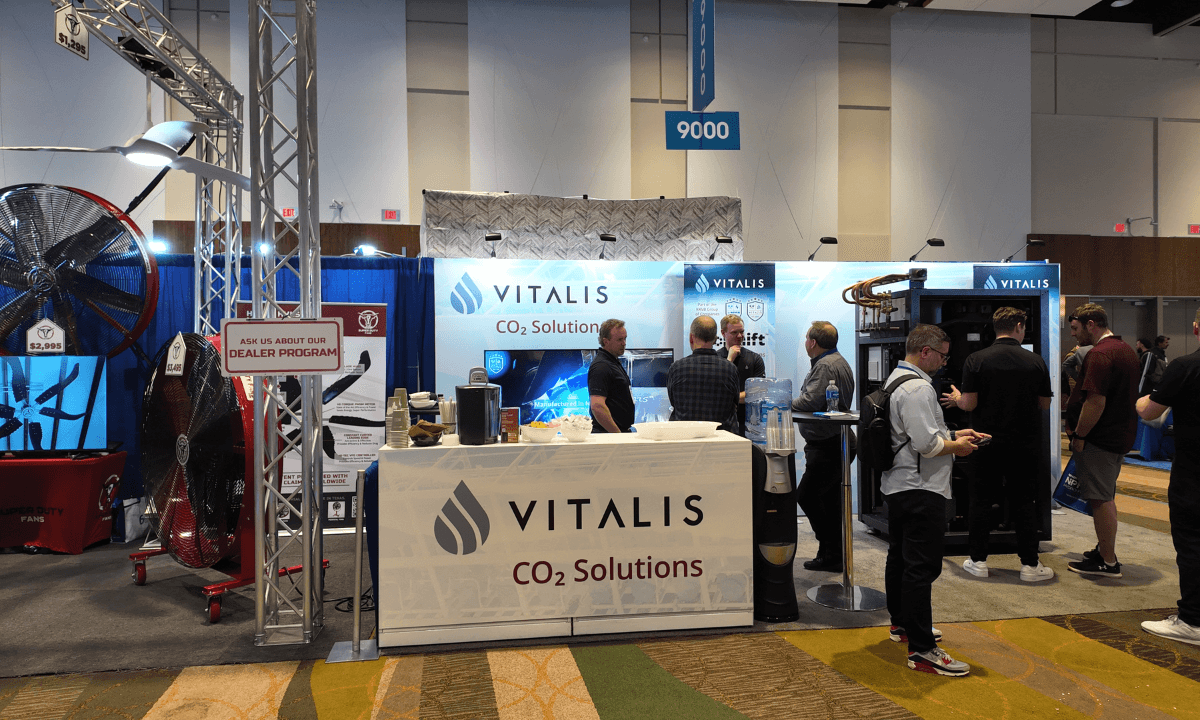
The AHR Expo is currently taking place in Orlando, Florida, from February 10–12.
Upgrading campus networks
Many universities already operate district energy networks, traditionally relying on steam-based boilers to distribute heat through underground loops, Cameron explained. By upgrading these systems to circulate hot water via heat pumps, institutions can not only electrify and decarbonize their heating but also introduce sustainable cooling solutions.
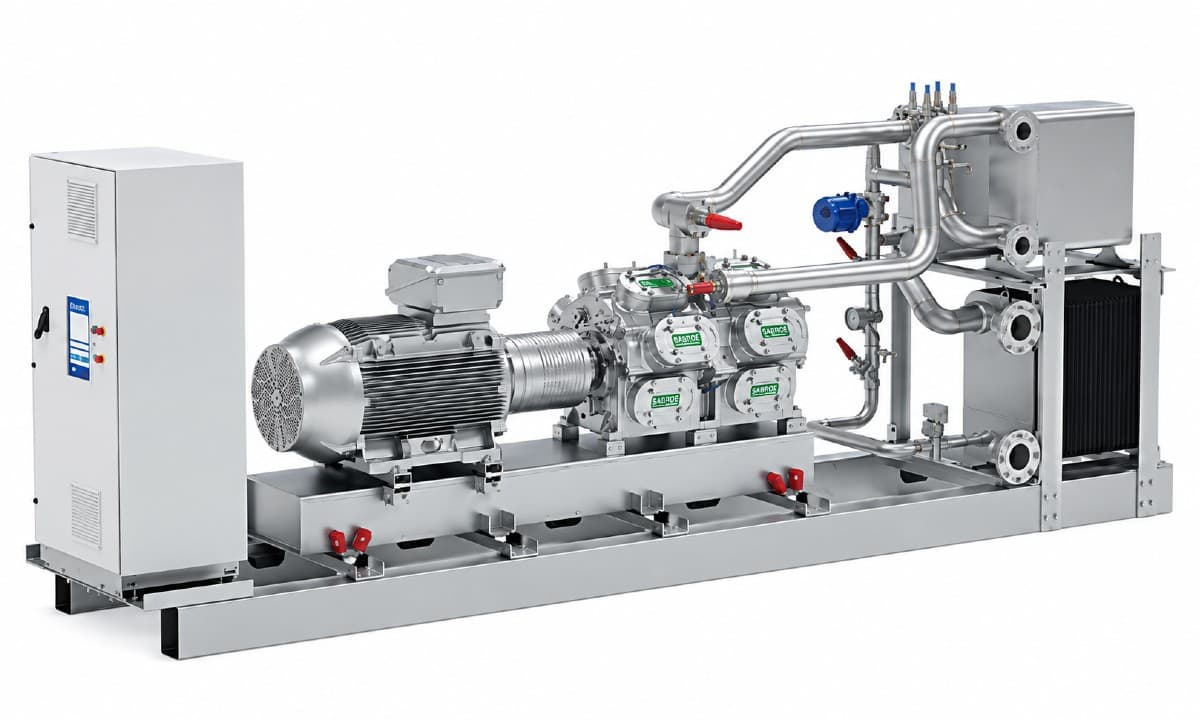
A standout example of this transition is underway at UBC’s Okanagan campus in Kelowna, where one of Vitalis’s Coolshift CO2 reversible air-source heat pumps is currently being installed. Once operational, the system will provide up to 1.5MW (426.5TR) of heating and cooling capacity. Scheduled for commissioning in March, the heat pump is expected to reduce the university’s greenhouse gas emissions by approximately 815 metric tons annually.
According to Cameron, Vitalis is seeing the strongest demand for its CO2 heat pumps in more progressive regions of North America, particularly California and New York, where state policy support and funding are driving adoption.
“There’s a lot of legislation and lobbying in New York, which provides the funding that helps drive some of these projects forward,” he explained.
Beyond university campuses and district heating networks, CO2 heat pumps are also gaining traction in industrial applications, such as industrial processing. Recently, Vitalis completed the installation of a 1.5MW water-to-water CO2 heat pump at a facility in Detroit, Michigan.
Bringing TEKO technology to North America
As demand for CO2-based refrigeration technologies grows in North America, Vitalis has partnered with German manufacturer TEKO, a company that has been developing R744 condensing units and racks for the European market since 2004. The German KKVB is the parent company of both TEKO and Vitalis, having acquired the latter in May of 2024.
“We complement each other so well,” explained Cameron. “Where Vitalis has this large industrial mindset, TEKO has decades of experience in the commercial refrigeration sector. The value that comes from joining forces has been amazing.”
According to Oliver Rauer, Sales Manager at Vitalis and former Account Manager for TEKO, the North American commercial refrigeration sector is showing the strongest growth potential. To meet this demand, Vitalis will soon begin manufacturing TEKO CO2 systems in Canada, producing condensing units that serve capacities up to 17kW (4.8TR) to heavy industrial racks that go up to 1MW (284.3TR).
Rauer anticipates the greatest demand will be for TEKO’s ROXSTAcube mini S unit, which was showcased at the Vitalis booth at the 2025 AHR Expo. The commercial rack supports medium-temperature capacities of up to 90kW (25.6TR) and low-temperature capacities of around 20kW (5.7TR).
“The layout of U.S. stores is completely different from Europe,” he told NaturalRefrigerants.com. “You don’t have the same small discounters as in Europe. Supermarkets in the U.S. require much higher-capacity systems.”
While demand for TEKO’s CO2 technology is strong across North America, Rauer noted that potential U.S. tariffs on Canadian imports, proposed by President Donald Trump, could impact business in the U.S.
“Where Vitalis has this large industrial mindset, TEKO has decades of experience in the commercial refrigeration sector. The value that comes from joining forces has been amazing.”
Matthew Cameron, Strategic Account Manager at Vitalis