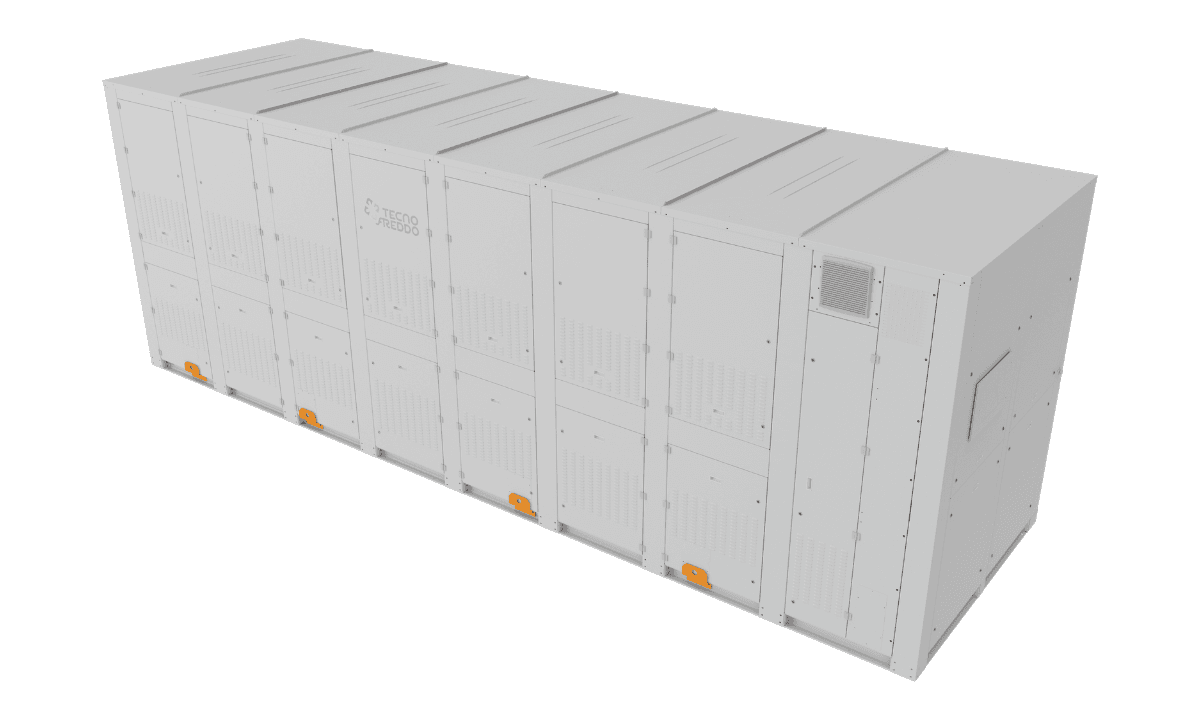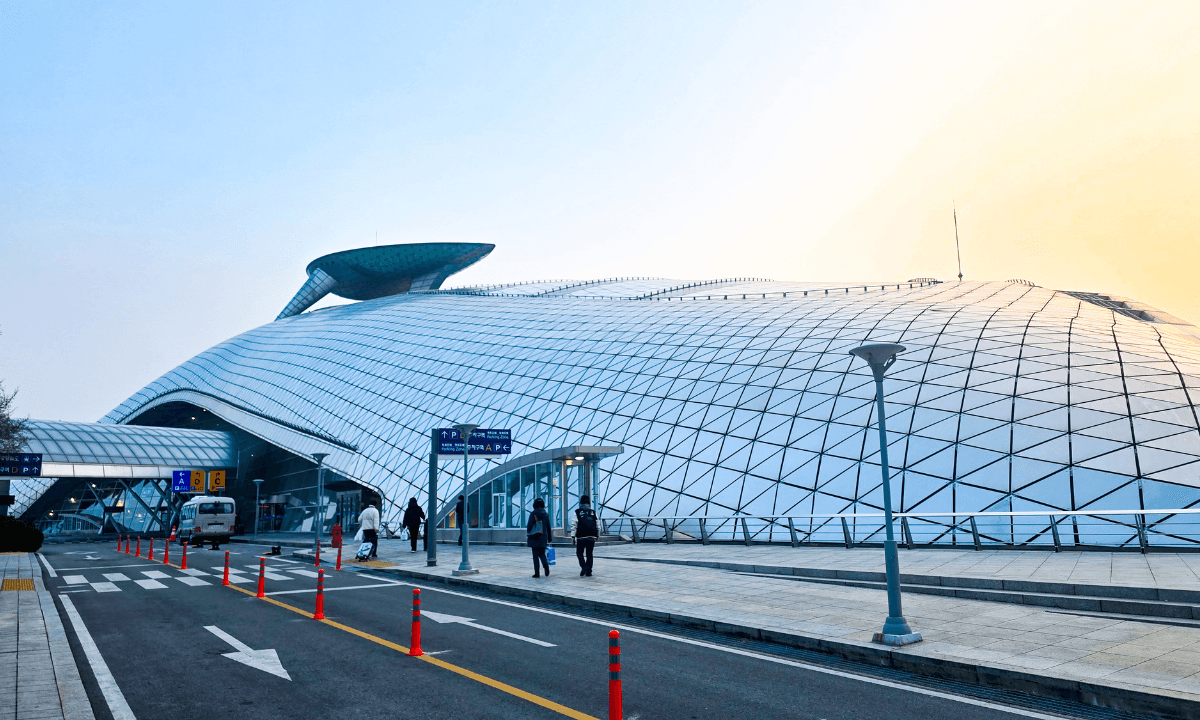
Global HVAC&R wholesaler and manufacturer Beijer Ref Korea has installed what it said is “the largest CO2 refrigeration system in South Korea,” a 200kW (56.8TR) CO2 (R744) system at Incheon Airport.
The refrigeration system is currently in the final stages of commissioning and verification, Beijer Ref Korea told NaturalRefrigerants.com. It is installed in the airport’s newly expanded cargo terminal three, operated by Atlas Air Cargo Terminal.
The manufacturer also said that this is the second CO2 refrigeration project completed at the Incheon airport. The first project replaced what the company called “an aging R22 refrigeration system” with a new CO2 system. The new refrigeration system will help store fresh food, fruit, flowers, pharmaceuticals, biopharmaceutical products and temperature-sensitive electronics.
Under the hood: The system features a CRII capacity-controlled compressor and three fixed-speed compressors that provide 175kW (49.7TR) of cooling capacity at 2–5°C (35-41°F) with an evaporating temperature of −5°C (23°F). One inverter-driven compressor and one fixed-speed compressor provide 25kW (7.1TR) of cooling capacity for frozen goods stored at approximately −25°C (−13°F) with an evaporating temperature of −32°C (−23°F).
- Beijer Ref Korea said the system is being commissioned and validated to operate at an ambient temperature of 35°C (95°F).
- The gas cooler is rated at 100bar (1,450psi) with an outlet temperature of 38°C (100°F), and the receiver is rated at 40 bar (580 psi).
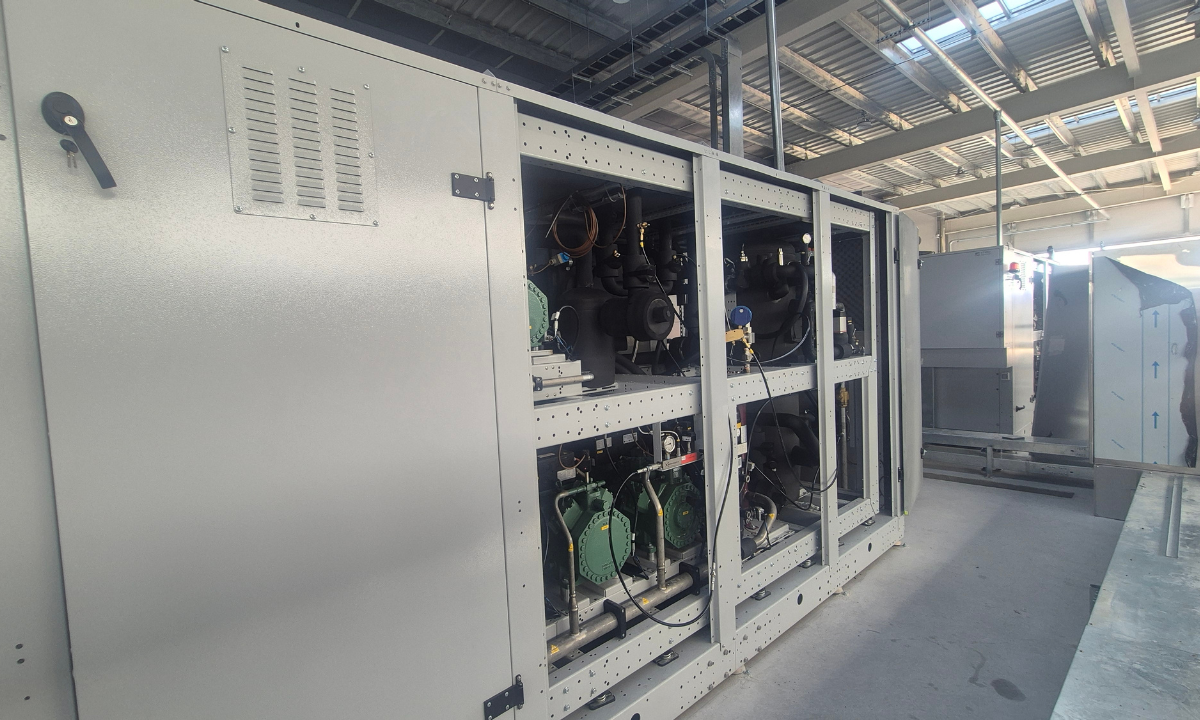
The new CO2 unit at Incheon Airport. Photo credit: Beijer Ref Korea
Cooling with purpose: Based on a comparative simulation between the CO2 system and a conventional R507A (GWP 3,985) system, the results show annual 34.8% energy savings, according to Beijer Refra Korea.
- The new unit consumes around 808,889 kWh/year of electricity, compared with 1,241,406 kWh/year for the R507A system. Beijer Ref Korea used an energy emissions factor of 0.530kg CO2/kWh to calculate the emissions savings, which are approximately 2,292 metric tons of CO2 over 10 years.
- When adding in direct emissions from refrigerant leaks, the total lifecycle greenhouse gas emissions for the CO2 refrigeration system were estimated at 4,290 metric tons compared to 14,872 metric tons of CO2e for the R507A system.
Keeping pace with regulation: The manufacturer chose CO2 to “actively prepare for future environmental regulations and evolving market trends.”
- South Korea has introduced a regulation establishing a GWP limit of 150 for new commercial refrigeration equipment, which is set to be implemented in 2030. Starting in 2028 the rule will ban refrigerants in new freezing and refrigeration chillers with a GWP higher than 1,500.
Come fly with me: Natural refrigerant-based heating and cooling systems are starting to make their way into airports.
- In 2026, Ordos Ejin Horo Airport in China replaced its fossil fuel boilers with CO2 heating and cooling systems. The project involved replacing fossil fuel boilers to heat an existing building and providing heating and cooling for a newly constructed building.
- In September 2025 U.S.-based Flow Environmental Systems said it installed its CO2 heat pump at an airport in Fargo, North Dakota. The unit provides hot water up to 180°F (82°C) for space heating with a capacity range of 70.3 to 422kW (20 to 120TR).
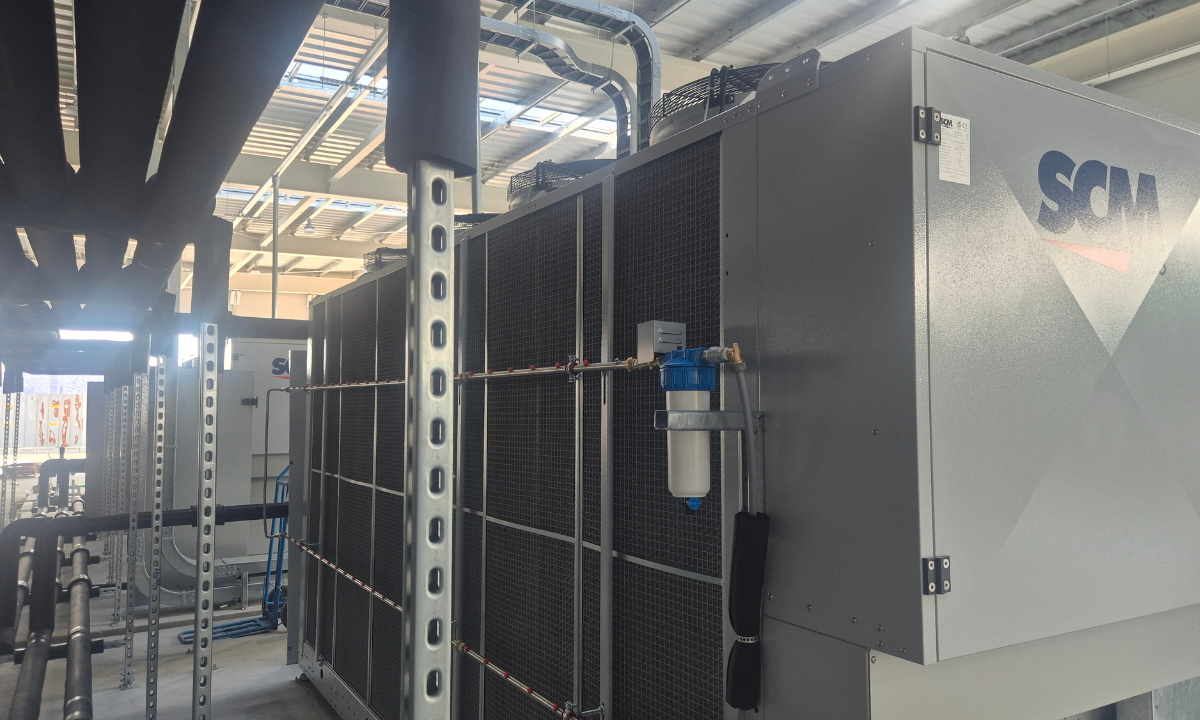
A nascent market: In 2025 there were four retail stores and six industrial sites in South Korea using transcritical CO2 refrigeration systems, according to data gathered by ATMOsphere, the publisher of NaturalRefrigerants.com.
- In 2023 supermarket Nonghyup Hanaro Mart installed an Arneg-manufactured transcritical CO2 refrigeration system with a cooling capacity of 38kW (10.8TR) for medium-temperature applications and 6kW (1.7TR) for low-temperature cold room and cabinet.
- One of the earliest installations in commercial refrigeration was in 2021 at a Seoul convenience store. That project featured an Arneg CO2 condensing unit with a cooling capacity of 3.7kW (1.1TR).
Quotable: “A CO2 refrigeration system can deliver environmental benefits not only through the use of a natural refrigerant with an ultra-low global warming potential, but also through significantly improved energy efficiency, resulting in substantial reductions in indirect emissions from electricity generation,” said Beijer Ref Korea.