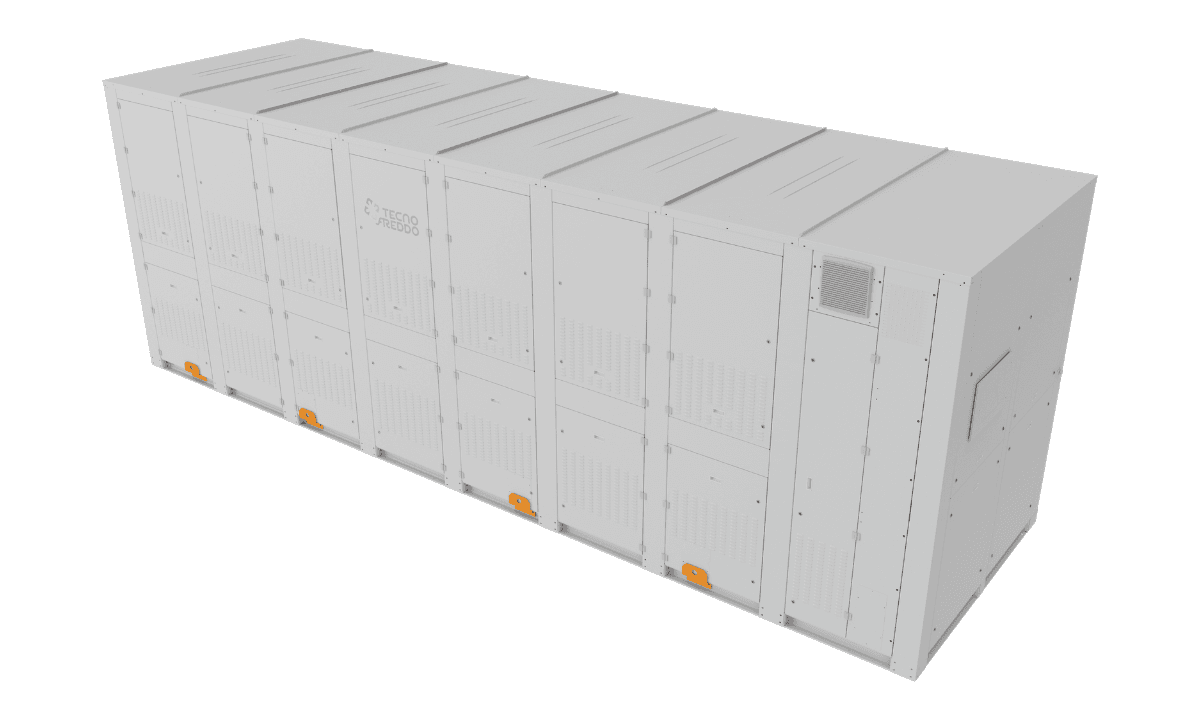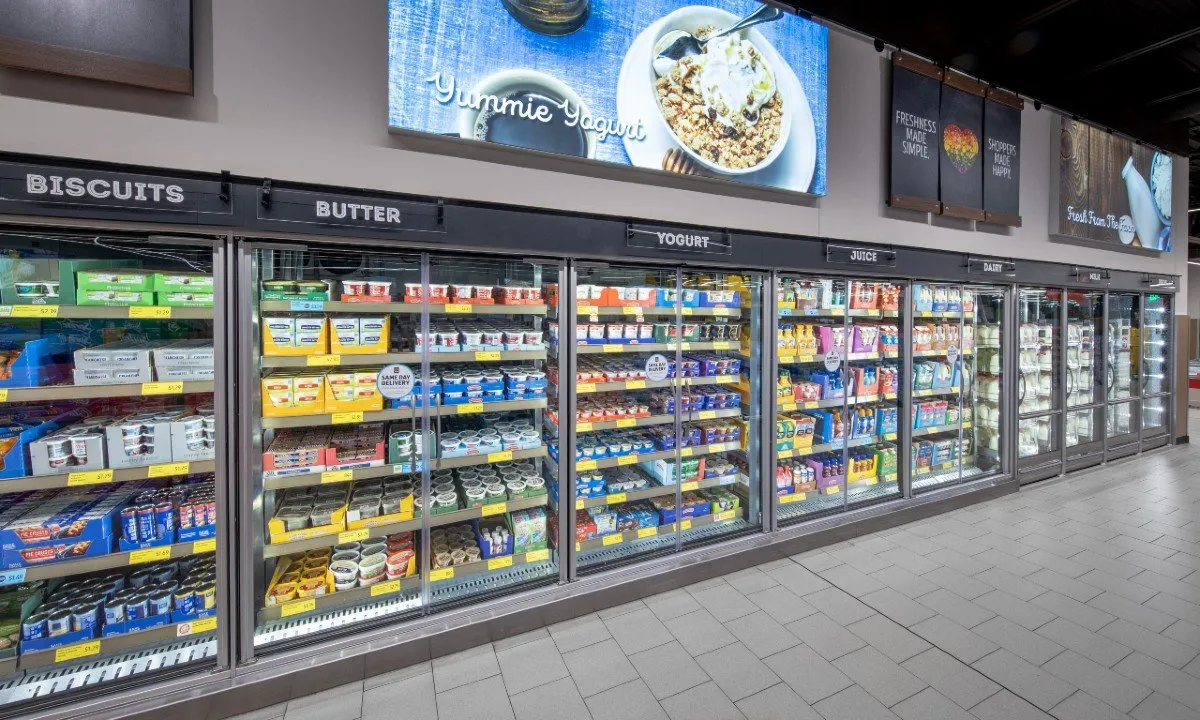
The number of U.S. stores using transcritical CO2 (R744) refrigeration systems is projected to grow by 176% between 2024 and 2028 while the number employing CO2 secondary systems is forecast to increase by 620%, according to data released by the North American Sustainable Refrigeration Council (NASRC), a U.S. nonprofit working to advance adoption of natural refrigeration in North American supermarkets.
Notably, the majority of the CO2 transcritical systems will be installed in newly constructed stores builds and the majority of the secondary systems will replace equipment in existing facilities, the NASRC said.
The NASRC began publishing data on CO2 system installations in 2023, based on surveys of U.S. food retailers. This year, the nonprofit queried 14 major U.S. food retailer companies representing more than 28,000 store locations. According to the Food Industry Association (FMI), citing NielsenIQ TDLinx, there are 45,575 supermarkets in the U.S., including conventional supermarkets, limited assortment grocery, supercenters, warehouse grocery, conventional club, and natural/gourmet stores, along with military commissaries.
“Both regulations and environmental and social governance (ESG) are driving the transition from traditional high global warming potential (GWP) hydrofluorocarbon (HFC) refrigerants, causing a growing body of U.S. food retailers to seek future-proof HFC-free alternatives,” said the NASRC. “Carbon dioxide (CO2) is a natural, ultra-low GWP, non-toxic, and non-flammable refrigerant with no ozone-depleting properties, making it one of the leading alternative refrigerants.”
The key takeaways of the NASRC’s 2024 data collection include:
- Demand for CO2 refrigeration technologies will grow significantly in the next five years.
- Compared to 2023 data, the projected growth of CO₂ is very similar, but the timeline has been shifted out slightly (from 2027 to 2028).
- Demand for CO2 technologies could exceed these projections.
“It is important to note that these projections are subject to change,” said the NASRC. “Some retailers cited that improving CO2 resiliency would likely increase their forecasted adoption. But there is also the potential for these projections to decrease if resiliency concerns are not addressed.”
According to the NASRC, in 2024 there was a starting total of 1,067 stores among the 14 food retailer companies with transcritical CO2 systems, with another 185 new stores expected to be added, and a few more existing stores. Those numbers are expected to grow year by year; in 2028, there will be a projected 2,481 stores with transcritical CO2 at the outset, plus another 340 new stores and 125 existing locations.
In regard to secondary CO2 systems, 473 stores have them this year, and in 2028, 2,505 locations will operate them at the beginning of the year, with another 900 existing stores adding them, said the NASRC.
Secondary CO2 systems in food retail are generally considered to be those that use an f-gas to chill CO2, which circulates in the store as a volatile brine. Cascade CO2 systems also employ an f-gas to condense CO2 in a subcritical compressor-driven CO2 system, with the CO2 circulating in the store. In its definition of secondary CO2, the NASRC includes cascade systems, though “the majority of systems in the projection are secondary using pumped CO2/glycol with no compressors on the CO2 side,” Danielle Wright, Executive Director of the NASRC, told NaturalRefrigerants.com in an email. Neither secondary CO2 nor cascade CO2 systems are used in new installations or retrofits in Europe, where transcritical CO2 is the dominant CO2 architecture.
Combining data for transcritical and secondary CO2 stores, the NASRC reports that in 2024 7% of the more than 28,000 stories affiliated with the 14 major food retailers will use CO2 as a refrigerant; the organization projects that in 2028 that percentage will grow to 22%.
ATMOsphere data
ATMOsphere (publisher of NaturalRefrigerants.com) in its 2023 Natural Refrigerants State of the Industry report identified 2,930 food retail stores in North America using transcritical CO2 systems as of December 2023, up more than 80% from 1,605 in 2022 and from 945 in 2020. Of these 2,930 stores, 1,850 are in the U.S. and 1,080 in Canada.
According to the ATMOphere report, as of December 2023, there were also 498 industrial sites using transcritical CO2 in North America in 2023, 14.5% of the total of 3,428 transcritical CO2 sites. The 498 industrial sites consists of 208 in the U.S. (up from 120 in 2022) and 290 in Canada (up from 170 in 2022).
As of December 2023, there were approximately 68,500 food retail stores in Europe that use transcritical CO₂ systems; of these 60,000 use a centralized system (one or more racks), and 8,500 use condensing units, according to the ATMOsphere report.
ATMOsphere will publish the 2024 edition of the Natural Refrigerants State of the Industry report in January 2025. It will cover CO2, hydrocarbon and ammonia (R717) installations in North America (including Mexico), Latin and South America, Europe, Japan and Australia.
This article was updated on September 12 with input from Danielle Wright, Executive Director of the NASRC, on how the group defines secondary CO2 systems.
“Both regulations and environmental and social governance (ESG) are driving the transition from traditional high global warming potential (GWP) hydrofluorocarbon (HFC) refrigerants, causing a growing body of U.S. food retailers to seek future-proof HFC-free alternatives.”
NASRC