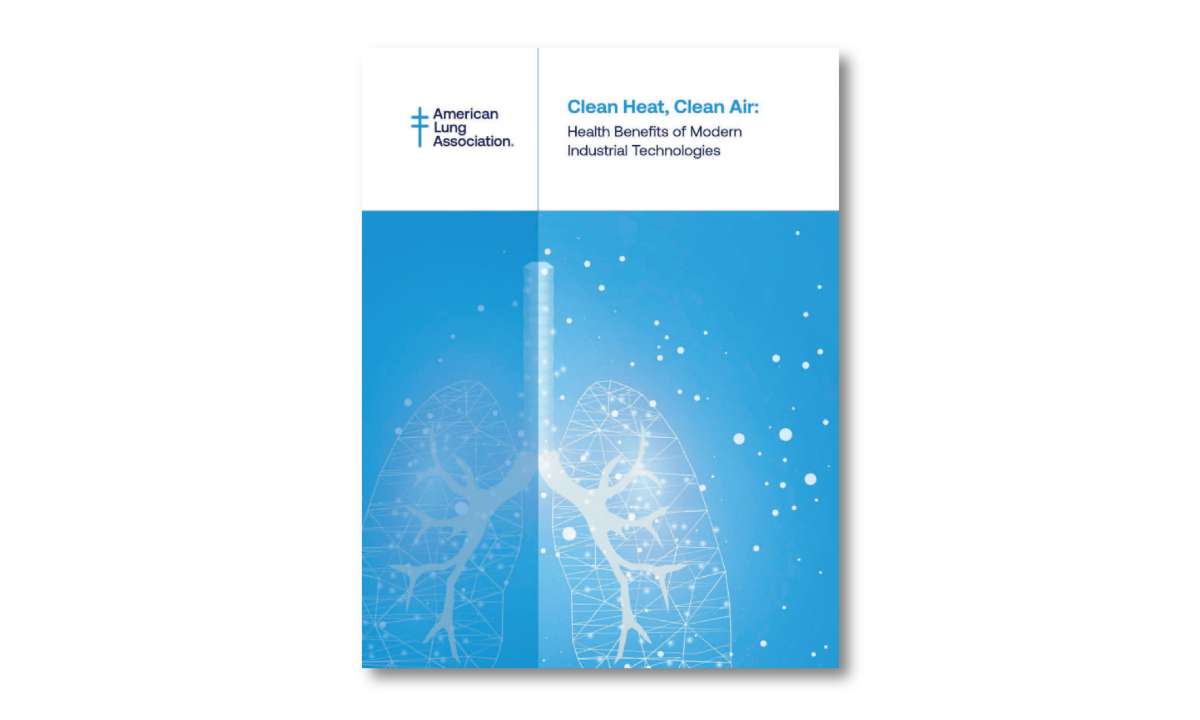
Switching from fossil fuel-powered boilers to heat pumps in U.S. industrial applications could help prevent more than 77,000 premature deaths while unlocking $350 billion (€300 billion) in climate benefits, according to a new study from the American Lung Association (ALA).
The report, “Clean Heat, Clean Air: Health Benefits of Modern Industrial Technologies,” highlights the significant role industrial boilers play in driving air pollution and greenhouse gas emissions. Across the country, more than 33,000 boilers – most of which burn fossil fuels – are used in manufacturing, food processing and chemical production. Replacing these with zero-emissions heat pumps could deliver $1.1 trillion (€940 billion) in health benefits between 2030 and 2050, the ALA found.
By improving air quality, the transition could also help prevent more than 33 million asthma attacks, 200,000 new cases of asthma, 13 million lost school days and 3.4 million lost work days by mid century. In the long term, additional benefits could be realized by decarbonizing the electric grid.
“Burning fossil fuels to power industrial heat processes releases harmful pollutants into the air we all breathe, contributing to asthma, heart attacks, strokes and other health emergencies,” said Harold Wimmer, President and CEO of the ALA. “This new report highlights the enormous health benefits we can achieve by switching to modern, zero-emission heat technologies in industrial facilities.”
Increasingly, heat pumps are being designed around natural refrigerants such as ammonia (R717), CO2 (R744) and hydrocarbons, which have ultra-low GWP and therefore minimal climate impact. Their adoption also supports compliance with HFC phase-downs mandated under the American Innovation and Manufacturing (AIM) Act, various state-level regulations and the Kigali Amendment.
“Burning fossil fuels to power industrial heat processes releases harmful pollutants into the air we all breathe, contributing to asthma, heart attacks, strokes and other health emergencies.”
Harold Wimmer, President and CEO of the ALA
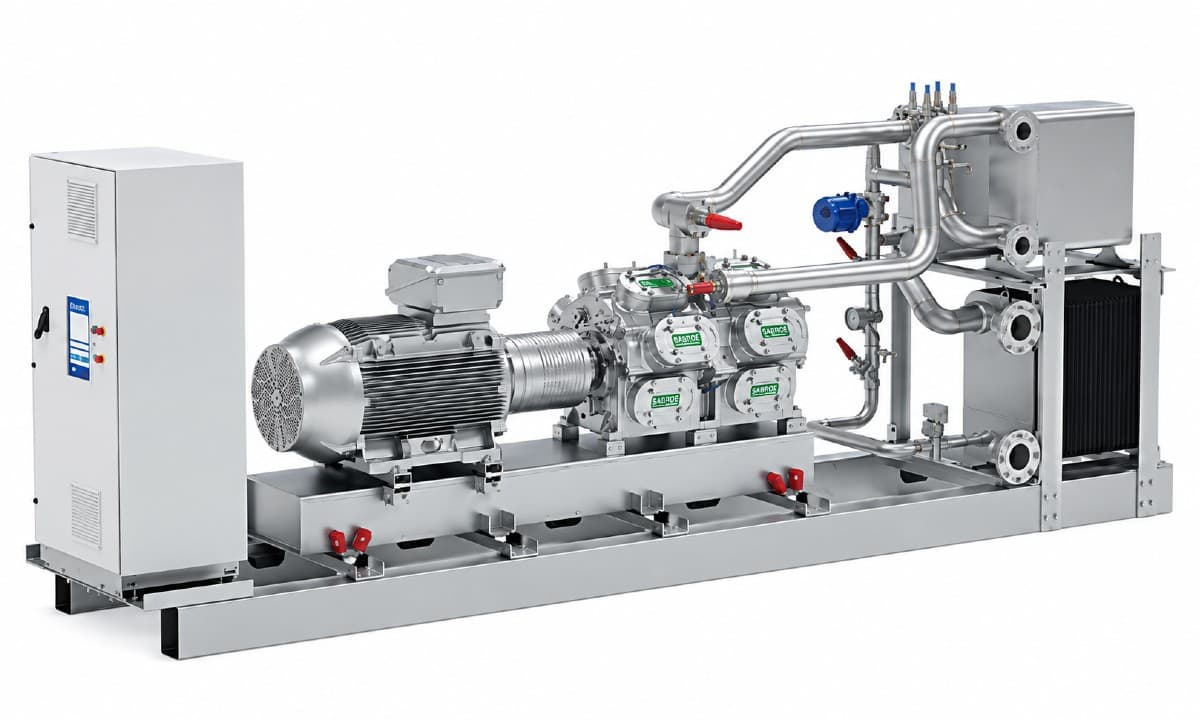
The technology: Industrial heat pumps are already available and can replace thousands of fossil fuel boilers to boost efficiency and cut emissions, according to the ALA.
- Breweries, beverage processors and other low-temperature applications (up to 100°C/212°F) could easily switch to heat pumps by 2030.
- Processes that require temperatures of 100–140°C (284°F) could shift to heat pump technologies by 2035.
- Higher-temperature applications (up to 200°C/392°F) remain a key R&D focus, the ALA noted, but Europe has already proven the viability of high-temperature industrial heat pumps in sectors such as sugar refining and adhesive production.
Support: Policy and financial support will be critical to accelerate adoption, the ALA said.
- Stronger pollution standards, clear market signals and incentives at both state and federal levels would help manufacturers transition more quickly.
- The ALA’s recommendations include stronger permitting, R&D investment, awareness-raising programs and utility planning.
- Several states – including New York, Oregon and California – have already funded industrial decarbonization efforts, such as heat pumps.
Quotable: “The technology is absolutely not new, but its efficacy, its uptake, its market readiness, is definitely emerging,” Andrew Hoffmeister, a Senior Research Analyst at the American Council for an Energy-Efficient Economy (ACEEE) told Grist. “The potential of the technology can’t be understated. It’s not some sexy, silver-bullet solution that’s just been developed and is going to solve everything. It’s a robust, well-documented technology.”
ACEEE was not involved in the ALA research, noted Grist.