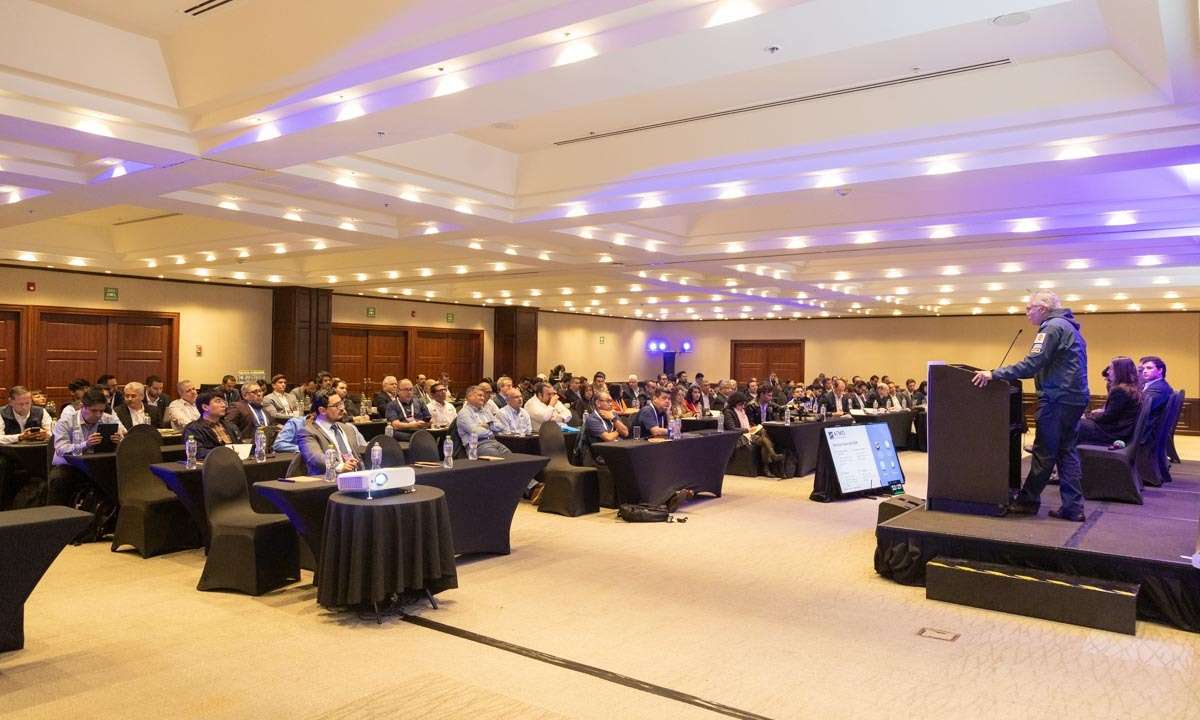
Grupo Bimbo, Frialsa and OXXO all took the stage during the first day of ATMOsphere (ATMO) LATAM 2025 in Mexico City.
The event, organized by ATMOsphere, publisher of NaturalRefrigerants.com, is being held at the Barceló México Reforma and is a gathering of end users, manufacturers, government officials, academics and more who are promoting the use of natural refrigerants throughout Latin America. This is the third ATMO LATAM and the second to be held in-person.
The two-day event kicked off with two presentations by major end users: multinational baked-goods manufacturer Grupo Bimbo and logistics company Frialsa.
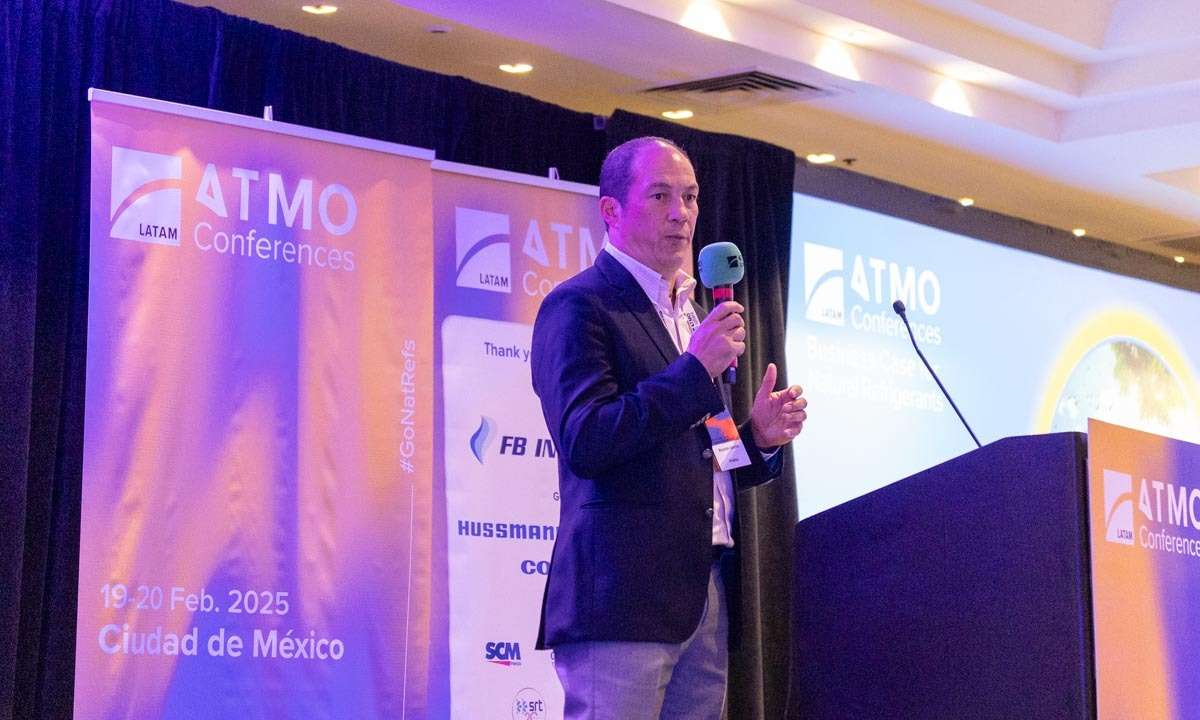
End users share experiences
Jimena Hernández Cejudo, Global Sustainability Manager at Grupo Bimbo, presented the first keynote. The baked goods giant spoke at ATMO America 2023 where it shared that 10% of its sites worldwide were fully using natural refrigerant technologies. That figure has risen drastically in just two years, according to Hernández Cejudo.
“Currently, 63% of Grupo Bimbo’s refrigeration systems worldwide operate with natural refrigerants,” Hernández Cejudo said.
Frialsa, which operates 31 cold storage facilities in Latin America, took the stage next. Ricardo Garcia, Project Director, said 22 of the company’s cold storage warehouses use natural refrigerants: nine have ammonia (R717)/CO2 (R744) cascade systems and 13 use ammonia-only systems.
“Natural refrigerants are the most efficient refrigerants – it’s one of the great advantages of natural refrigerants,” Garcia said.
The end users panel began after the two keynotes, with Mexican convenience store OXXO, Mexican grocery store chain Casa Ley and Chilean salmon producer Marine Farm all presenting.
Armando Treviño Almeda, Energy Manager at OXXO Mexico, said the company makes extensive use of propane (R290) self-contained cases. “[We have] 21,270 end-cap units, 43,658 ice cream freezers and cold rooms at [our] distribution centers,” Treviño Almeda said.
Rafael Francisco Navarro Torua, Senior Maintenance and Hygiene Manager at Casa Ley, shared the company’s first experience with transcritical CO2, which was installed at a supermarket in Culiacán, Mexico.
“We achieved an investment payback in 3.7 years, system knowledge and operation and trained technicians for subsequent projects,” Navarro Torua said.
Eduardo Osses, Electronic Technician and Industrial Engineer for Marine Farm, spoke about the benefits the company saw when it moved from R22 to ammonia. “[We] eliminated the use of more than 1,000kg of R22, reduced electricity consumption by approximately 360,000kWh per year and achieved an estimated savings of $60,000 [€57,000] per year in maintenance,” Osses said.
In its 2024 Market Report, ATMOsphere estimated that there were 580 supermarkets using transcritical CO2 systems, 8.5 million self-contained hydrocarbon cases installed in stores and 60 industrial sites using low-charge ammonia systems in Latin America.
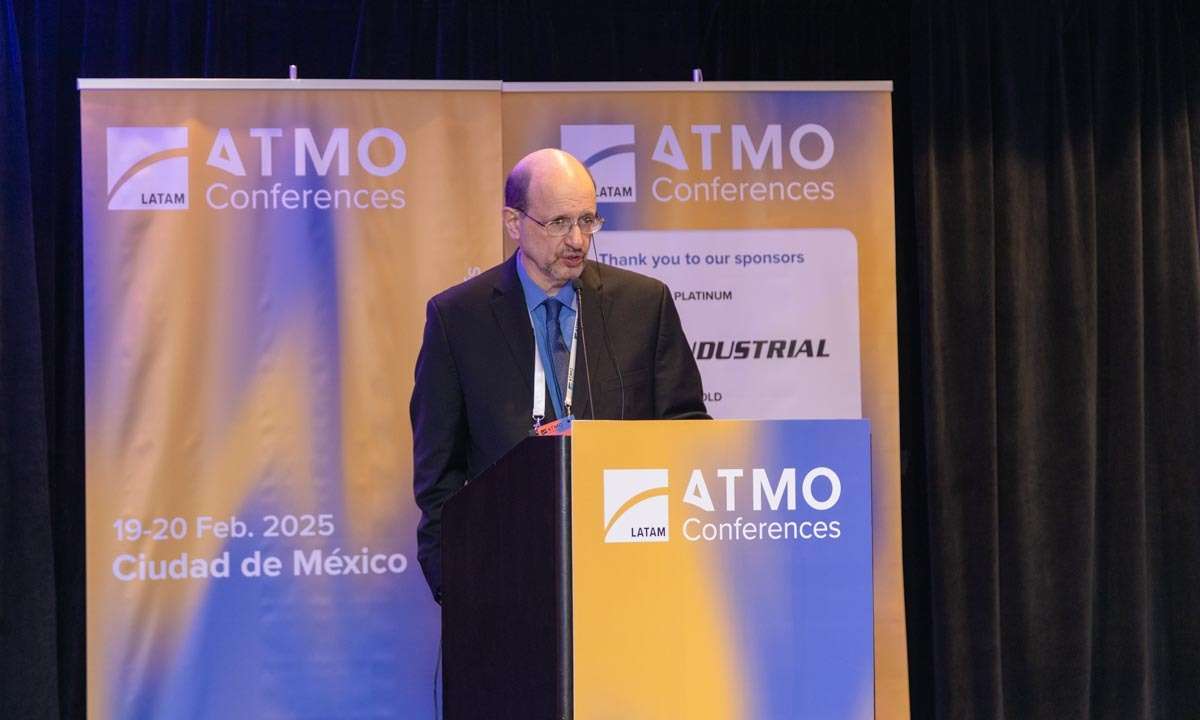
HFOs and TFA
After the end users, NaturalRefrigerants.com Editor-at-Large Michael Garry spoke about HFOs and their connection to trifluoroacetic acid (TFA).
“HFOs and other chemicals generate TFA, a PFAS [per- and polyfluoroalkyl substances] that is everywhere in the environment and in human blood,” Garry said. “TFA at minimum is a significant risk to human health – more research is needed. Meanwhile, the HFO contribution to TFA formation is unnecessary because there are natural refrigerant alternatives.”
Shira Joudan, Assistant Professor of Analytical Environmental Chemistry at the University of Alberta in Edmonton, Canada, was recently interviewed by NaturalRefrigerants.com about the harmfulness of TFA to humans. While Joudan agreed that more research needs to be done, she stated that the continued buildup of TFA in the environment provides reason to worry.
“If we are emitting a chemical into the environment – whether that’s directly or via many other chemicals that are useful but then form it – and it has no way to break down and it keeps increasing, that’s concerning,” Joudan said. “Because the idea is that we may reach a concentration that has a major harmful effect, and then we can’t deal with it.”
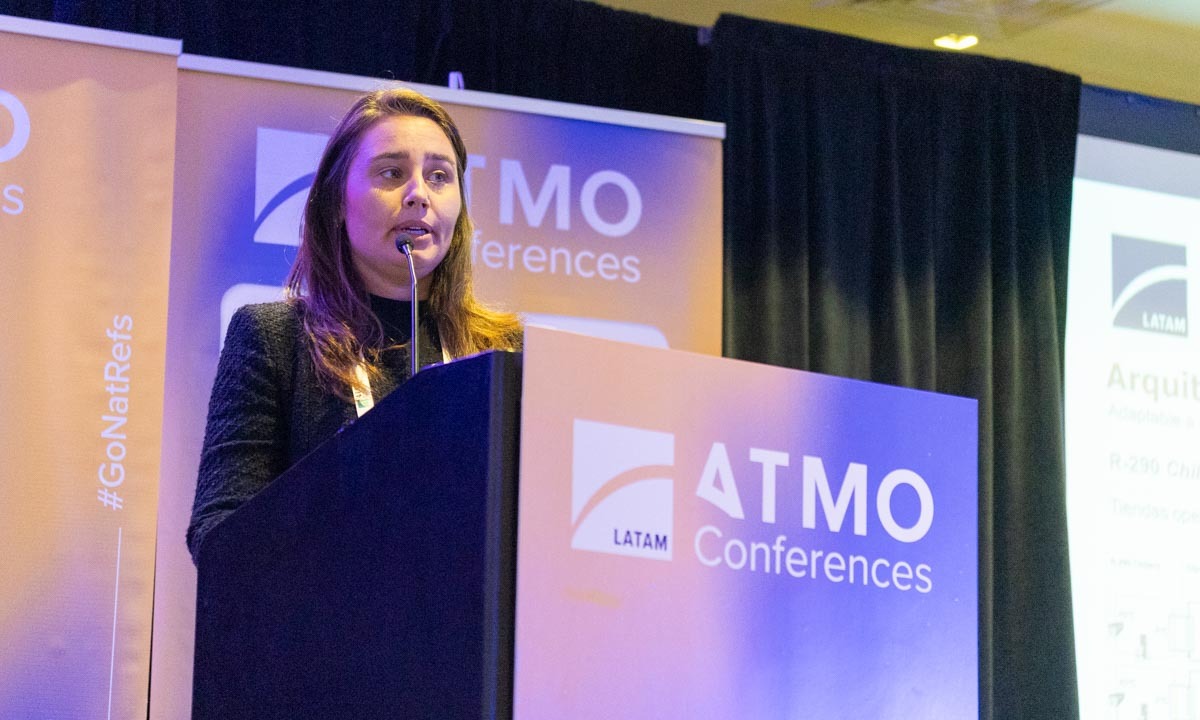
The manufacturer perspective
Manufacturers from Latin America and around the world closed out the first day of ATMO LATAM 2025 with refrigeration case studies.
In the first session, Gildardo Yañez Angli, Technical Training Manager at FB Industrial, spoke about propane chillers in his case study, which he said, “offer significant advantages over traditional chillers” as they are “more environmentally friendly and energy efficient.”
Yañez Angli was followed by two presenters from Copeland Latin America: Misael González, Sr. Application Engineer, and Joana Canozzi, Engineering Services Director. The pair shared a case study focused on an integrated R290 and CO2 system with a glycol loop.
“It uses a modular and scalable refrigeration architecture based on the flexible application (distributed or centralized) of natural refrigerants, enabling efficient and safe operation, and is applicable to supermarket facilities or food refrigeration in general,” Amor said.
The first refrigeration case studies session was capped off by David Osma, Project Engineer at Weston, and Gabriel Gomez, Sales Representative for New Cooling Solutions at Dorin. The two spoke about the advantages of using propane self-contained cases with a waterloop.
“[There’s] a 90% reduction in refrigerant charge and natural refrigerants don’t damage the ozone layer, and are 1,300 times more ecological compared to what is used in the market,” Gomez said.
The second session of refrigeration case studies began with a trio of presenters: Raúl Alanis, Technical Sales at Güntner; Mauricio Baena, Regional Sales Manager LATAM at Advansor; and Brian Blanco, Project Engineer at RCR Refrigeración. Their case study centered on a transcritical CO2 system used in the meat industry and its advantages over other refrigerants.
“[CO2] is non-toxic and non-explosive, simple to use, has a shorter installation time, uses less space for installation and has less structural requirement for pipe pulling, better temperature recovery after thawing and operational redundancy,” Baena said.
Fernando Rios, Head of Natural Refrigerants and Services at Total Refrigeration Systems, spoke about the use of CO2 heat pumps in the hospitality sector.
“The efficiency of these [CO2 heat pump] units is at its peak, with a cost of 0.06 pesos per liter of hot water, providing savings of at least 48% compared to LP gas and 25% compared to industrial natural gas,” Rios said.
“The efficiency of these [CO2 heat pump] units is at its peak, with a cost of 0.06 pesos per liter of hot water, providing savings of at least 48% compared to LP gas and 25% compared to industrial natural gas.”
Fernando Rios, Head of Natural Refrigerants and Services at Total Refrigeration Systems
Maxime Girot, representing Clauger México, ended the day with a case study about ammonia systems for glycol water generation and the best ways to entice end users to use natural refrigerants and how to support end users.
“Offer technical support to the customer in choosing a natural refrigerant, make the importance of the 10-year analysis clear, illustrate the impact of energy consumption versus investment cost, ensure safe operation of the installation by controlling the risks of ammonia with a safe design, and offer a long-term solution,”Girot said.
Day two of ATMO LATAM 2025 will feature more refrigeration case studies along with a contractors panel and session on market and technology trends in Latin America.