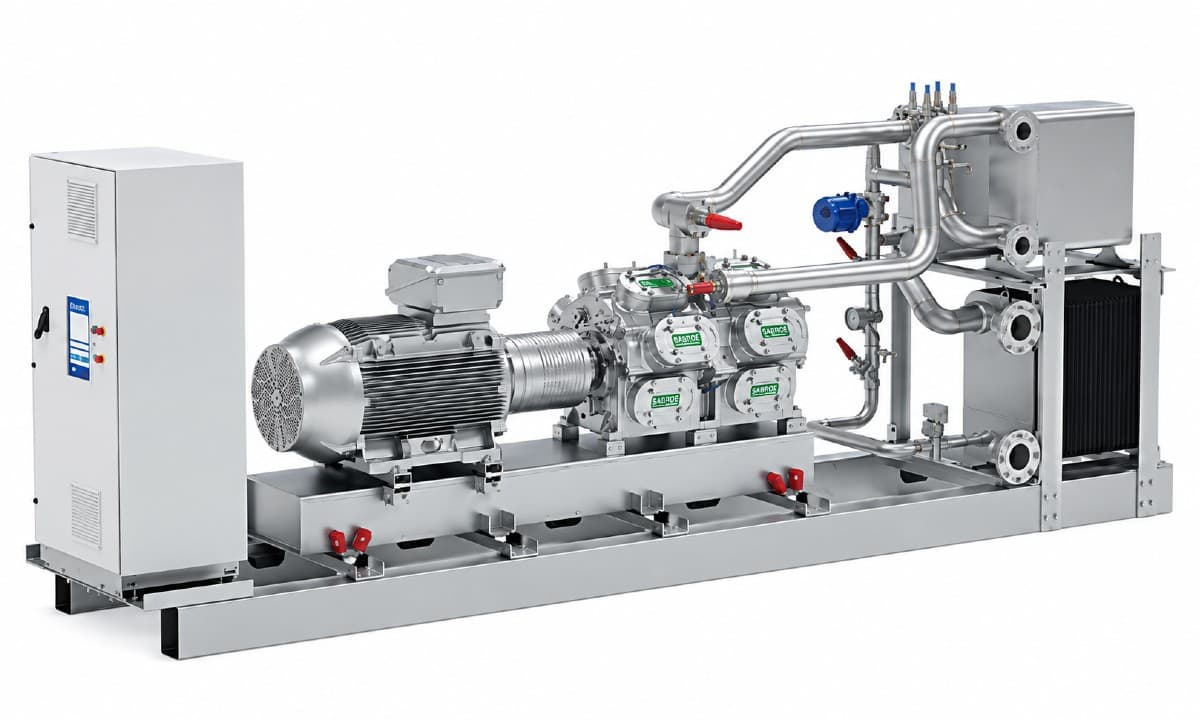
A leisure center in northern England has replaced its gas boilers and combined heat and power (CHP) plant with five CO2 (R744) heat pumps supplied by U.K. HVAC&R manufacturer Clade Engineering.
The installation at the Orford Jubilee Neighbourhood Hub in Warrington comprises five Maple SN/300 heat pumps, providing a total heating output of 1.5MW (426.5TR). Each unit offers a 300kW heating capacity in ambient temperatures of −5°C (23°F) and 390kW (111TR) at 7°C (44.6°F).
The system delivers temperatures of up to 70°C (158°F) for space heating, domestic hot water (DHW) and the facility’s two swimming pools, with additional capacity built in for resilience.
“The leisure center has a high demand for hot water,” Tim Rook, Chief Markets Officer at Clade, told NaturalRefrigerants.com. “CO2 was selected so the DHW and heating could be served by one set of heat pumps.”
In the reporting year for 2022/2023, the leisure center welcomed more than 485,500 visitors, underscoring the need for a robust and reliable heating solution.
“CO2 was selected so the DHW and heating could be served by one set of heat pumps.”
Tim Rook, Chief Markets Officer at Clade
‘Easy’ management
For space heating, heat is emitted within the facility via air handling units (AHUs), radiators and radiant panels, some of which were retained from the original system.
“The high temperature differential of CO2 also meant that the existing distribution pipework could be retained, which lowers the cost and disruption of the installation,” Rook explained.
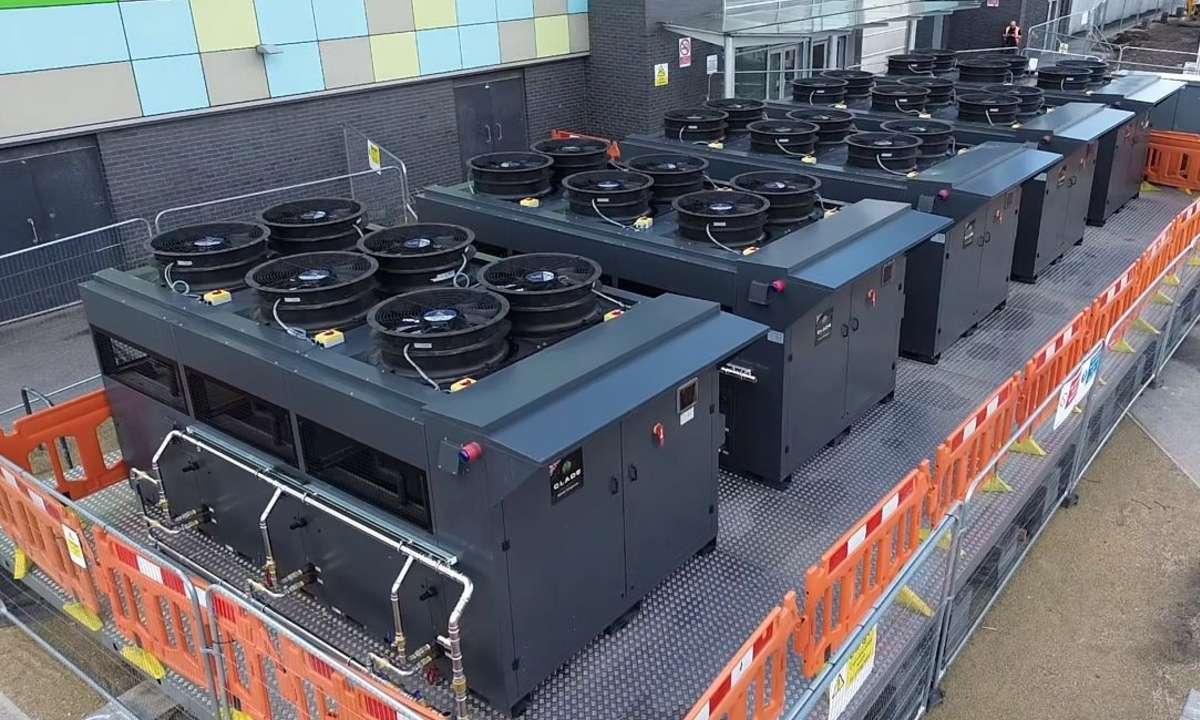
The five heat pumps are managed via a Clade multi-heat pump controller, which automatically balances capacity and buffer management for optimal efficiency.
“The multi-heat pump controller makes life easy for commissioning and BMS [building management system] teams,” he noted. “All the heat pump specific logic is taken care of.”
The design and piping arrangements are familiar to U.K. contractors, making installation straightforward and maintenance efficient, according to Rook.
Launched in early 2024, the Maple series offers an effective, low-carbon and compact option for commercial applications, Clade noted at the time.
Supporting public sector decarbonization
The project required a Distribution Network Operator (DNO) upgrade to expand the site’s electrical supply capacity as it fully electrified its heating system.
Funding was provided through the U.K. government’s Public Sector Decarbonization Scheme (PSDS), which offers grants to support heat decarbonization and energy efficiency measures in public buildings.
Earlier this year, the Queen’s Medical Centre in Nottingham also received PSDS funding to install four ammonia (R717)-based heat pump-chiller units for heating and cooling.
As the U.K. continues to decarbonize its heating sector, CO2 heat pumps are gaining ground, with deployments expanding into applications ranging from industrial greenhouses and urban district heating networks.