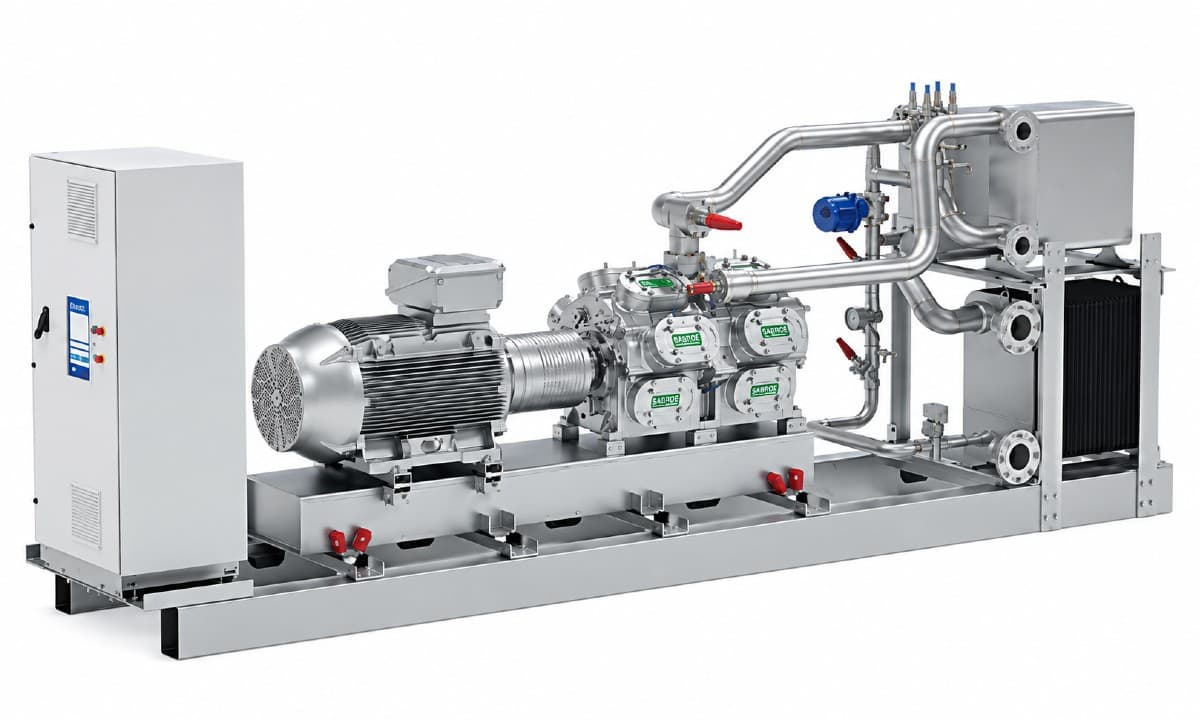
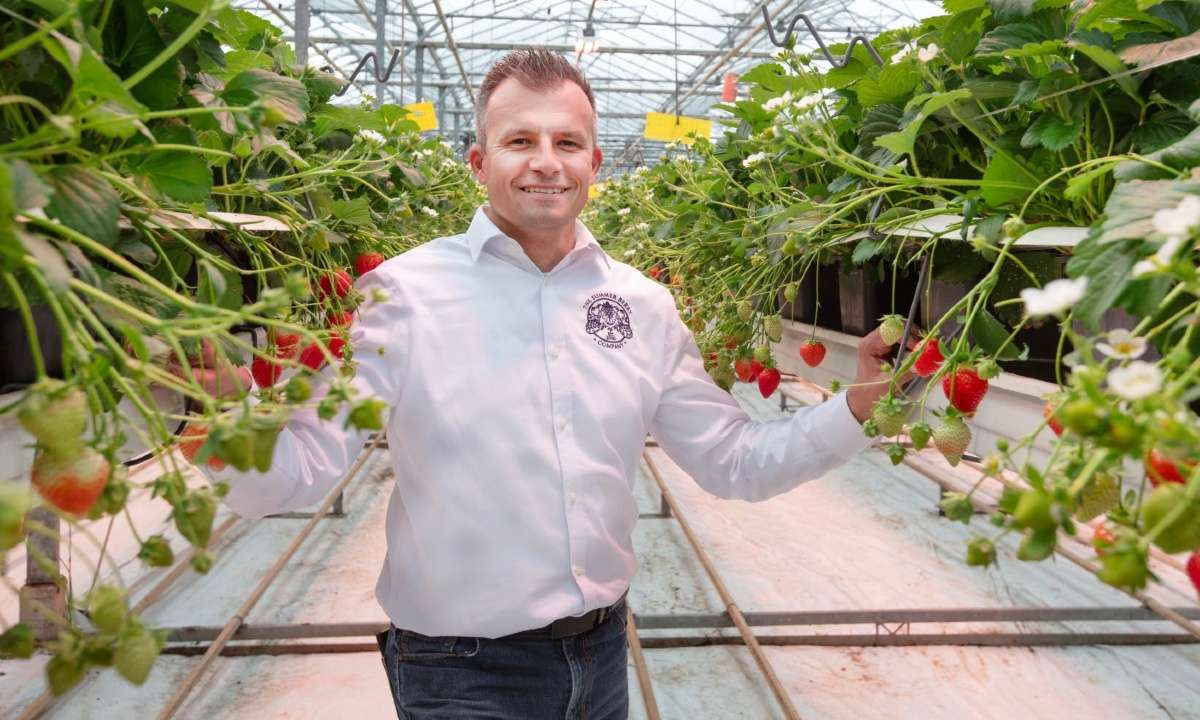
A pioneering CO2 (R744) heat pump system from Carrier Commercial Refrigeration has helped The Summer Berry Company (TSBC), a U.K.-based strawberry producer, cut energy bills by more than 50% while reducing its reliance on gas.
Installed at TSBC’s 240m² (2,583ft²) greenhouse in Chichester, England, the 2.5MW (710.9TR) dual-source system comprises two HeatCO2OL industrial racks. The project also included the installation of a new combined heat and power (CHP) plant, LED lighting and a 2 million-liter (439,938gal) heat storage tank, enhancing the site’s energy efficiency and flexibility.
According to Trevor Day, U.K. Industrial Sales Manager for Carrier Commercial Refrigeration, this is the first project of its kind in Britain.
Previously, the site used gas boilers and an onsite gas-fired power plant, consuming around 28 million kWh of gas annually. The new system has slashed gas consumption by approximately 17 million kWh per year. Additionally, CO2 from the CHP plant is captured and fed into the greenhouse to boost plant growth.
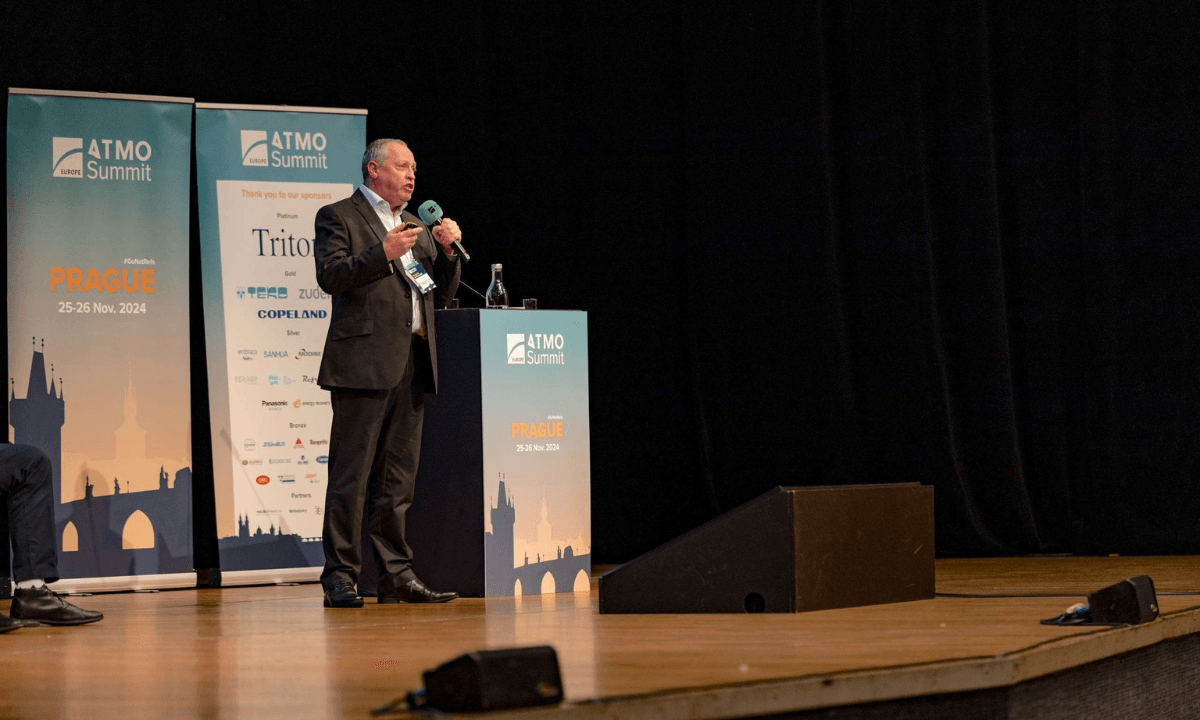
Details of the new system were shared by Day and Jonathan Froggatt, Sales Director at Ebtech Energy Systems – a heat decarbonization business specializing in glass house projects – at the ATMOsphere (ATMO) Europe Summit 2024. The event was organized by ATMOsphere, publisher of NaturalRefrigerants.com, and held in Prague, Czech Republic.
Dual-source heat pump
The greenhouse’s extended heating season, due to its lack of thermal insulation, required a robust solution, explained Day. The system primarily draws heat from a local reservoir, with ambient air as a secondary source via a Güntner evaporator.
“We’ve blended the two types of collectors because you’re still heating the greenhouse when it’s 15°C [59°F] outside,” he said. “We try as much as possible to use the water source, switching to the air source when the ambient temperature is higher than the water temperatures to maximize COP. With an extended heating season, efficiency becomes even more important.”
The system operates with a flow temperature of 60°C (140°F) and a return temperature of 30°C (86°F), but can handle return temperatures up to 48°C (118.4°F) without technical issues. The greenhouse’s existing heating infrastructure was modified to ensure peak performance.
‘A very sensible investment’
In total, the site’s upgrade cost about £6 million (€7.2 million/$7.5 million), half of which was spent on the CO2 heat pumps, Day said. With annual energy savings of £2 million (€2.4 million/$2.5 million), the strawberry producer expects to recoup its investment in three years.
“A three-year payback on a system that’s going to last 20–25 years is a very sensible investment,” he added.
Unlike many decarbonization projects, TSBC received no subsidies, relying solely on financial viability. Froggatt emphasized the significance of the project: “By integrating district heating, heat pumps and CHP, we achieved financial benefits without subsidies — something we hadn’t done before. This serves as a blueprint for large-scale heat pump adoption.”
According to Day, this project is just the first step of TSBC’s decarbonization efforts, with the possibility of expanding the heat pump system to meet the site’s peak demand of around 6.5MW [1,848.2TR].
“By integrating district heating, heat pumps and CHP, we achieved financial benefits without subsidies — something we hadn’t done before. This serves as a blueprint for large-scale heat pump adoption.”
Jonathan Froggatt, Sales Director at Ebtech Energy Systems
Rising demand for CO2 heat pumps
While this was the U.K.’s first combined water/air-source CO2 heat pump system, Carrier Commercial Refrigeration has already implemented similar projects in the Nordic region, Day said.
Now with an example of this type of system in action in the U.K., interest is growing, with three companies currently in talks with Ebtech. As food retailers and producers set aggressive sustainability targets, the demand for eco-friendly heating solutions is growing.
“Heat pumps offer a massive opportunity, and the growth of heat pumps in the U.K. and across Europe is going to continue,” he said. “With CO2 being a natural refrigerant and having the ability to go from 70kW [20TR] all the way to 2MW [568TR], I think [our technology] is in a really strong place.”
With Haier’s recent acquisition of Carrier Commercial Refrigeration, Day anticipates increased investment in R&D, further driving innovation in the sector.
“Heat pumps offer a massive opportunity and the growth of heat pumps in the U.K. and across Europe is going to continue.”
Trevor Day, Industrial Sales Manager UK for Carrier Commercial Refrigeration