Robert Bilott, the award-winning and widely profiled environmental attorney whose lawsuits over a two-decade period first exposed the environmental and health threat of PFAS (per- and polyfluoroalkyl substances), recently urged natural refrigeration-industry stakeholders to get information about refrigerant-related PFAS products “out to the public.”
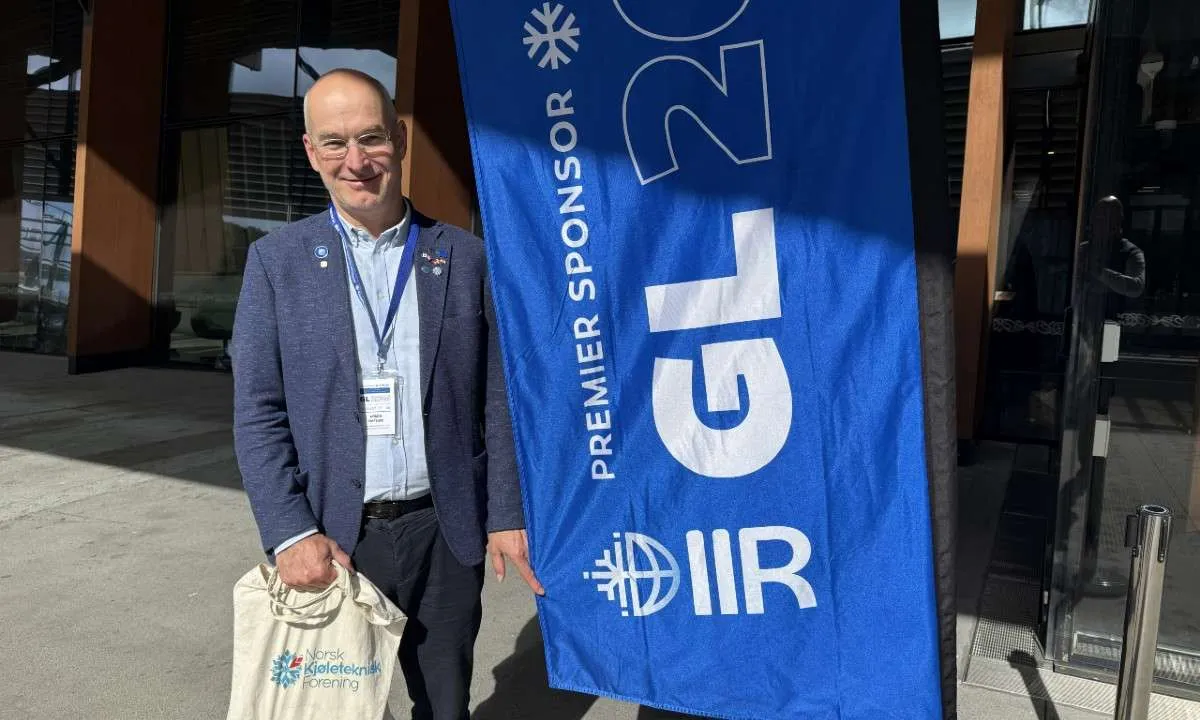
“If we’ve learned anything from this PFAS story, it’s the power and importance of reaching out to the public and helping them understand what this stuff is, why it’s of concern, and to make sure, if games start to be played with definitions and detection modes, that the public understands why that’s important,” Bilott said in a keynote address on March 3 at the IIAR 2025 Natural Refrigeration Conference & Heavy Equipment Expo in Phoenix, Arizona.
The keynote was Bilott’s second address to the natural refrigeration industry in the past year. Last June, he gave the keynote at the ATMOsphere America conference in Washington, D.C., organized by NaturalRefrigerants.com publisher ATMOsphere. As he did last year, at the IIAR Conference Bilott told the story of his involvement in the PFAS issue – and provided lessons that could be applied to refrigerants.
Known as “forever chemicals” for their persistence in nature, PFAS encompass more than 14,000 synthetic fluorinated chemicals that have been used in a variety of applications, such as non-stick cookware and packaging, stain-resistant clothing and carpets, and firefighting foam. Bilott’s legal work made it possible for scientists, regulators and the public to learn about the carcinogenic and other health impacts of two prevalent PFAS called PFOA (perfluorooctanoic acid) and PFOS (perfluorooctanesulfonic acid).
Moreover, he determined that DuPont and 3M, the manufacturers of the chemicals, did not disclose their internal findings that these substances caused harm to laboratory animals and to their own employees, even as these companies publicly said the PFAS were harmless. But the legal process took over 15 years, including a seven-year scientific inquiry into the effects of PFOA and PFOS on human health, followed by a flood of publicity. Bilott’s story became the basis for the 2019 film Dark Waters and the 2018 documentary The Devil We Know.
“Look how long it took to get the information down to the public about the fact these chemicals even exist, about how hazardous they are, and to get to the point of being able to actually regulate them,” said Bilott.
Whack-a-mole
While his work has focused on PFAS that contain eight carbon atoms, he pointed out that shorter chain PFAS have also proved to be problematic. F-gas refrigerants have two or three carbons while a prevalent atmospheric by-product of some f-gases, trifluoracetic acid (TFA) has two carbons. (There are other sources of TFA, such as the breakdown of pesticides and pharmaceuticals, and industrial waste.) These ultrashort-chain substances are considered to be PFAS by the scientific community, though the U.S. Environmental Protection Agency (EPA) has excluded many f-gases and TFA from its definition of PFAS.
Bilott pointed out that TFA has been found in water supplies all over Europe, and it’s being found “in the rain falling all over the planet.” A number of studies have detected TFA in human blood serum. “People don’t want these things in their bodies, in their blood,” he said.
The EU is in the process of deciding upon regulations of PFAS as a class of chemicals that could include f-gases and TFA. Bilott noted that efforts to regulate PFAS as a class are being challenged by lobbyists that want to carve out certain PFAS from the definition, as the U.S. EPA has done. “All across the planet, you are seeing legislators are being approached about changing the definition. Or we talk about PFAS only if it gets detected above a certain level, and if it’s below that, it’s not there.”
Added Bilott: “Regulators and scientists start realizing, ‘Oh, we’re dealing with a whack-a-mole game.” This is why regulators and scientists are starting to say PFAS needs to be addressed “in a more comprehensive, class-wide basis, like the way we dealt with dioxins and PCBs.”
Another lobbying critique is that regulating PFAS as a class will “destroy the economy,” though there are typically alternatives and in the case of refrigerants natural alternatives are frequently available.
A further time-worn gambit, noted Bilott, is to say there’s no data that a certain PFAS causes any harm, though that may not turn out to be true. The chemical industry has been making that claim about TFA, citing their own studies and a United Nation Environment Programme (UNEP) report published in 2023 by its Environmental Effects Assessment Panel (EEAP). Even those reports acknowledge uncertainties in the deposition of TFA and UNEP recommends continued monitoring and assessment.
“What we’re seeing is history repeating itself, [with] the same stories we heard in the early 2000s that the chemical doesn’t cause any harm,” Bilott said. “We’re seeing that same thing with these new short-chain PFAS as well. We’re even seeing arguments made that it’s naturally occurring, but it isn’t.”
“If we’ve learned anything from this PFAS story, it’s the power and importance of reaching out to the public and helping them understand what this stuff is.”
Robert Bilott, Environmental Attorney, Taft Stettinius & Hollister
Germany’s environmental authorities have suggested toxic effects from TFA. For example, the German Federal Office for Chemicals (Bundesstelle für Chemikalien or BfC) last year submitted to the European Chemical Agency (ECHA), a proposal linking reproductive toxicity to TFA and its inorganic salts.
Last month, the Belgian village of Villers-le-Gambon announced that it was temporarily closing a spring that provides mineral water due to a high level of TFA – one of the first governmental actions aimed at TFA.
In addition, a recent European study makes the case that TFA meets the criteria of a “planetary boundary threat” because of increasing planetary-scale exposure, where “potential irreversible disruptive impacts on vital earth system processes could occur.”
Massive litigation
Bilott described how producers and users of long-chain PFAS are facing growing legal challenges. Last year, litigation to cover the cost of PFAS remediation by U.S. drinking water systems – following stringent new U.S. EPA regulations – resulted in landmark settlements from 3M, DuPont, Tyco and BASF totaling more than $14 billion. Bilott’s firm, Cincinnati, Ohio-based Taft Stettinius & Hollister, is continuing to represent states and individual PFAS injury claims.
Overall, there’s “massive litigation” worldwide against companies that are using these materials. “There are groups sampling the water coming out of factories,” said Bilott. “If they’re finding any of these organic fluorinated materials, lawsuits are being filed. Or they’re going out and sampling products and finding these chemicals and bringing lawsuits, saying. ‘You didn’t disclose this. You said it was PFAS-free, but it isn’t.’”