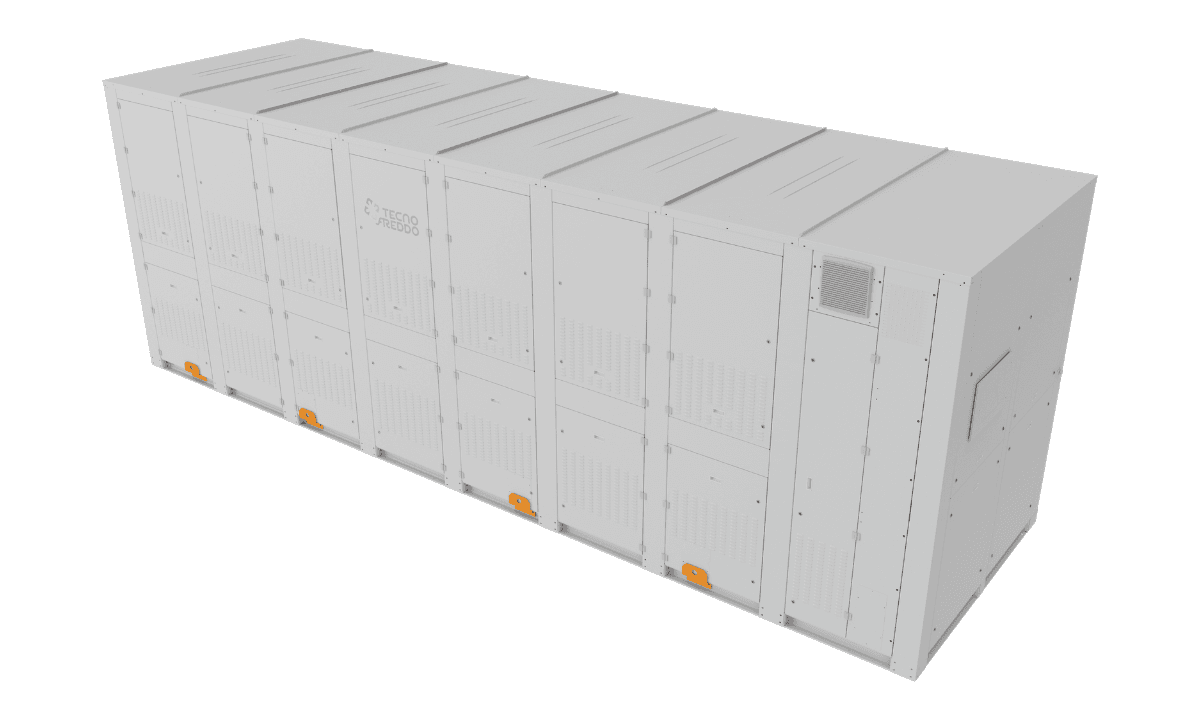
A 2MW (569TR)-capacity ammonia (R717) refrigeration system has helped Chilean fish producer Marine Farm cut its annual energy consumption by 360MWh and significantly reduce its operating costs after replacing its older R22-based equipment.
Installed at the company’s salmon processing, cooling and storage facility in Quellón, Chile, the system is delivering annual savings of around US$70,000 (€63,665) in maintenance and monitoring costs. It has also eliminated the use of more than one metric ton of R22 – an HCFC refrigerant with a global warming potential (GWP) of 1,810 – and optimized facility layout for improved space and operational efficiency.
Details of the installation were shared by Eduardo Osses, Electronic Technician and Industrial Engineer at Marine Farm, during the end-user panel discussion at the ATMOsphere (ATMO) LATAM Summit 2025. The event was held February 19‒20 in Mexico City and was organized by ATMOsphere, publisher of NaturalRefrigerants.com.
The project was developed in collaboration with the United Nations Industrial Development Organization (UNIDO), local contractor Sofrisur and Chile’s Ministry of Environment and National Ozone Unit. It forms part of Marine Farm’s broader strategy to eliminate synthetic refrigerants entirely.
“As a result of this transition, Marine Farm managed to mitigate the emission of [1.23 million metric tons] of CO2 equivalent, a significant step towards reducing its carbon footprint,” explained Patricio Albornoz, Head of Project and Services at Sofrisur.
Setting a benchmark
Designed as a model for sustainable refrigeration in the seafood supply chain, the system aims to demonstrate that natural refrigerants can be both effective and commercially viable in demanding industrial environments.
“This new system supports food safety processes by maintaining cold chains and becomes a reference for the industry by showing that it is possible to have production processes with clean and efficient technologies,” explained Claudia Paratori, Chile’s National Ozone Officer, in a statement about the project.
Paratori emphasized that the adoption of natural refrigerants across Chile’s economic sectors is accelerating in line with the country’s commitments under the Montreal Protocol.
“This new system supports food safety processes by maintaining cold chains and becomes a reference for the industry by showing that it is possible to have production processes with clean and efficient technologies.”
Claudia Paratori, National Ozone Officer of Chile
Safety first
The Quellón processing plant, which opened in 2006, can freeze up to 160 short tons (145,150kg) of fish per day and offers cold storage capacity of 500 short tons (453,592kg).
Before its 2023 upgrade, the facility faced persistent refrigerant leaks due to exposure to the region’s highly corrosive sea air. To reduce the escape of high-GWP R22, the company had previously invested heavily in leak detection and maintenance.
Recognizing ammonia’s toxicity, Marine Farm prioritized system design and implemented a comprehensive safety system that includes ammonia sensors, automated valves, forced ventilation and system monitoring. Additional measures include rigorous employee training and adherence to best operational practices.
“To date, we haven’t had any events or problems,” said Osses.
Transitioning to natural refrigerants
Marine Farm operates three processing plants, all of which now use environmentally friendly refrigerants. The company’s primary facility in Quellón, where fish are slaughtered, opened in 2011 and was retrofitted in 2020 to replace R22 with R717. According to Osses, the transition delivered “immediate energy and operational efficiency” improvements and led to the adoption of ammonia at its other facilities.
In 2022, Marine Farm opened a second processing facility – located in Calbuco – which has the capacity to freeze up to 2,000 short tons (1.8 million kg) of fish per day and store 300 short tons (272,155kg) of fish. This site is also fully powered by an ammonia-based refrigeration system.