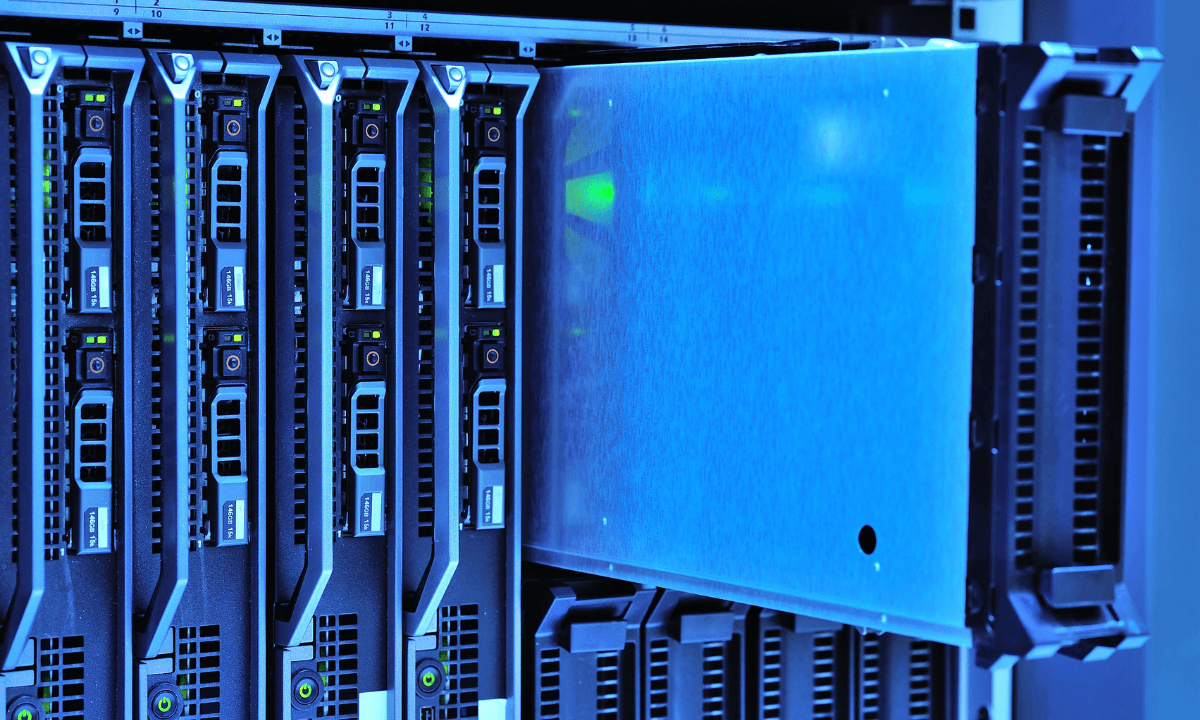
A Zudek ammonia (R717) chiller has cut the energy consumption for cooling at a data center in the German state of Baden–Württemberg by 43% compared to the original R407C-based chiller, according to Jakob Terčon, Business Development Manager.
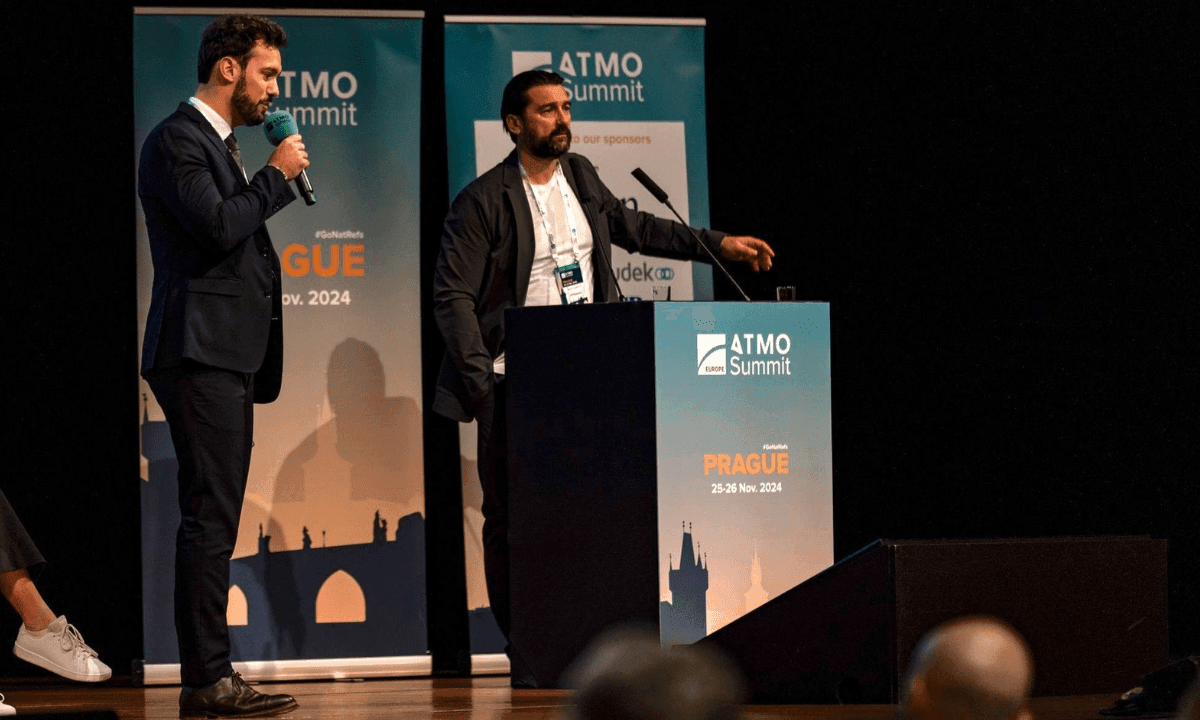
Terčon presented the installation from the Italy-based manufacturer of ammonia chillers and heat pumps at the ATMOsphere (ATMO) Europe Summit 2024 in Prague, Czech Republic. The event was held November 25‒26 and organized by ATMOsphere, publisher of NaturalRefrigerants.com.
“If we adopt natural, efficient cooling systems, we can reduce the power generation required for data center cooling,” said Ivan Zudek, a Partner at Zudek, who presented alongside Terčon.
Data centers require an immense amount of power for cooling, with the International Energy Agency (IEA) estimating that the world’s more than 8,000 data centers consume 460TWh of electricity annually as of 2022, with cooling accounting for 40% of power usage. The IEA forecasts data center electrical consumption to reach 1,000TWh annually by 2026.
Case study: Working in partnership with German refrigeration contractor Rütgers Kälte Wärme, Zudek replaced an existing 790kW (224TR) R407C chiller with an equivalent–sized air-cooled low-charge ammonia unit from its Airmatik line. The 43% increase in energy efficiency led to an annual savings of €185,752 ($195,128).
- The HFC unit contained a charge of 150kg of R407C, which has a GWP of 1,774. The new unit has an ammonia charge of 53kg, which has a GWP of 0.
- With the HFC chiller, the data center could only capitalize on free cooling when ambient temperatures dropped below −4°C (24.8°F), which averaged just 195 hours annually. The ammonia unit, with free cooling available in temperatures below 10°C (50°F), bumps that up to an average of 2,131 hours annually.
- The efficiency of the ammonia unit slashed carbon emissions from 528 to 299kg (1,164 to 659lbs) per year based on a German energy mix producing 370g (13.05oz) of CO2e emissions per kWh of electricity. The carbon reduction calculation did not take into account emissions due to refrigerant leaks.
Market availability: Zudek offers its air- and water-cooled ammonia chillers globally, with the modular units coming pre-charged with oil and refrigerant.
- “We’ve shipped our pre-charged ammonia units all over Europe without a problem,” Terčon said.
- The unit fits inside an open-top container for marine transport, he noted, adding the company has sent its industrial ammonia refrigeration products to places like New Zealand, the Philippines and South Africa.
NatRefs data centers: The revised EU Energy Efficiency Directive, published in 2023, requires data centers with an installed IT power demand of 500kW (142TR) or greater to report key sustainability metrics and performance indicators annually, including energy consumption, temperature set points, waste heat utilization and use of renewable energy. This focus on data center energy use could pave the way for a greater uptake of more efficient natural refrigerant-based cooling in the sector.
- A data center in Valencia, Spain, owned by international information technology provider KIO Networks, operates with CO2 (R744)-based cooling and air-conditioning systems produced by Danish OEM Advansor, providing 1.3MW (369.6TR) of cooling capacity for the servers and 150kW (42.7TR) for comfort cooling.
- Within two years, ammonia-based cooling systems for data centers could comprise up to 10% of German manufacturer GEA’s business, Michael Jacobi, Head of Sales and Support Compression for GEA Refrigeration Germany, told NaturalRefrigerants.com at Chillventa 2024.
Quotable: “The ROI [for the data center] was below three years,” said Terčon. “At this point, choosing a natural refrigerant solution is a political choice, not a technical one.”