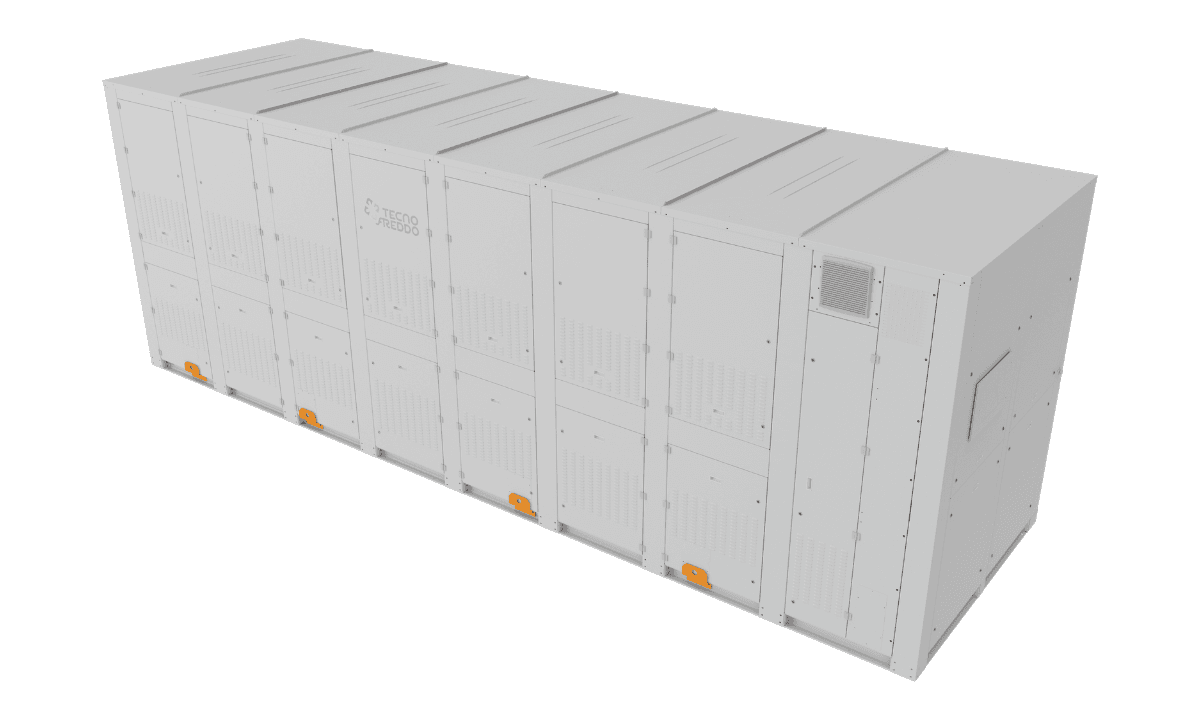
Hillphoenix, the leading manufacturer of transcritical CO2 (R744) systems in North America, has announced the launch of its first industrial rack platform for a transcritical CO2 system, the AdvansorUltra.
The AdvansorUltra builds on Hillphoenix’s experience in developing transcritical CO2 rack platforms for commercial refrigeration, such as AdvansorFlex Max, AdvansorFlex and AdvansorFlex Mini.
Hillphoenix began selling the AdvansorUltra platform in 2025; however, the company officially launched it at the RETA National Conference, held October 20–24 in Spokane, Washington, said Ousama Sabra, Senior Product Manager – Systems for Hillphoenix. The company previously marketed industrial-scale transcritical CO2 systems on an “engineered-to-order” basis, he added.
Hillphoenix’s participation in the industrial refrigeration segment started about 30 years ago, targeting cold-storage, food processing and pharmaceutical-storage end users. In recent years Hillphoenix’s industrial segment has seen a dramatic shift to primarily CO2 refrigeration and very limited HFC systems, Sabra said.
The launch of the AdvansorUltra platform is a reflection of the growing adoption of transcritical CO2 systems in the industrial market and the uptick of Hillphoenix’s industrial CO2 business, said Sabra, adding, “As our volumes increase, a platform solution enables us to provide a more consistent product with improved lead times to meet the market demand we see ahead of us.”
Some components are not readily available in the U.S., but providing a platform solution to the industrial system enables Hillphoenix to “forecast requirements and eliminate the hurdle of prolonged lead times,” he said.
Up to 450TR per rack
The AdvansorUltra offers capacities up to 450TR (1,583kW) per rack. Given that cold-storage loads may go as high as 3,000TR in large facilities, “there is a very high possibility of seeing multiple racks installed at a single job site,” said Sabra, Temperatures typically range from −25 to 20°F (−32 to −7°C), and as low as −54°F (−48°C) for applications like spiral freezing.
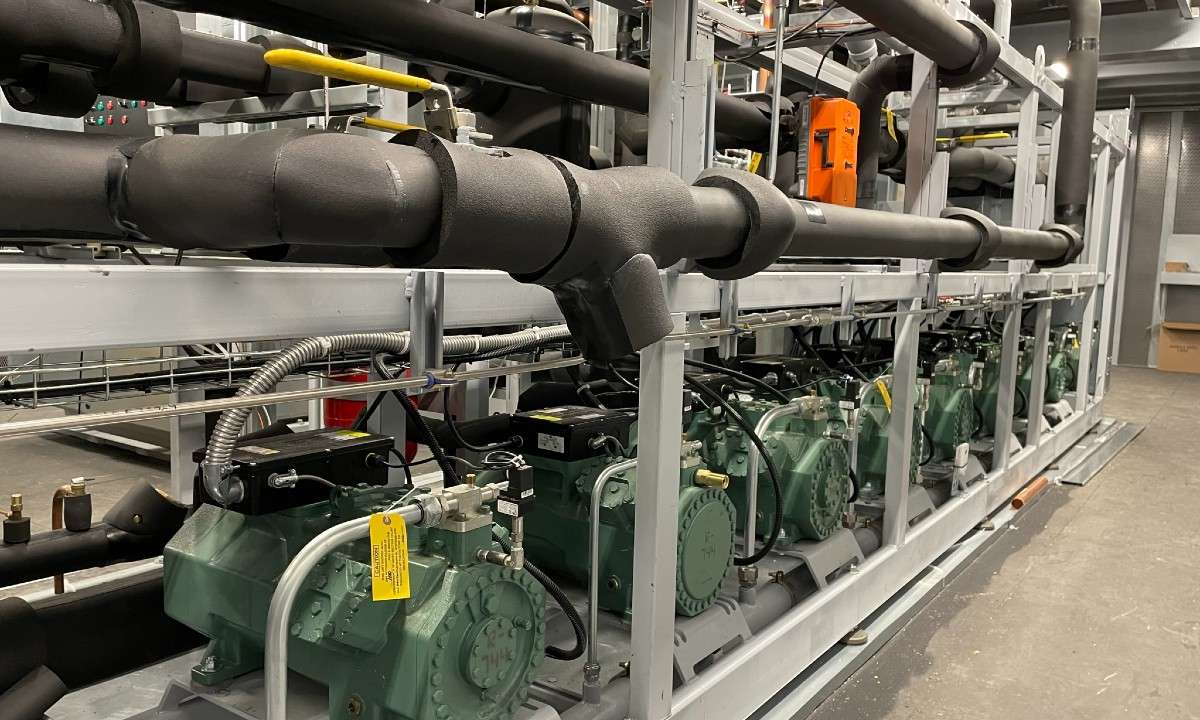
Optional features include Bitzer or Dorin compressors; dry air gas cooler or adiabatic gas cooler; copper or stainless steel pipes; 90bar (1,305psi) standstill rating; parallel compression; air, water or hydronic heat reclaim; and Hillphoenix’s ChargeSecure charge-preservation system.
The AdvansorUltra offers technicians more space to provide maintenance and access parts, with no shutdown needed for most service events . “Serviceability is a big topic in the industrial business,” said Sabra.
CO2 vs. ammonia
Capacity and temperature precision are also key factors in industrial refrigeration as well as educating contractors on transcritical CO2, said Sabra.
“The industrial business has been historically dominated by ammonia (R717), so now we’re trying to bridge that knowledge to CO2,” he said, adding that “the learning curve will not be steep” for ammonia technicians. Hillphoenix recently finished upgrading its training facility at its Conyers, Georgia, headquarters.
Sabra acknowledged that while ammonia may still be the preferred refrigerant in very large industrial facilities, “CO2 continues to gain momentum, and a facility with as much as 2,000TR [7,034kW] could be either CO2 or ammonia”, he said.
For small-to-medium-sized operators, the total cost of ownership for AdvansorUltra “is more advantageous than ammonia and it gets more advantageous as the size of the facility gets smaller.” Ammonia systems’ costs are affected by safety regulations, such as the requirement for 24-hour oversight, whereas CO2 as a class A1 refrigerant has no such requirements.
The rise of cold-storage warehouses in urban areas, such as those providing grocery “click-and-collect” services, supports the use of CO2 refrigeration over ammonia. Another factor, noted Sabra, is that ammonia systems, which use fewer compressors than CO2 systems, offer less redundancy. “CO2 is more forgiving.”
“CO2 continues to gain momentum, and a facility with as much as 2,000TR [7,034kW] could be either CO2 or ammonia.”
Ousama Sabra, Hillphoenix