The Commonwealth Scientific and Industrial Research Organisation (CSIRO), Australia’s national science and technology agency, has opened a new edge data center designed to assist in the development of robots and related sensors that uses two air-cooled 100kW (28.4TR) CO2 (R744) chillers for cooling.
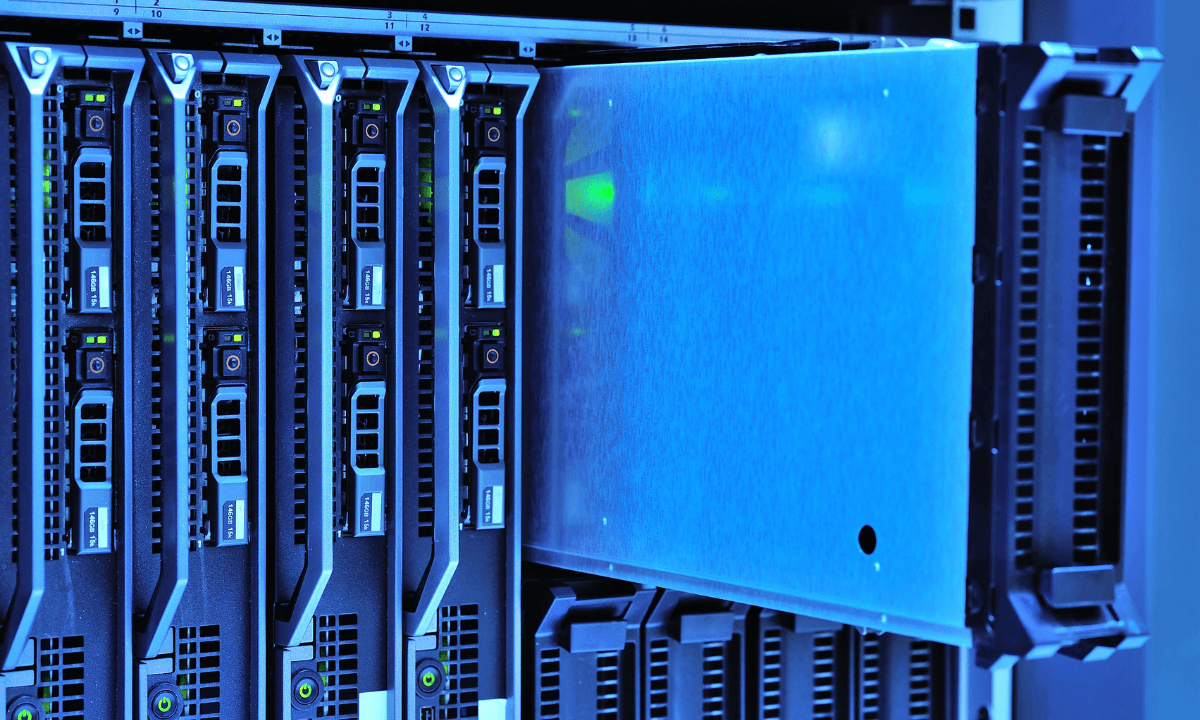
The CSIRO edge data center, dubbed Vetra, is located at the Queensland Center for Advanced Technologies (QCAT) in Pullenvale. Edge data centers are designed to process data closer to where it’s generated, or “on the edge.” Vetra is equipped with 48 high-performance graphics processing units and was designed by Oper8 Global, an Australian provider of data center solutions.
“CO2 was considered alongside other gases being deployed in chillers with the right capacity,” Mike Andrea, CTO of Oper8 Global, told NaturalRefrigerants.com. “The focus was on efficiency. We were also looking at the choice of controllers and monitoring options, and where possible, a single supplier of the chillers and in-row CRACs. CO2, while having higher pressures than other gases, presented lower flame risk than other gas options.”
The system: Vetra has a close-coupled cooling system that places the computer room air-handling (CRAH) units in the server row. The servers and CRAHs are located inside an enclosure, which ensures the servers don’t need to contend with other ambient heat sources while also eliminating concerns around the fresh air supply, as personnel don’t work inside the enclosure.
- The CRAHs are supplied with liquid in a closed-loop setup, with a supply temperature of 15°C (59°F) and return temperature of 20°C+ (68°F+), according to Oper8. Vetra has three CRAH units, each with a cooling capacity of 53kW (15TR).
- The cooling system uses a closed-loop design that, coupled with the air-cooled chillers, drastically reduces its water consumption.
- “The water usage effectiveness for CSIRO Vetra is nominally less than 0.0006 L/kWh when operating at 100% load,” said Angus Macoustra, CSIRO’s CTO. “For context, the Green Grid considers anything below 1.0 L/kWh excellent and most data centers using evaporative cooling sit at 1.5–4.0 L/kWh.”
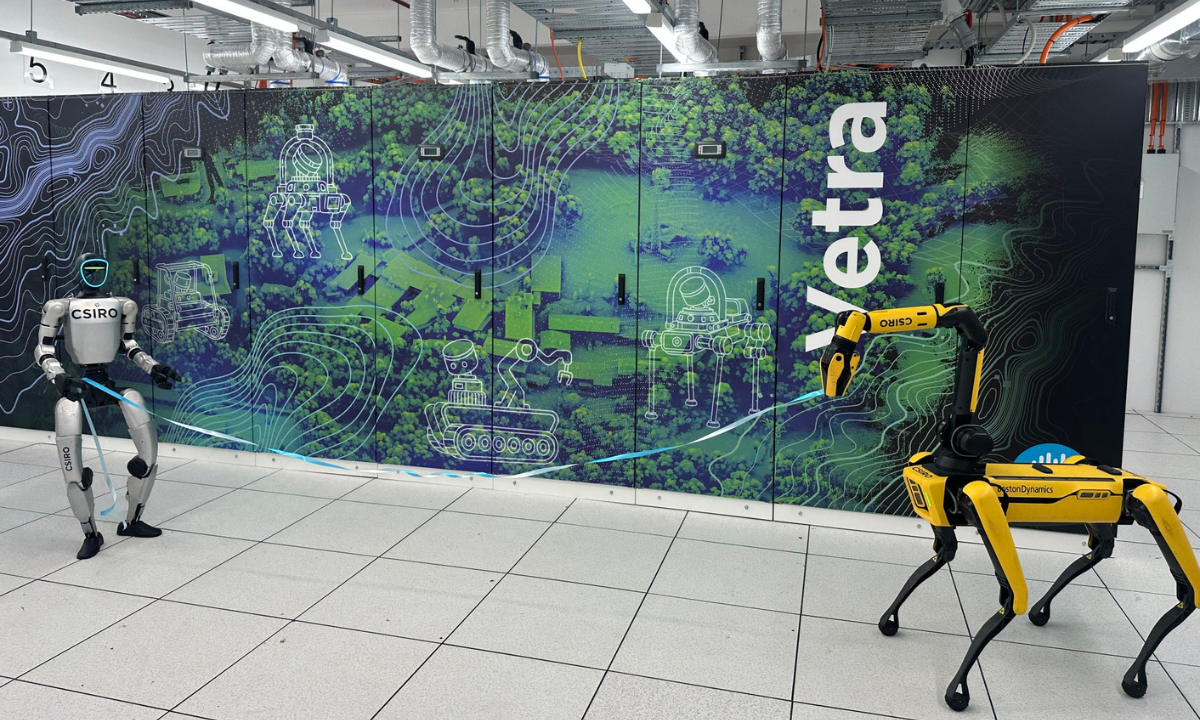
Efficiency information: The facility was designed to run advanced AI workloads more energy efficiently.
- The design of Vetra is expected to save around 225 tonnes of CO2 emissions per year in comparison to “a more conventional data center cooling approach of similar scale,” CSIRO said.
- The chillers are also capable of free cooling. Pullenvale has average summer temperatures of around 29–30°C (84–86°F), with highs exceeding 35°C (95°F). Average daytime temperatures in the fall and winter range from about 21–24°C (70–75°F) and winter overnight lows drop to around 10°C (50°F).
- The Pullenvale site is equipped with solar panels, which supply power to the QCAT site and Vetra.
CO2 in small data centers: While natural refrigerants have yet to gain traction in data center cooling, CO2 cooling systems have already been installed in edge and other smaller data centers.
- Smaller facilities, such as edge data centers, are especially suitable for CO2, according to John Miranda, Director of CO2 Strategy for Industrial Refrigeration at M&M Carnot. M&M Carnot has supplied CO2 CRAC (computer room air conditioner) units to many data centers operated by telecom companies in Canada.
- These units provide free cooling without the use of pumps by leveraging the unique properties of CO2. Switching to CO2–based free cooling can slash cooling-related energy use in data centers by up to 70%, noted Miranda.
Natural refrigerants in data centers: In addition to M&M Carnot, a handful of other companies have installed natural refrigerant-based cooling systems in data centers.
- In April 2026, Advansor commissioned a 1.3 MW (369TR) transcritical CO2-based cooling system for a data center in Valencia, Spain, consisting of two industrial SteelXL transcritical CO2 racks and three MiniBoosters. The system also has 150kW (42.6TR) of cooling capacity for air-conditioning.
- Secon and Fenagy have installed hydrocarbon chillers in data centers in Germany and Finland, respectively.
- In 2024, Italian refrigeration systems manufacturer Zudek installed an ammonia (R717) chiller at a German data center.
Quotable: “High-performance AI systems generate a lot of heat in dense, enclosed spaces,” said Macoustra in a press statement. “Vetra shows how advanced technology can be delivered in a way that significantly reduces water use and emissions.”