Italian component manufacturer Refrigera has announced it is stepping up efforts to enhance the stability and reliability of its components in response to market demand for higher safety standards in HVAC&R applications.
With the industry transitioning to high-pressure refrigerants like CO2 (R744) and flammable refrigerants like propane (R290), Refrigera is adapting its products to meet these new requirements.
“We are currently improving the performance of our products with a focus on safety,” Roberto Sabatino, Chief Operating Officer at Refrigera, told NaturalRefrigerants.com in a recent interview at Chillventa 2024, held October October 8–10 in Nuremberg, Germany. “This is what customers are requesting.”
Refrigera’s efforts include upgrading its welding processes to increase pressure resistance and increasing the thickness of its pipes.
“Where we previously had 3mm [³⁄₃₂in]-thick pipes, we have now moved 4mm [⅛in],” Sabatino explained. “Even though we are already compliant [with regulations], we’d prefer our pipes to be stronger.”
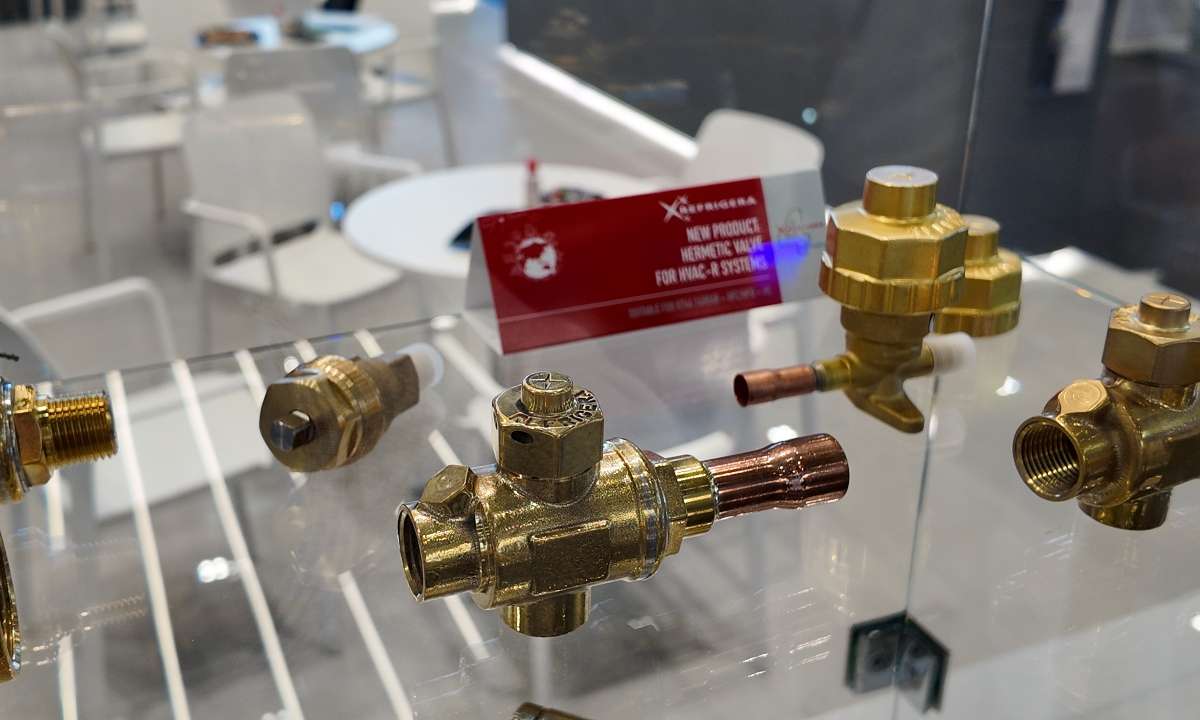
In the coming months, Refrigera plans to launch a new valve with reinforced piping. Although designed for lower operating pressures, the 54mm (2 ⅛in) model will withstand pressures up to 100bar (1,450psi), making it ideal for CO2 applications, he added.
“We are currently improving the performance of our products with a focus on safety. This is what customers are requesting.”
Roberto Sabatino, COO at Refrigera
Earlier this year, the company introduced a 140bar (2,030psi) hermetic service valve specifically for CO2 systems, which has been positively received in the market, highlighting the industry’s interest in robust solutions for high-pressure refrigerants.
Additionally, Refrigera is working to maintain consistent rotational torque throughout its components’ life cycles, which is especially critical for motorized valves that rely on stable torque for actuator performance.
Growing demand for natural refrigerants
According to Sabatino, Refrigera is observing increasing interest in CO₂ applications across various sectors in Europe, including marine, transport, commercial refrigeration and industrial refrigeration.
“The largest share of our sales is commercial refrigeration, but we have noticed a growing interest from end users in the transport sector, particularly railways and buses,” he noted.
Alongside CO₂, Refrigera is also experiencing heightened demand for propane as a replacement for HFCs. To meet this need, the company is expanding its hydrocarbon-based product portfolio, he added.