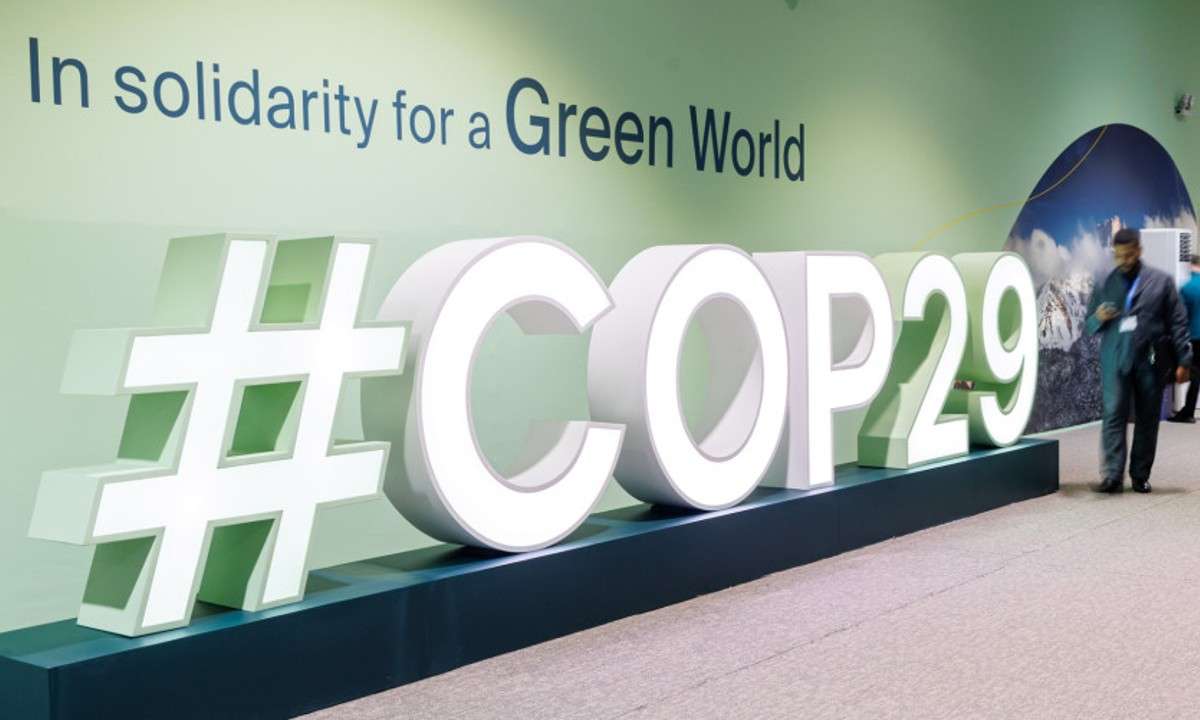
The Environmental Investigation Agency (EIA), a global NGO focusing on climate and other environmental issues, reports in a blog that high-GWP “climate-wreaking” refrigerants are being used in comfort cooling systems at the 29th annual UN Climate Change Conference (COP29) in Baku, Azerbaijan, the third year in a row that EIA has detected these refrigerants at a COP meeting.
The blog was authored by Tom Nickson and Beth Porter, EIA Climate Campaigners at EIA’s London and Washington, D.C., offices, respectively.
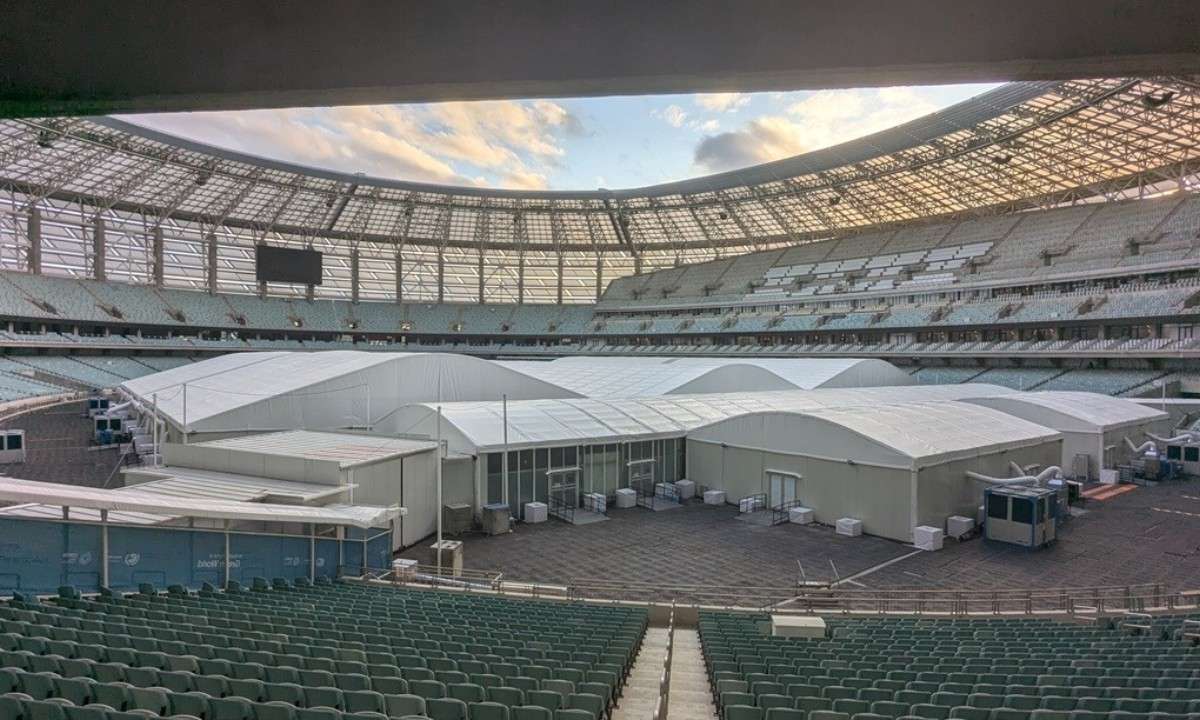
Many temporary air-conditioning systems at COP29, being held November 11–22, contain R410A, a refrigerant blend with a 100-year GWP of 2,256. EIA also found air-conditioning containing HCFC-22, which is an ozone-depleting substance as well as a potent greenhouse gas (GWP 1,960).
In total, based on the equipment EIA was able to access, the NGO estimates that the COP29 venue has a minimum 975kg (2.150lbs) of R410A on site, equivalent to 2,199,149kg (4,848,294lbs) of CO2e in terms of its potential climate impact when it leaks. Although EIA only observed one unit containing HCFC-22 in publicly accessible areas, this contained a quantity of refrigerant equivalent to 3,332kg (7,346lbs) of CO2e.
The other major refrigerant EIA found in use at COP29 was HFC-32 (GWP 675). EIA estimates that 239,220kg (527,390lbs) of CO2e for HFC-32 are in use onsite.
“The consistent failure of COP hosts and the United Nations Framework Convention on Climate Change (UNFCCC) Secretariat to embed sustainable cooling into their procurement and logistics processes guarantees that, every single year, the annual climate change conference is contributing further to the ongoing climate emergency.”
The Environmentral Investigation Agency
Together, the emission of these refrigerant gases is equivalent in terms of potential climate impact to burning roughly 1,220 metric tons of coal. And this, EIA blog post said, is “a conservative estimate” that excludes equipment operating in areas inaccessible to the public.
“Since EIA began tracking the refrigerant gases being used at COP venues in 2022, the record has not been good,” the campaigners wrote. “The consistent failure of COP hosts and the United Nations Framework Convention on Climate Change (UNFCCC) Secretariat to embed sustainable cooling into their procurement and logistics processes guarantees that, every single year, the annual climate change conference is contributing further to the ongoing climate emergency.”
An alternative to high-GWP f-gases in comfort cooling systems could be propane (R290). Over the last year, a number of major HVAC&R manufacturers have launched R290-based air-conditioning units in the European market.
The UNFCCC did not immediately respond to a request for comment.
Disappointing the Pledge
EIA made a similar discovery about refrigerants at last year’s COP28 in Dubai, despite the launch there of the Global Cooling Pledge, a joint initiative between the United Arab Emirates as host of COP28 and the Cool Coalition to bring attention to the climate impact of refrigerant gases. In total 71 countries have signed the pledge, which aims to reduce cooling-related emissions by 68% by 2050.
“On the basis of the Global Cooling Pledge, EIA hoped that future COP hosts and the UNFCCC Secretariat would recognize the vital need to step up their game and ensure a genuinely sustainable approach to cooling at COP venues,” wrote the EIA campaigners.
The host country of Azerbaijan has not signed the Global Cooling Pledge, nor has it yet ratified the Kigali Amendment, the global agreement to phase down the use of HFCs under the Montreal Protocol. “EIA urges Azerbaijan to both join the Global Cooling Pledge and to ratify the Kigali Amendment as soon as possible, joining the 163 countries that have already done so,” the campaigners wrote.
EIA also urges Azerbaijan to report its 2023 production and consumption f-gas data as required under the Montreal Protocol, noting that until it does so it will remain in non-compliance with the treaty.
“More broadly, EIA urges the UNFCCC Secretariat to ensure that all future COP hosts develop transparent procurement plans outlining the steps taken to ensure climate-friendly cooling and to report on related emissions from the meeting,” said the blog. “As the most prominent climate change forum in the world, the COP process must demonstrate best practices for sustainability in all areas, including cooling.”