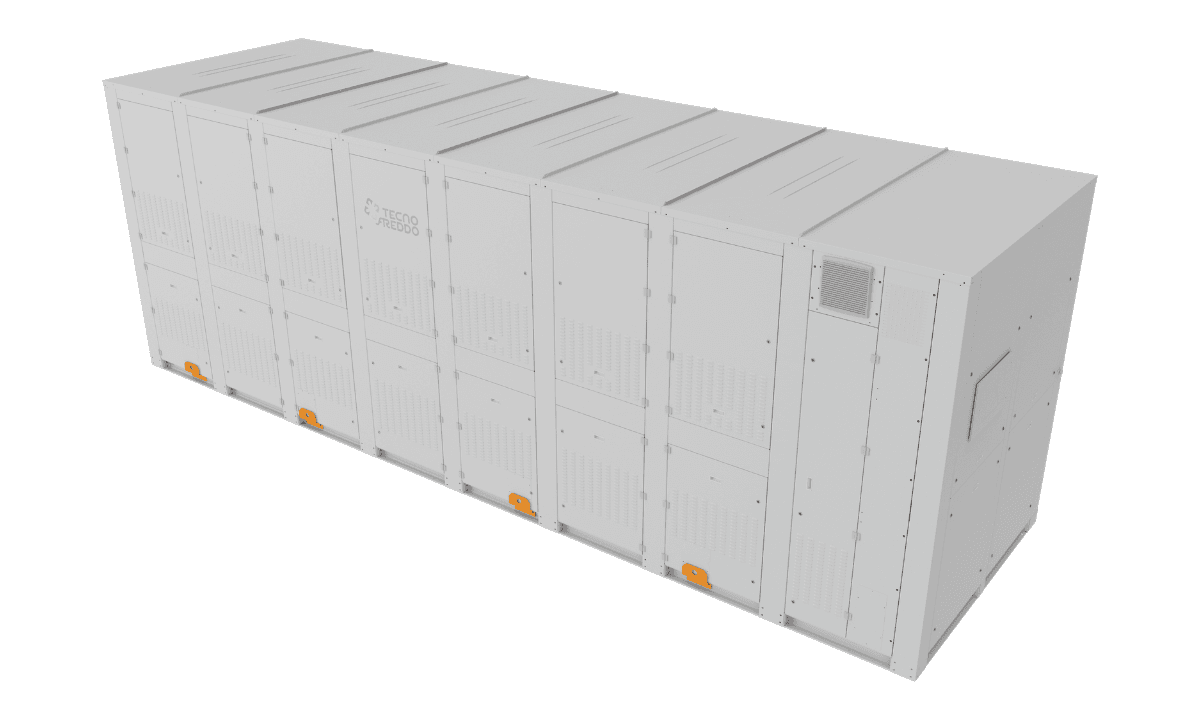
Integrating Energy Recovery’s PX G1300 pressure exchanger into a transcritical CO2 (R744) refrigeration system at a Hungarian hypermarket has increased system efficiency by up to 15%, according to a study by Italian OEM Epta Group.
The demonstration study, conducted under the EU-funded ENOUGH Project, also highlighted the technology’s ability to support reliable system operation in ambient conditions up to 45°C (113°F).
“The solution proved to be successful, both from the correct operation and energy consumption point of view,” said Stefano Trabucchi, System Engineering Group Manager at Epta. “The COP of the enhanced PX system, when compared to standard transcritical architecture, showed an average improvement ranging from 8% to 15.1%.”
Trabucchi presented the study’s findings at the International Institute for Refrigeration (IIR)’s inaugural International Conference on Refrigeration Adapting to Rising Temperatures (Adaptation 2025), held August 10–13 in Manchester, England, and hosted by the Institute of Refrigeration UK (IoR).
Multiple installations of the PX G1300 worldwide have shown an increase in COP of up to 25% depending on ambient temperature and installation specifications.
The ENOUGH Project aims to decarbonize Europe’s food supply chain by testing innovative emissions-reduction technologies in real operating conditions. Within this framework, the Hungarian trial was carried out to build confidence in the pressure exchanger solution, evaluate its performance under both seasonal and daily load variations and collect operational data to support future commercial rollout. Additional demonstration projects include a CO2-based blast freezer, a CO2-based transport refrigeration unit and an ammonia (R717) high-temperature heat pump.
“The COP of the enhanced PX system, when compared to standard transcritical architecture, showed an average improvement ranging from 8% to 15.1%.”
Stefano Trabucchi, System Engineering Group Manager at Epta
System architecture
The demonstration project has taken place at a 10,000m2 (107,640ft2) hypermarket in Hungary, where the refrigeration system was designed to deliver 40kW (11.4TR) of low-temperature (LT) capacity at −33°C (−27.4°F) and 140kW (39.8TR) of medium-temperature (MT) capacity at −8°C (17.6°F). The remote system serves more than 130 refrigerated display cases – most of them closed cabinets – along with several cold rooms.
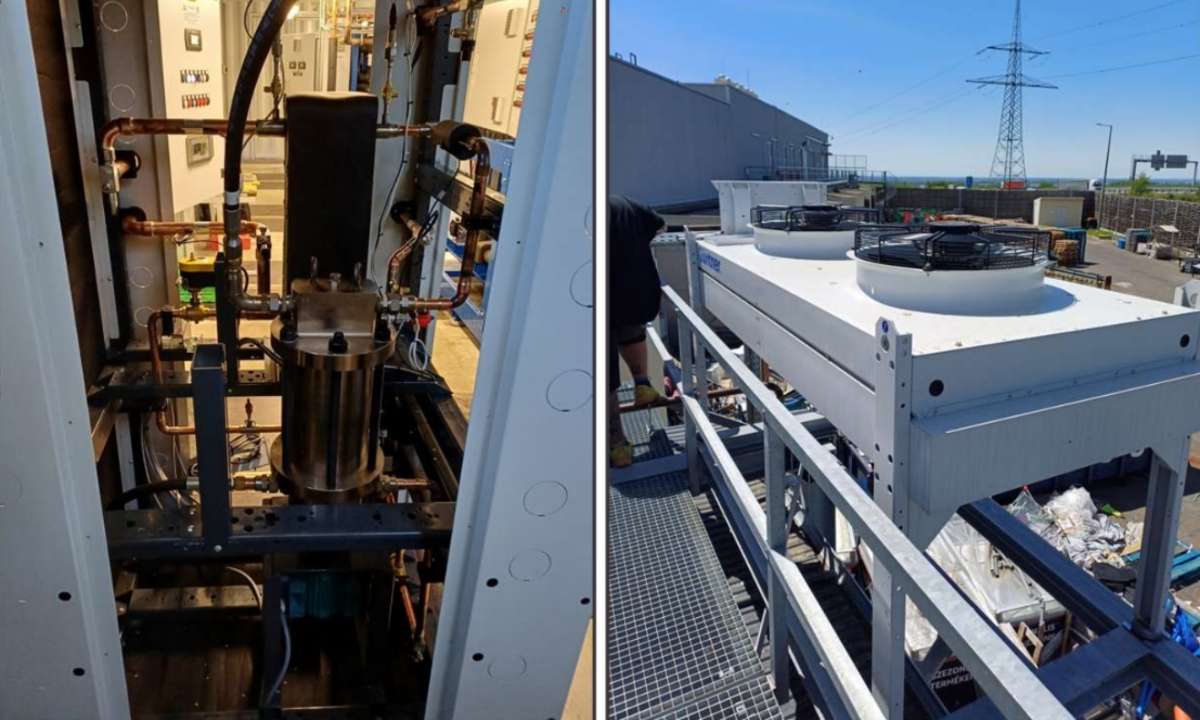
The refrigeration pack is equipped with three LT and five MT compressors from German manufacturer Bitzer, with the lead unit on each line fitted with a variable-speed drive. Heat rejection is managed by a V-shape gas cooler from Güntner, achieving a gas cooler outlet temperature of 42°C (107.6°F).
The pressure exchanger is installed on the system’s secondary gas cooler return line, connected via a three-way motorized valve that allows the device to be excluded from the system if necessary. The secondary gas cooler accounts for roughly 20% of the system’s demand, explained Trabucchi.
Control of the entire installation, including the pressure exchanger, is handled by standard Carel parametric controllers.
The system was commissioned in spring 2024 and evaluated over the summer and autumn months. To establish a fair baseline against a standard booster system, the pressure exchanger was only operated part of the time. During the hotter summer period, the maximum opening of the pressure exchanger’s expansion valve was limited to 30%, while in September and October the limit was raised to 40% to analyze the effect of different operating conditions on COP.
Load profile
Epta’s study found that the impact of the pressure exchanger on system efficiency can vary significantly, depending on system conditions, particularly evaporating temperature and the balance between MT and LT demand.
For example, a higher MT load improved average COP due to higher equivalent system evaporating temperatures.
“It is well known that this ratio varies on a daily basis,” noted Trabucchi. “It is driven by the different types of refrigerated display cabinets installed in the store, the amount of coldrooms compared to cabinets and the number of customers entering the store.”
The results also indicated that COP values may shift when different data filters are applied, highlighting the need for more detailed analysis of system design parameters. Future work will focus on optimizing control strategies to further boost performance, including gas cooler pressure regulation, variable subcooling setpoints and transient management, he added.