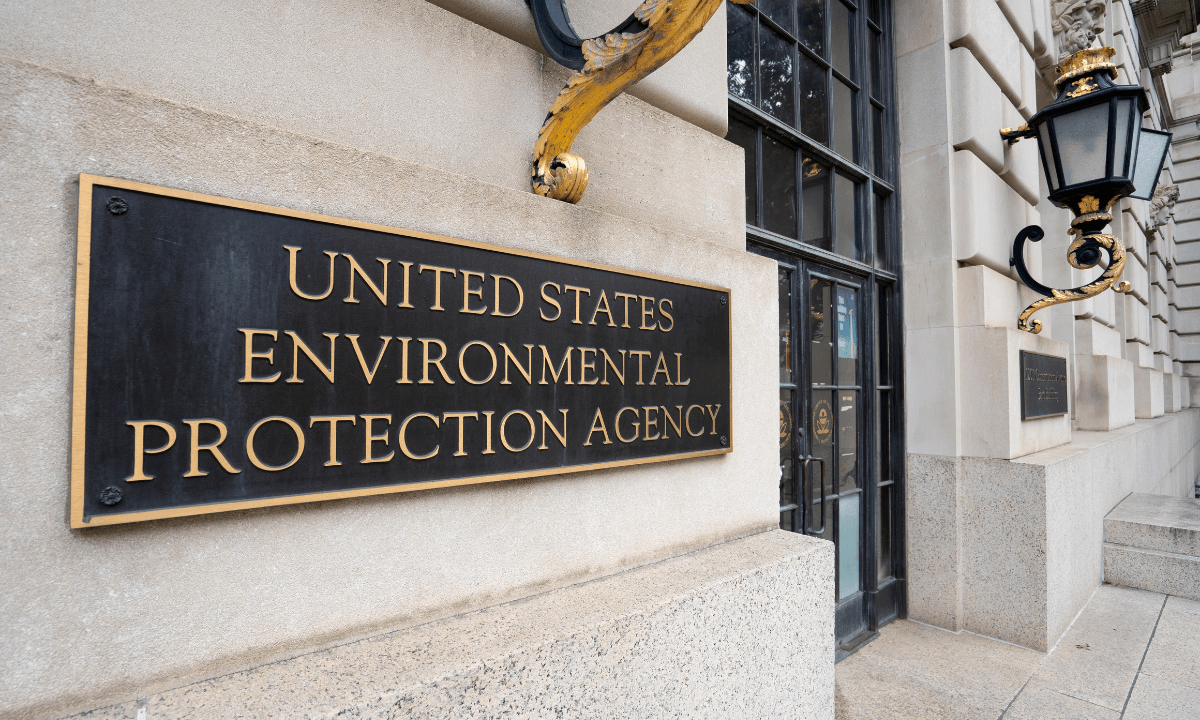
The U.S. Environmental Protection Agency (EPA) on May 21 announced a final rule revising its 2023 Technology Transitions Rule, extending compliance deadlines by several years for the use of refrigerants with a GWP of less than 150 or 300 in supermarket systems, remote condensing units and cold storage warehouses, among other changes.
The agency also proposed an exemption for road and intermodal container transport refrigeration units (TRUs) from leak repair requirements established under the 2024 Emissions Reduction and Reclamation (ER&R) rule.
The Technology Transitions and ER&R rules are two of the three pillars of the American Innovation and Manufacturing (AIM) Act, enacted in 2020 at the end of the first Trump administration with bipartisan and industry support. The third pillar, which covers the phasedown of HFC production and imports, remains unchanged; it requires a 40% reduction through 2028, followed by cuts of 70% and 85% in in 2029 and 2036, respectively.
During the announcement at the White House, EPA Administrator Lee Zeldin, alongside President Donald Trump, said the change in the Technology Transitions rule and the proposed change to the ER&R rule two together are estimated to save American families and businesses more than $2.4 billion, adding, “This will be felt directly by American families in lower grocery prices.”
However, other Trump administration policies over the past year, including tariffs and the Iran war, are widely considered to have caused prices of groceries and gasoline to spike. The delay in the Technology Transitions rule, part of the Trump administration’s sweeping rollback of climate-related regulations, is not expected to moderate price inflation.
“The affordability crisis is very real and deserves real solutions rather than thinly veiled environmental rollbacks that leave the United States stuck with outdated technologies of the past.”
David Doniger, Senior Strategist for Climate at the Natural Resources Defense Council
“The White House paints this as a way to address affordability; it is not,” said David Doniger, Senior Strategist for Climate at the Natural Resources Defense Council (NRDC). “Shoppers will not notice any cost savings from this. The affordability crisis is very real and deserves real solutions rather than thinly veiled environmental rollbacks that leave the United States stuck with outdated technologies of the past.”
These moves by the EPA, added Doniger, “will harm consumers and the climate and reduce American competitiveness in the global markets emerging for environmentally-safer refrigerants and technologies compliant with the Kigali Amendment to the Montreal Protocol.”
Avipsa Mahapatra, Climate Campaign Director at the Environmental Investigation Agency EIA US, called the EPA’s actions “a reckless step backward for climate action, public health and economic certainty. Amid dangerous heat waves, climate-fueled disasters and rising energy costs, the Administration is choosing to weaken one of the most effective climate measures available.”
Zeldin also said at the White House that the original Technology Transitions rule was a “rushed, frantic, reckless sprint by the Biden administration to phase out reliable equipment for grocery stores.” That view was challenged by Dan Howells, Green America’s Climate Campaigns Director, who pointed out that the rule was “carefully considered, supported by industry and pursuant to bipartisan legislation.”
Contrary to supply and demand
The Air-Conditioning, Heating, and Refrigeration Institute (AHRI) and the Alliance for Responsible Atmospheric Policy issued a joint statement criticizing supermarket chains that supported the changes to the Technology Transitions rule. The groups said the rule increases the risk of higher prices by increasing the demand for existing refrigerants while reducing their supply, impacting refrigerant costs for supermarkets, commercial buildings and residential dwellings.
“This rule works against basic supply and demand,” said Stephen Yurek, AHRI President and CEO. “By extending the compliance deadline, the EPA is maintaining and even increasing demand in the market for existing refrigerants while supply continues to fall under the AIM Act. So, instead of falling, refrigerant prices are likely to rise, resulting in higher service costs and higher costs for consumers.”
The groups also emphasized that the requirements did not apply to existing equipment. Supermarkets and other businesses could already keep using and servicing equipment they own. The requirements applied only to new equipment manufactured or imported after the transition dates.
“This was never a rule forcing stores to replace existing equipment,” Yurek said. “It was a rule for new equipment. The EPA has no analysis showing that delaying these dates will lower costs for consumers.”
“The EPA has no analysis showing that delaying these dates will lower costs for consumers.”
Stephen Yurek, AHRI President and CEO
AHRI and the Alliance said the final rule also harms U.S. manufacturers that invested to meet the existing dates. Over the past several years, manufacturers redesigned products, retooled factories, certified new equipment, expanded domestic production and trained workers to build and service next generation refrigerant equipment.
“American manufacturers did what Congress and the first Trump administration asked them to do,” said John Hurst, Executive Director of the Alliance. “They invested in new equipment, new refrigerants, new production lines and American workers. The Administration has now changed course in a way that weakens those investments.”
In an online hearing hosted by the EPA last October, a number of manufacturers, trade groups and NGOs expressed their opposition to some of the provisions in the agency’s proposed reconsideration of the Technology Transitions rule, particularly the delays in the launch of new GWP limits for refrigerants used in supermarket and cold-storage refrigeration. Notably, the delays are at odds with the availability of implementation of natural refrigerant-based systems such as transcritical CO2 by many food retailers, including Walmart, Target, Aldi, Kroger and Costco, However, FMI (the Food Industry Association) does support the delays, arguing that the grocery industry needed additional time to transition its cooling systems to new technologies.
Five- or six-year delays
Among the changes finalized by revised Technology Transitions rule are the following:
- New retail food – supermarket equipment can use refrigerants with a maximum GWP of 1,400 beginning January 1, 2027, replacing the previous GWP limits of 150 or 300 (which depend on charge size and equipment configuration). On January 1, 2032, the 150 or 300 GWP limits will take effect. In addition, the cooling capacity of supermarket systems can increase up to 15% without being considered the installation of a new system.
- New retail food – remote condensing units can use refrigerants with a maximum GWP of 1,400 beginning 60 days after publication of the rule in the Federal Register, replacing the previous GWP limits of 150 or 300 that were scheduled to take effect January 1, 2026. On January 1, 2032, the 150 or 300 GWP limits will take effect.
- New equipment in cold-storage warehouses can use refrigerants with a maximum GWP of 700 beginning 60 days after publication of the rule in the Federal Register, replacing the previous GWP limits of 150 or 300 that were scheduled to take effect January 1, 2026. On January 1, 2032, the 150 or 300 GWP limits will take effect.
- Residential and light-commercial air-conditioning and heat pump systems using refrigerants above 700 GWP and manufactured or imported before January 1, 2025, can be installed until supply runs out.
Other changes in the final rule pertain to industrial process refrigeration and chillers used for semiconductor manufacturing; refrigerated transport – intermodal containers; and industrial process refrigeration for centrifuges and laboratory shakers.
In its proposed exemption from leak repair requirements for road and intermodal container transport refrigeration units in the ER&R rule, the EPA claimed that these units should not be included in a provision that covers appliances with at least 15lbs (6.8kg) of HFC refrigerants. “Most of these TRUs utilize slightly more than 15 pounds of refrigerant,” the agency said. The ER&R rule set a 10% leak-rate threshold triggering mandatory repairs, repair timelines and proper recordkeeping practices for TRUs.
The EPA will accept comments for 45 days after the proposal is published in the Federal Register. Comments, identified by Docket ID No. EPA-HQ-OAR-2026-2905, may be submitted here.