On October 1, the U.S. Environmental Protection Agency (EPA) announced a proposed reconsideration of the Technology Transitions rule that would include delays in the starting dates for new GWP limits for refrigerants used in supermarket and cold-storage refrigeration.
The proposed rule was published in the Federal Register on October 3, and public comments are allowed through November 17. Comments, identified by Docket ID No. EPA-HQ-OAR-2025-0005, may be submitted here.
On October 20, the EPA will host a virtual public hearing on the proposed rule at 1 pm EDT. Registration can be done here. To pre-register to speak at the hearing, email Erin Birgfeld at birgfeld.erin@epa.gov by October 16.
One of the issues that is expected to be raised with the EPA is the timing of the proposed rule’s announcement.
The original Technology Transitions rule, released in October 2023, set some requirements that begin on January 1, 2026, in about 2.5 months. These include GWP limits of 150 or 300 for remote condensing units used in food retail stores and for cold-storage warehouses and the installation of residential and light-commercial air-conditioning and heat pump systems manufactured or imported before January 1, 2025. (The original 150/300 GWP deadline for food retail rack equipment is January 1, 2027.)
Under the proposed rule, those GWP requirements would be delayed until 2032, and the HVAC installations would have no deadline. Interim GWP limits would be 1,400 for food retail and 700 for cold-storage warehouses.
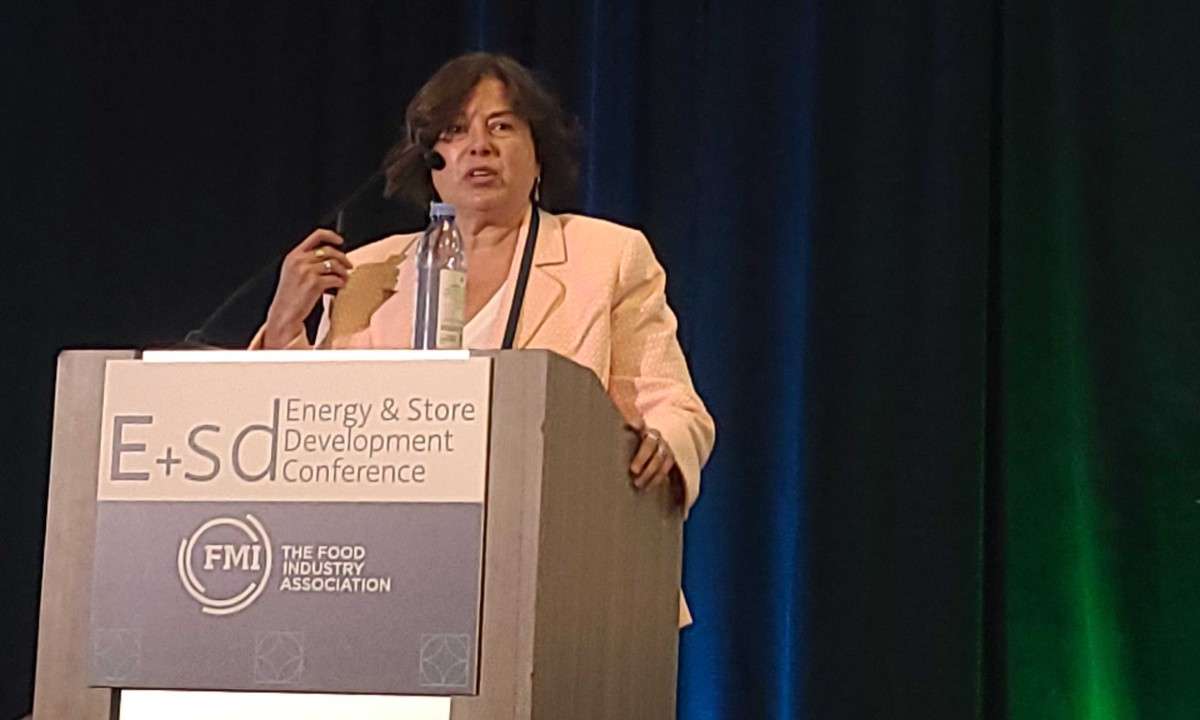
But what if the proposed changes to the Technology Transitions rule aren’t finalized before January 1, 2026? End users would presumably need to follow the original rule, only to see that rule changed at a later date, creating confusion and resentment. That concern was raised at the FMI (the Food Industry Association) Energy & Store Development Conference, held October 6–9 in San Diego.
“My main worry now is: Are they [the EPA] going to get that final regulation out before the January 1, 2026, deadline?” said Keilly Witman, Department Head for consulting firm Refrigerant Management Solutions during a general session on October 8. “Can you imagine how disastrous it would be if the current regulation went into effect from January through April, and then they issue the final regulation, and we go to a completely different system? I just can’t even imagine what compliance would be like.” Witman previously worked at the EPA, founding its GreenChill program in 2007.
Witman explained that following the end of the 45-day comment period on November 17, the EPA has to address the comments. The agency then writes the final rule, which goes to inter-agency review and is sent to the president’s office and the Office of Management and Budget before it is announced and later published in the Federal Register.
Witman encouraged FMI attendees at a later breakout session to address the January 1, 2026, deadline for the original Technology Transitions rule in comments to the EPA. “If you only do one thing, please submit a comment to the federal government saying that if they do not get the final regulation out by January 1, 2026, can they please put something out that exempts enforcement for that time period until the final regulation comes out,” she said. She also advised asking for an exemption that is “binding on future administrations.”
The hearing on October 20 would also be an opportunity to ask for an exemption, Witman noted, adding that the EPA would not be able to address the requests but would take them under consideration.
“Can you imagine how disastrous it would be if the current regulation went into effect from January through April, and then they issue the final regulation, and we go to a completely different system?”
Keilly Witman, Refrigerant Management Solutions
Industry response to the proposed Technology Transitions rule has been mixed. FMI President and Chief Executive Officer Leslie Sarasin applauded the EPA for “reconsidering certain aspects of the Technology Transitions Rule in a way that achieves the intended environmental benefits without placing unnecessary and costly burdens on the food industry. The previous rule imposed significant and unrealistic compliance timelines, and we are pleased to see those are being reconsidered.”
On the other hand, industry trade group AHRI defended the original Technology Transitions rule with a list of its positions. Among them is that delaying the Technology Transitions rule transition dates “would disrupt multi-year planning and investment by U.S. manufacturers. Companies have already retooled production, certified new equipment, and built supply chains around the current schedule.”
Another reconsideration rule expected
The Technology Transitions rule is one of three pillars of the American Innovation and Manufacturing (AIM) Act, enacted in 2020 at the end of the first Trump administration with bipartisan and industry support. The rule was designed to accelerate the ongoing transition to more efficient and climate-safe technologies in new refrigeration, heating and cooling systems and other products by restricting the use of HFCs where alternatives, notably natural refrigerants, are already available.
The proposed rule does not apply to the other regulations of the AIM Act, one covering the phasedown of HFC production, the other emissions reduction and reclamation.
The phasedown regulation, which sets the amount of HFC refrigerant that chemical manufacturers are allowed to produce and import every year, has stayed the same. “As far as I know, there isn’t really anybody serious out there that has tried to challenge that, but I doubt that if they did, they would be successful,” said Witman.
However, Witman added, the EPA may at some point reconsider the emissions reduction and reclamation regulation. “There have been several people who have approached the EPA” with that request, she said. “Let’s face it: This administration doesn’t need much of an excuse to reconsider environmental regulations. So I don’t think there’s any doubt that that’s going to be the next thing on the list.”
Witman also addressed state refrigerant regulations, observing that, as in the first Trump administration, states may decide to enact their own HFC restrictions to address their greenhouse-gas reduction requirements. She notes that this could happen quickly if state governments “copy and paste” the federal regulations established during the Biden administration. In the past some states would “put a little bit of their own spin on it,” adding to the complexity for end users of refrigeration. In any event, “get ready for a bunch of state regulations,” she said.