Norway is testing the viability of subcritical CO2 (R744)-based refrigeration to cut food waste on small fishing vessels as part of a SINTEF (Foundation for Industrial and Technical Research) project supported by the Trøndelag Regional Research Fund.
A CO2 refrigeration unit with a cooling capacity of 8.5kW (2.4TR), developed in partnership with Norwegian maritime manufacturers HAV Kjølesystemer and Cardio, has been installed on the lobster boat Odd–Angel, which operates out of Skansen in Trondheim. It is the second prototype developed by the partnership, with the new design increasing the unit’s user-friendliness and energy efficiency, according to SINTEF.
The CO2 prototype cools and circulates a secondary seawater loop, allowing for the live storage of marine catches in tanks, including lobsters placed in individual cubbies. The unit ‒ measuring 800 × 600 × 1,000mm (31.5 × 23.6 × 39.4in), with a 500 × 250 × 700mm (19.7 × 9.8 27.6in) electrical box ‒ fits inside the Odd-Angel’s engine room, Kristina Widell, Senior Research Scientist at SINTEF told NaturalRefrigerants.com.
“In normal Norwegian water temperatures, the unit can achieve water outlet temperatures as low as −1°C [30.2°F],” Widell said. “When the seawater temperature is above 17°C [62.6°F], it has reached 3‒4°C [37.4‒39.2°F].”
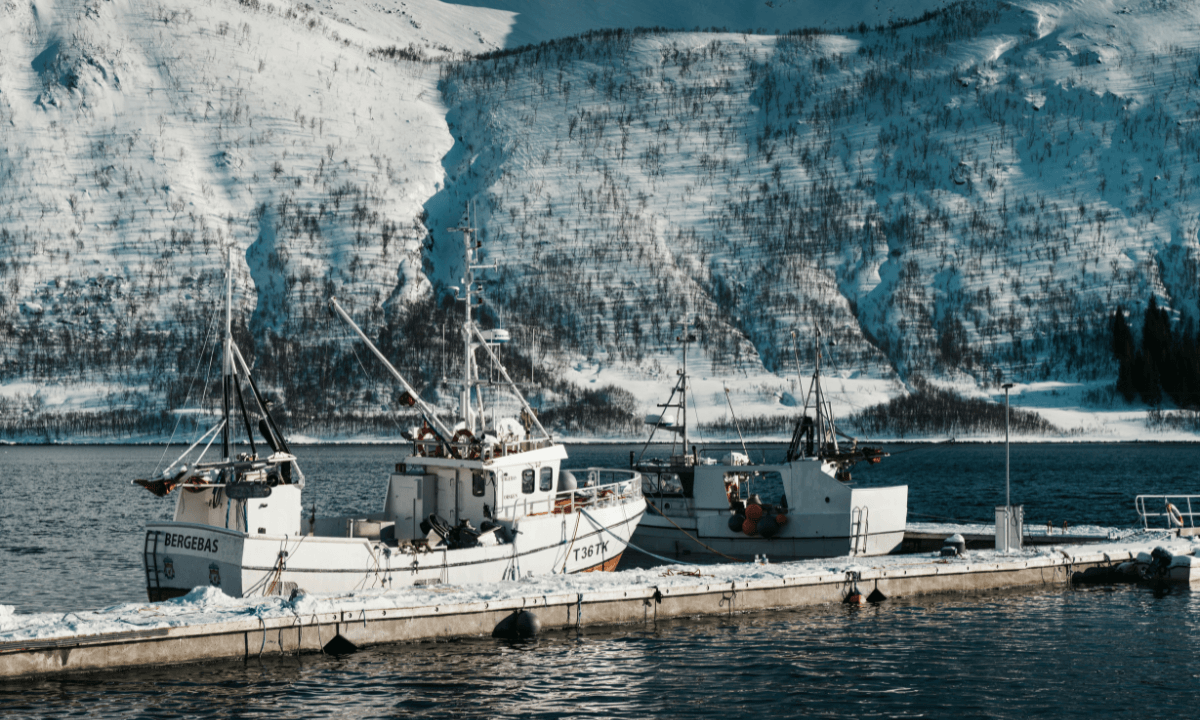
Keeping cod cool: As of 2021, almost 80% of the Norwegian fishing fleet’s boats measured 11m (36ft) in length, with these small boats accounting for 11% of the total volume of the country’s cod catch, according to SINTEF.
- Only 5% of Norway’s small vessels actively chill their catches. Norway is one of the largest producers of cod in the world, and in 2024 it exported 40,370 metric tons of fresh cod.
- “[Studies] show that the shelf life of cod is six days longer when stored at 1°C [33.8°F] than at 5°C [41°F],” said Kristina Widell, Senior Research Scientist at SINTEF. “Refrigeration onboard allows the fishermen to spend more time on the fishing grounds by slowing down the rate of deterioration, and it allows the catch to be delivered to buyers who were previously out of reach.”
Market applicability: No plug-and-play modular refrigeration system is commercially available for small fishing vessels. The second prototype uses a Panasonic CO2 rotary piston compressor and operates with a COP of up to 4.0, according to SINTEF.
- At least 30% of global fish and seafood become food waste, according to a study commissioned by the UN Food and Agriculture Organization.
- When brought up from the 7°C (44.6°F) ocean floor to 20°C (68°F) on board a vessel in the summer, lobsters become lethargic with increasing mortality, according to Ove Andreas Mandal, Owner and General Manager of Fosen Skalldyr, a processing facility in Vallersund.
- The prototype testing will conclude in 2025, Widell told NaturalRefrigerants.com. She added that SINTEF plans to conduct testing at higher seawater temperatures in collaboration with Indian partners.
Other segments: Larger Norwegian vessels also need natural refrigerant solutions, with few ice slurry systems installed on fishing vessels using ammonia (R717) or CO2, according to Widell.
- “For sustainability, there is an urgent need to address refrigerant leakage and transition to natural refrigerants in onboard fishing vessels since the use of high-GWP refrigerants hinders progress towards sustainability,” Widell said, at the 2023 International Institute of Refrigeration conference, held in North Macedonia.
Quotable: “With the new system, I can be at sea for several days before I have to deliver the catch,” Ervik Ervik, Skipper of the Odd–Angel, told Phys.org. “That means lower diesel costs for me and better conditions for the [lobsters] on board.”