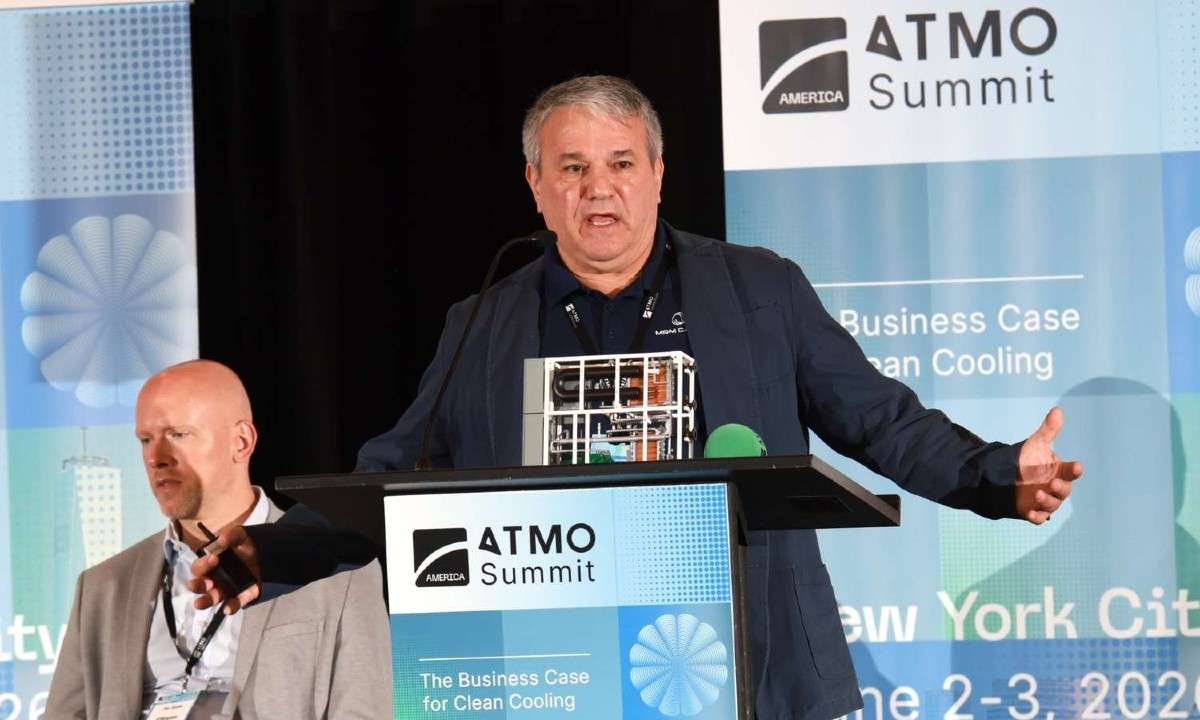
With 10 years of experience in CO2 (R744)-based data center cooling in North America, M&M Carnot, a subsidiary of Johnson Controls, outlined the refrigerant’s advantages and key market trends in a presentation at ATMOsphere America Summit 2026.
M&M Carnot has deployed over 260 CO2 systems for data center cooling, including 200 computer-room air conditioners (CRAC), 41 chiller/heat pumps and 20 in-row AC units, said Vice President of Sales John Miranda during a presentation on commercial HVAC market trends. The event, organized by ATMOsphere, publisher of NaturalRefrigerants.com, took place June 2‒3 in Tarrytown, New York.
“In suitable climates, we can run in free-cooling mode,” said Miranda, while referencing heat pumps. “With our patented system, we thermally siphon CO2 and use a flooded evaporator rather than DX operation. In free-cooling mode, CO2 systems are 30‒60% more energy efficient than synthetic systems with no free cooling.”
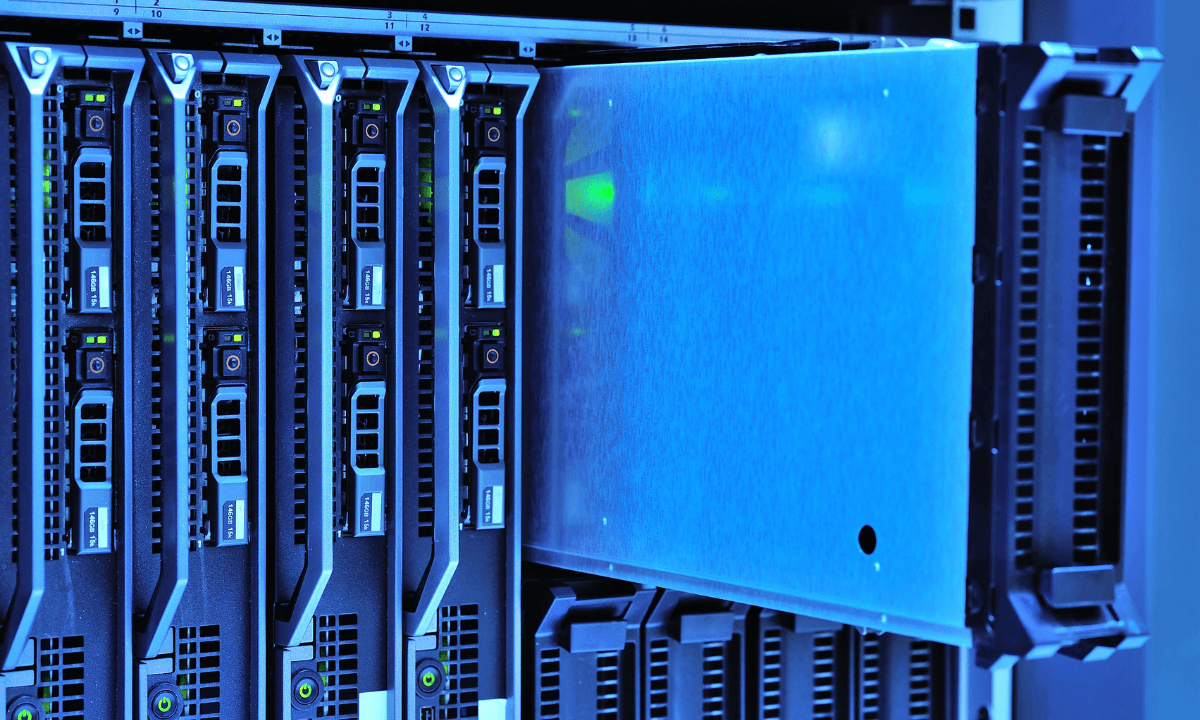
The different types of equipment provide data center cooling in distinct ways. CRAC units circulate conditioned air throughout the room. In-row units are installed between server racks and deliver cooled air directly to the IT equipment. Chiller/heat pump systems use a heat exchanger to chill water or glycol, which cools servers via liquid cooling circuits.
The market
The bulk of M&M Carnot’s CO2 data center experience is in Canada, with Miranda noting three or four CRAC and chiller/heat pump installations in the U.S. over the past year. To date the company has deployed 36 CO2 heat pumps, primarily in retrofit applications, including its 40TR (141kW) unit, packaged within a 2ft-wide × 8ft-long × 6ft-high (0.6 × 2.4 × 1.8m) footprint.
M&M Carnot expects CO2 equipment deployments for data center cooling to roughly double each year over the next six years. It forecasts installing 100 CO2 CRAC units in 2027, rising to 1,600 in 2031; 24 CO2 chiller/heat pumps in 2027, increasing to 560 in 2031; and 20 CO2 in-row units in 2027, growing to 320 in 2031.
“If you look at the installed base of data centers today, I would say 50% are nearing end of life with synthetic-refrigerant CRAC and chiller systems,” Miranda said. “The future for CO2 looks really bright,” he added, noting that new greenfield data center projects are forecast to grow at a 30% compound annual growth rate over the next decade.
Heat pump case study
In heat pump installations, a three-way valve enables switching between heat recovery for space-heating and free-cooling modes. When the heat demand is satisfied during the winter months, the CO2 circulates passively to a roof-mounted air-cooled gas cooler, providing compressor-free cooling for the data center.
Miranda highlighted a recent CO2 installation for an 80TR (281kW) telecom data center that reuses waste heat as part of a retrofit replacing synthetic-refrigerant chillers and natural-gas boilers. Two 40TR units were installed back-to-back, supplying 44/56°F (13/17°C) chilled water for IT equipment cooling and 109 to 131°F (43 to 55°C) hot water for 85.3TR (300kW) of space heating. The system achieves a heating COP of about 2.8.
“As data center [operating] temperatures continue to go up, it allows us to do more free cooling,” Miranda said, noting that when M&M Carnot first began cooling these facilities, it typically worked with water temperature in the 40s°F (4‒9°C), while some applications today run as high as 75°F (24°C). In addition, splitting the cooling load between two heat pumps allows one unit to recover heat for space heating while the other provides free cooling.