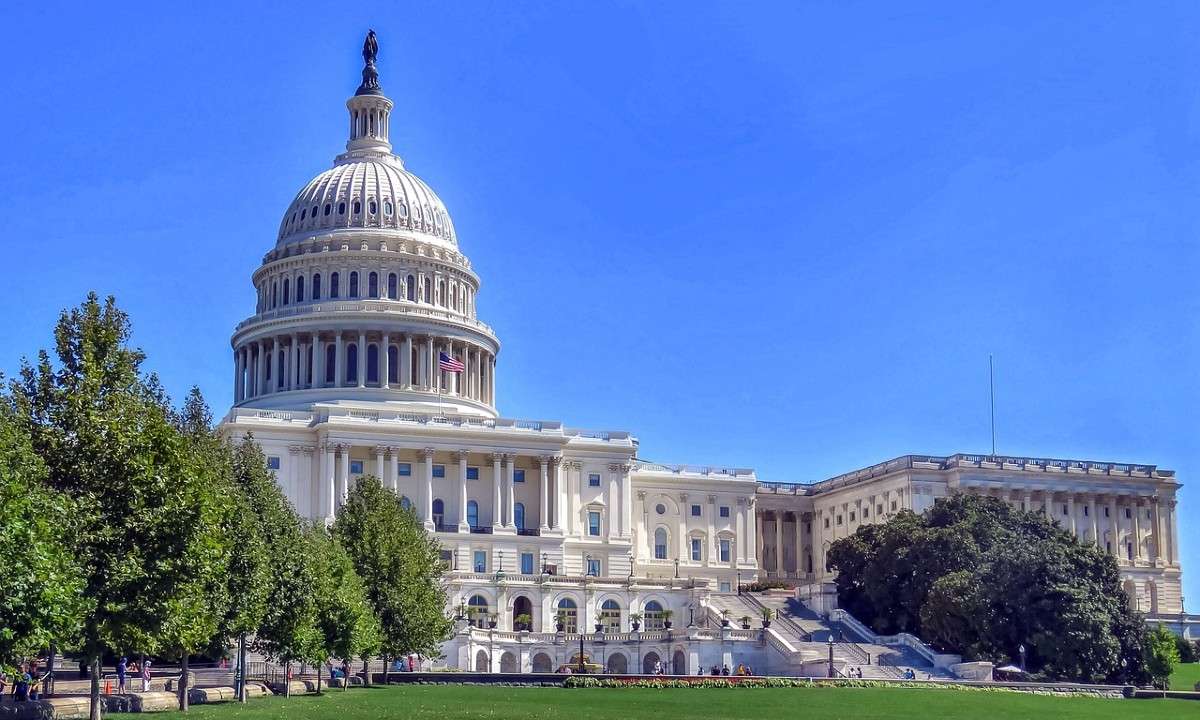
Two Democrats have proposed legislation in the U.S. House of Representatives and the Senate to address the use of per- and polyfluoroalkyl substances (PFAS) in the domestic supply chain, using a definition of PFAS that would include many refrigerants and the atmospheric byproduct of some refrigerants called trifluoroacetic acid (TFA).
The bill, the Forever Chemical Regulation and Accountability Act, was introduced last month by Congresswoman Betty McCollum (Democrat, Minnesota-04) and Senate Minority Whip Dick Durbin (Democrat-Illinois). The legislation was originally introduced in April 2024 but didn’t make it out of committee.
The U.S. Environmental Protection Agency (EPA) has taken the position that f-gases and TFA don’t fall under the definition of PFAS; this is contrary to the findings of scientists worldwide, who define PFAS as having at least one fully fluorinated carbon atom, as do f-gases and TFA.
Some U.S. states, such as Maine and Minnesota, have defined PFAS to include many f-gases and TFA. And now the proposed PFAS bill would define a polyfluoroalkyl substance as a chemical with “at least one fully fluorinated carbon atom and at least one nonfluorinated carbon atom.”
“Minnesotans know all too well the threat that PFAS contamination poses to the health and safety of our communities,” said McCollum. “I’m proud to partner with Senator Durbin to reintroduce our legislation which will set a ten-year national deadline to eliminate PFAS wherever possible.”
“Our legislation would establish a federal ban, while also investing in research and ensuring thoughtful, science-backed safeguards that keep people safe and healthy,” added McCollum. “Reintroducing this legislation is the first step towards ensuring that communities across America have access to the clean and safe drinking water they deserve.”
Both the U.S. House and Senate are currently controlled by Republicans who are unlikely to advance the PFAS legislation but mid-term elections in November may shift control in one or both chambers to the Democrats.
At the state level, Minnesota passed ambitious PFAS legislation in 2023 known as Amara’s Law, and has recently been exploring whether to regard PFAS refrigerants as non-essential and thus subject to a ban in 2032.
“Reintroducing this legislation is the first step towards ensuring that communities across America have access to the clean and safe drinking water they deserve.”
Congresswoman Betty McCollum (Democrat, Minnesota-04)
PFAS, known as “forever chemicals for their persistence in nature, include eight-carbon substances known to be toxic to humans, such as PFOS and PFOA that have been used in a variety of consumer products.
TFA, an ultrashort-chain, two-carbon substance, is generated by the complete breakdown of HFO-1234yf and the partial breakdown of some other f-gases in the atmosphere; TFA is then absorbed in rainfall and has been found throughout nature and in drinking water, food and beverages. TFA is also generated in the environment by the breakdown of certain pesticides and pharmaceutical products, among other sources. Its toxicity in humans is still being studied but animal studies have linked it to reproductive toxicity among other effects.
In defending the use of TFA-producing refrigerants, (notably HFO-1234yf), the fluorochemical Industry points to the UN Environment Programme (UNEP) and its 2022 Environmental Effects Assessment Panel (EEAP) report.The report says that TFA is not bioaccumulative, is “not expected to pose significant risk to humans or the environment at the present time” and “is unlikely to cause adverse effects out to 2100.” The report does not comment on the contribution of pesticides and other precursors to TFA since they don’t fall under the purview of the Montreal Protocol, under which UNEP is an implementing agency.
What the Act would do
The Forever Chemical Regulation and Accountability Act would:
- Initiate a National Academies of Sciences, Engineering, and Medicine study to review the persistence, bioaccumulation, and human health risks of PFAS. The Academies would also identify current PFAS uses and provide guidance on classification of essential or non-essential uses, which will be used by the EPA to require those designated “non-essential” be phased out.
- Require all PFAS manufacturers and users to file reports with the EPA to disclose certain information relating to PFAS, and require manufacturers and users to submit a phase-out schedule of their products to be completed within 10 years.
- Direct EPA to facilitate phasing out non-essential PFAS production, consumption, and possession and prohibit manufacturers and commercial users from releasing any PFAS into the environment within 10 years.
- Establish deadlines for manufacturers to remove PFAS from certain consumer goods such as rugs, furniture, and child products.
- Reinforce that, to the maximum extent possible, PFAS should be eliminated from products or replaced by substitutes that reduce risk to human health and the environment. The bill also would direct federal agencies to maximize resources to achieve this goal.
- Establish regional PFAS rapid response hubs to advance PFAS replacement and remediation.
- Require EPA to collect fees to administer the reporting and petition processes.
- Prevent large corporations from exploiting bankruptcy procedures to avoid persistent, bioaccumulative, and toxic chemicals, claims, ensuring that individuals who have been harmed by such chemicals can have their day in court.
- Update the Comprehensive Environmental Response, Compensation, and Liability Act (CERCLA) to delay state statutes of limitations and statutes of repose for newly designated hazardous substances, such as PFAS, until the date on which it was designated as a hazardous substance or when the plaintiff knew or reasonably should have known their injury was caused by the substance, whichever is later.
The full text of the bill can be found here. A fact sheet on the bill can be found here. A section by section summary can be found here.