The U.S. Department of Energy (DOE) gave a strong show of support to the country’s nascent CO2 (R744) heat pump market this past September, providing $8.5 million (€8 million) in total funding to five companies developing CO2 commercial heat pumps. The funding was part of a larger program designed to accelerate the development of technology to decarbonize the U.S. building stock. CO2 heat pumps are particularly suited to the task of decarbonizing hot water production, and in recent years the sector has shown signs of growth in the U.S.
Mayekawa, Lync (part of Watts Water Technologies) and Transom were just a few of the manufacturers to bring hot water CO2 heat pumps to the 2023 AHR Expo in Atlanta. Sales of CO2 heat pump water heaters are doubling every year in North America, with many displacing natural gas boilers, according to Jake Bucklin, Product Manager, Decarbonization Solutions at Lync.
“We have more competitors, but we’re all seeing the same growth; we’re not fighting over market share,” he told NaturalRefrigerants.com.
It’s this growth that Dalrada Climate Technology (DCT) has its eye on.
Entering the market
DCT is part of Dalrada, a multi-national holding company founded in 1982 and headquartered in San Diego, California, with offices in EMEA and the Americas. The company acquired Likido, a Scottish manufacturer of CO2 heat pumps, in 2019 “with the goal of expanding its existing technology and scaling it on a global level,” according to CEO Brian Bonar.
“After a long and extensive period of optimizing the design and development, we believe we now have the perfect solution for the commercial and industrial sectors,” Bonar told NaturalRefrigerants.com.
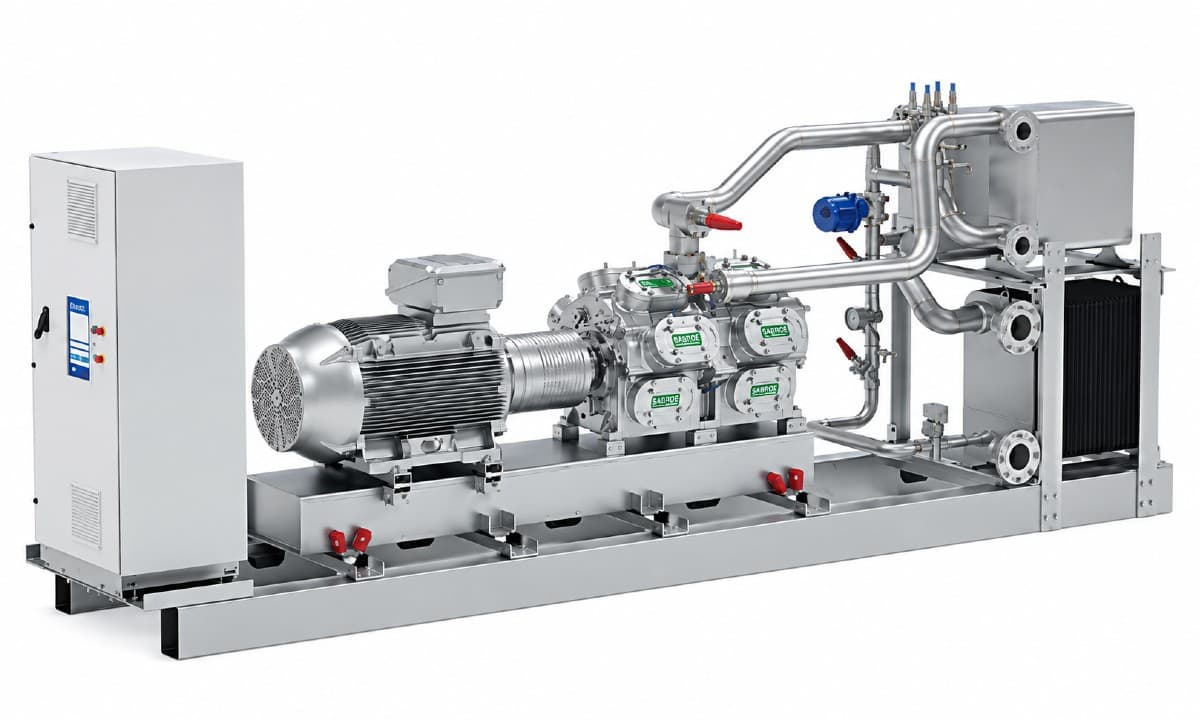
That solution is the DCT One, a commercial and industrial water-to-water heat pump that offers simultaneous heating and cooling. The DCT One has a heating COP of 4.5 and a cooling COP of 2.5 and can supply hot water from 50–85°C (122–185°F) and cold water from 0–15°C (32–59°F). The company says its applications include hotels, food processing facilities and data centers.
NaturalRefrigerants.com recently spoke with Bonar about the DCT One, the company’s view on the natural refrigerant heat pump market in the U.S. and its future product plans.
This interview has been edited for length and clarity.

Dalrada Climate Technology offers a commercial water-to-water CO2 heat pump, the DCT One. When did this come on the market, and what types of applications does it serve?
Brian Bonar: The DCT One Series CO2 heat pump will officially enter the market in 2025 and is expected to be used mainly for commercial applications, such as in office buildings and manufacturing facilities. This niche product uses R744 refrigerant to deliver an excellent COP for when our customers require both heating and cooling simultaneously. As our flagship product, it delivers up to seven times more efficiency versus traditional heating and cooling systems.
Dalrada recently began expanding its line of heat pumps to include a variety of air-to-air, air-to-water and water-to-water heat pumps. This wide range of products will include specialized models for home/domestic use as well as light commercial/industrial use. The company plans on continuing to develop and launch new products using the natural refrigerant CO2.
Where does Dalrada manufacture the DCT One?
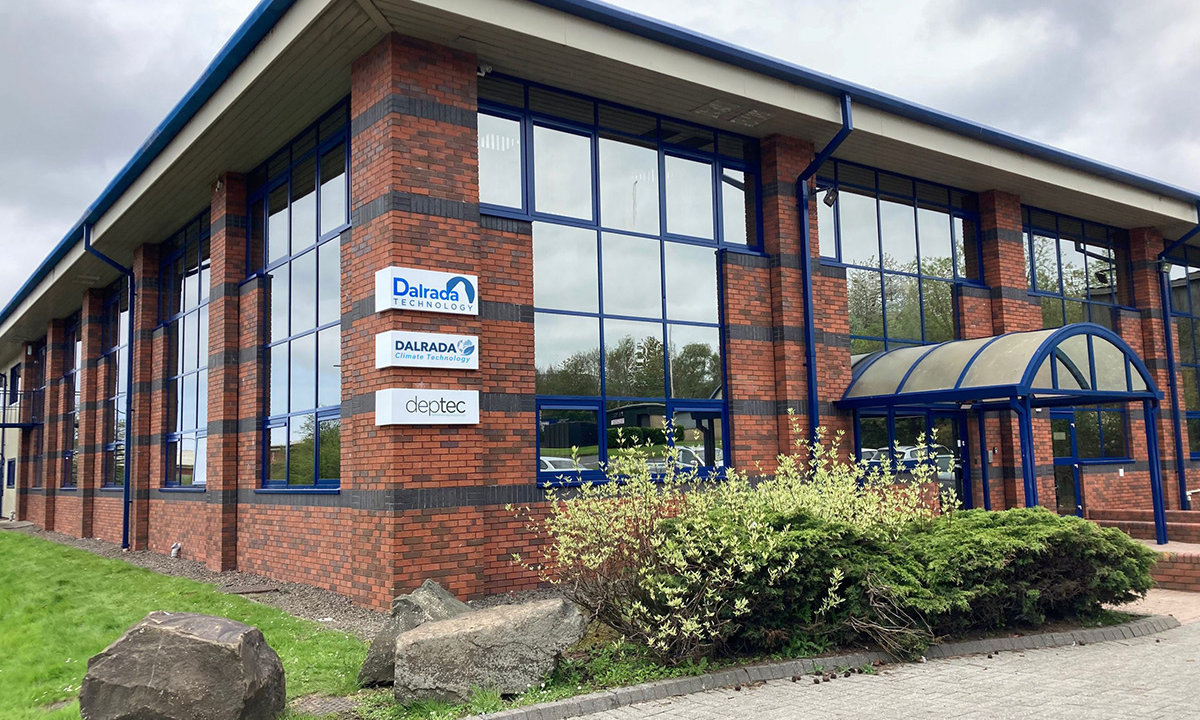
BB: Dalrada manufactures the DCT One Series at our in-house facility in Livingston, Scotland. Once built, they are rigorously tested and optimized for performance at our dedicated North America testbed facility in Portland, Oregon. These units are meant for global consumption and have been shipped throughout the U.K. and the EU, in addition to the U.S.
Our heat pumps are currently made-to-order to meet or exceed the unique needs of our global client base. We expect to increase production capabilities of these machines rather quickly toward the end of this year and into 2025. Production numbers and sales figures will be updated accordingly as we gather additional information in the coming months.
“Dalrada will continue to develop and launch new products using CO2.”
Brian Bonar, CEO of Dalrada
Dalrada also offers an R290 heat pump for residential use. Where is this product currently available, and would Dalrada bring it stateside if regulations permitted?
BB: At the moment, the use of R290 [propane] is heavily regulated and/or restricted for use in U.S. homes. However, outside of the U.S., R290 is quickly becoming the market-leading refrigerant. As a result, Dalrada’s non-U.S. sales of home/domestic heat pumps will be focused on using R290 while we wait for U.S. regulations to change. We anticipate these regulations to be updated within a couple of years. Until then, our heat pumps sold in the U.S. will continue to use R454B or R32 refrigerants.
What is Dalrada’s outlook for natural refrigerants in the U.S., and does it have plans to launch any new natural refrigerant products in the coming year?
We plan on bringing an R290-based heat pump to the U.S. market once the regulations are in place to allow it. However, we won’t simply wait for these regulations to be relaxed on specific refrigerants before bringing additional solutions to the U.S. marketplace.
Dalrada will continue to develop and launch new products using CO2. We are constantly improving on our design and development process to reflect the latest trends in climate technology so that we can deliver the most modern and efficient heat pumps in the world, whether for commercial, industrial or residential use. We anticipate the release of new and upgraded products that meet the most demanding needs of our climate-conscious consumers.