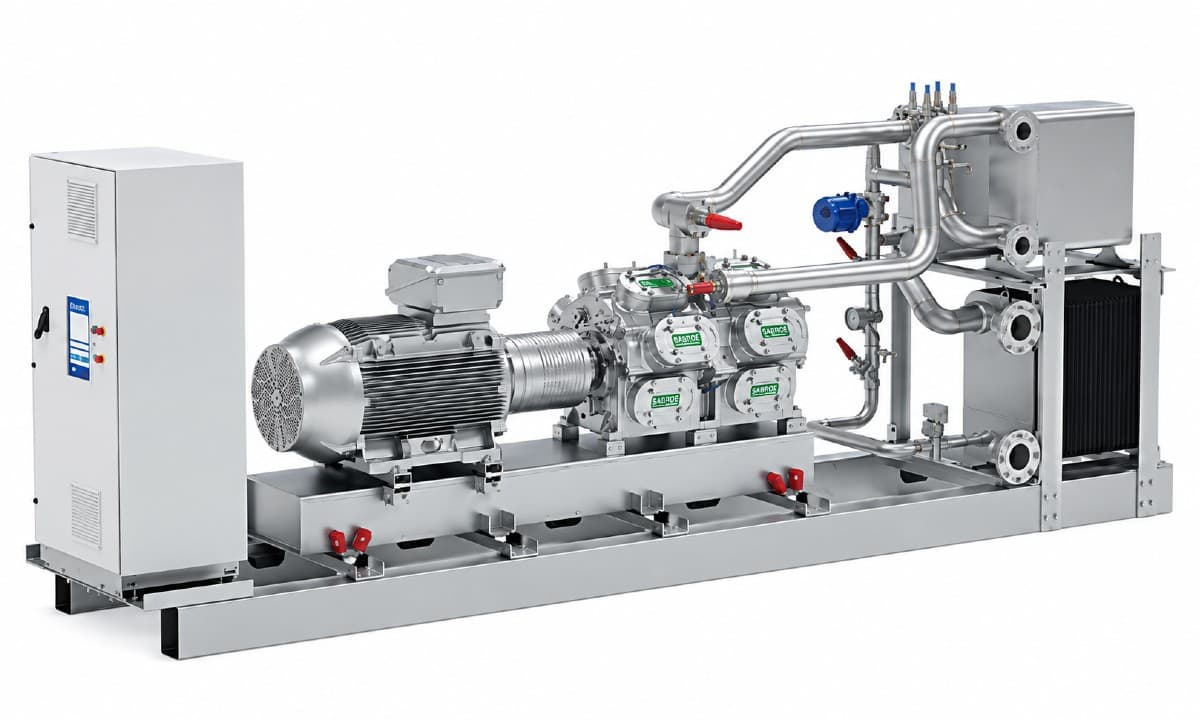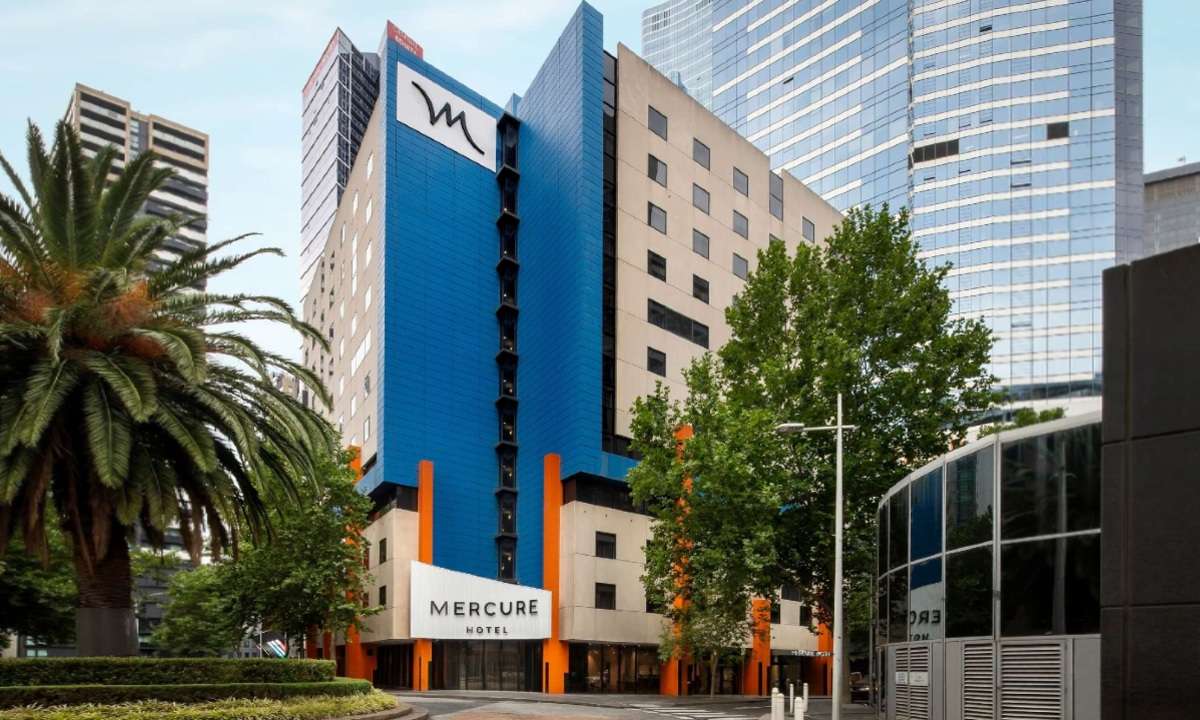
A Mercure hotel in Melbourne, Australia, has reduced its energy use for producing hot water by more than 82% after replacing its two gas boilers with two CO2 (R744) heat pump units from Japanese HVAC&R manufacturer Itomic.
The upgrade, which consists of two 70kW (19.9TR)-capacity Revere heat pumps, also cut hot water-related operating costs by 51% and emissions by 23%.
As Victoria’s electricity grid continues to decarbonize, emissions are expected to drop even further, from 134.4tCO2e to just 15.6tCO2e annually by 2034, explained Terry Plaisted, the Director of Automatic Heating, Itomic’s Australian manufacturing and distribution partner.
“This sharp decline highlights the benefits of natural refrigerant-based efficient technologies,” he noted.
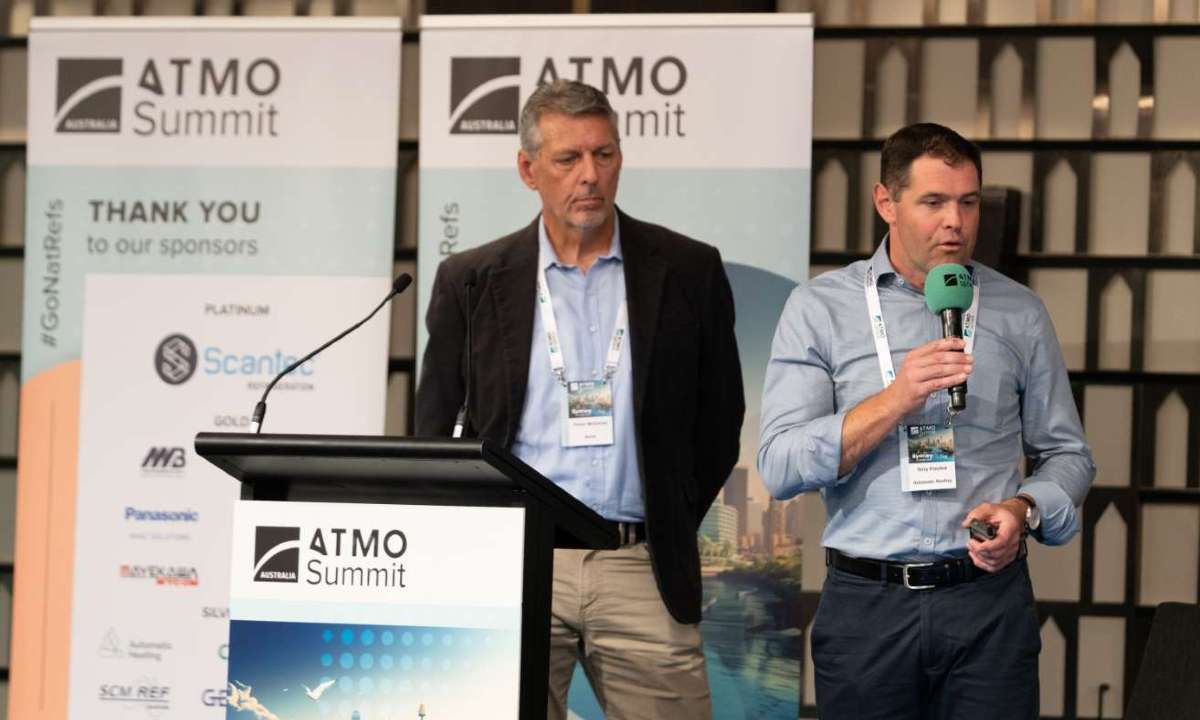
Details of the installation were shared by Plaisted and Trevor McCarren, Accor Hotels’ Director of Technical Services for Pacific North, during a presentation at the ATMO Australia Summit 2025. The event, which was held May 12–13 in Sydney, was organized by ATMOsphere, publisher of NaturalRefrigerants.com.
The 275-room property is operated by international hotel chain Accor Hotels but owned by Australian investment company Salter Brothers.
Managing peak demand
Salter Brothers, which owns 11 hotels across Australia, acquired the Melbourne Southbank property in 2023. Before assuming operational control, Accor identified the hotel’s existing hot water system as a key area in need of an upgrade.
According to McCarren, the upgrade aligned with Accor’s broader sustainability goals, including a 30% reduction in energy consumption across its Pacific properties by 2030.
“Decarbonizing our owners’ assets is vital,” he emphasized.
While reducing emissions through electrification, natural refrigerants and improved efficiency was central to the project, a critical design consideration was the ability to meet the hotel’s peak hot water demand – approximately 11,000L (2,420gal) over a two-hour period. To support this, two additional 1,000L (220gal) storage tanks were installed alongside the hotel’s existing two 4,000L (880gal) tanks.
The CO2 heat pump system delivers an average COP of 4.2, contributing significantly to both energy savings and reliable hot water delivery.
“Our big focus was to increase the stored capacity and ensure that we get that efficiency,” Plaisted explained.
Accor Hotels manages over 550 properties across Australia under various brands. In McCarren’s region, four hotels – including the Southbank Mercure – now operate with CO2 heat pumps. At the other three sites in Brisbane and Sydney, the company has recorded operational cost savings of up to 30%.
“This sharp decline [in emissions] highlights the benefits of natural refrigerant-based efficient technologies.”
Terry Plaisted, Director of Automatic Heating
Return on investment
Beyond environmental benefits, the hot water system upgrade at Mercure Southbank also had to deliver a compelling financial return. According to McCarren, factors such as equipment cost, operational savings and available government incentives played a critical role in the decision-making process.
“Automatic Heating offered a solution which was just too good to say no,” said McCarren. “The payback for the CO2 heat pump beat [other options] hands down.”
Thanks to a 51% reduction in energy costs and a state government rebate of AU$40,000 (US$25,840/€22,780), the CO2 heat pump system is expected to achieve a payback period of just over five years. In comparison, a proposed gas and solar thermal system presented to the property owners had a projected payback of nine years.
Plaisted added that further operational savings are anticipated through the use of off-peak electricity tariffs and optimized system set points.
He also highlighted the crucial role of government incentive schemes in accelerating the adoption of low-emission technologies.
Supporting natural refrigerants
Automatic Heating has been supplying CO2 heat pump systems since 2016 and is witnessing growing adoption across a wide range of sectors – including food retail, healthcare, hospitality and multi-residential developments, according to Plaisted.
This trend is driven in part by R744’s strong performance characteristics, particularly its ability to achieve and sustain higher water temperatures, making it well-suited for domestic hot water and heating applications. Additionally, CO2 is significantly more cost-effective than many synthetic refrigerants, priced at around AU$6 (US$3.90/€3.40) per kilogram compared to AU$60 (US$39/€34) per kilogram for R32.
Plaisted also noted rising interest in other natural refrigerants, particularly propane (R290), as industry stakeholders seek sustainable and future-proof solutions in line with global climate and environmental goals.