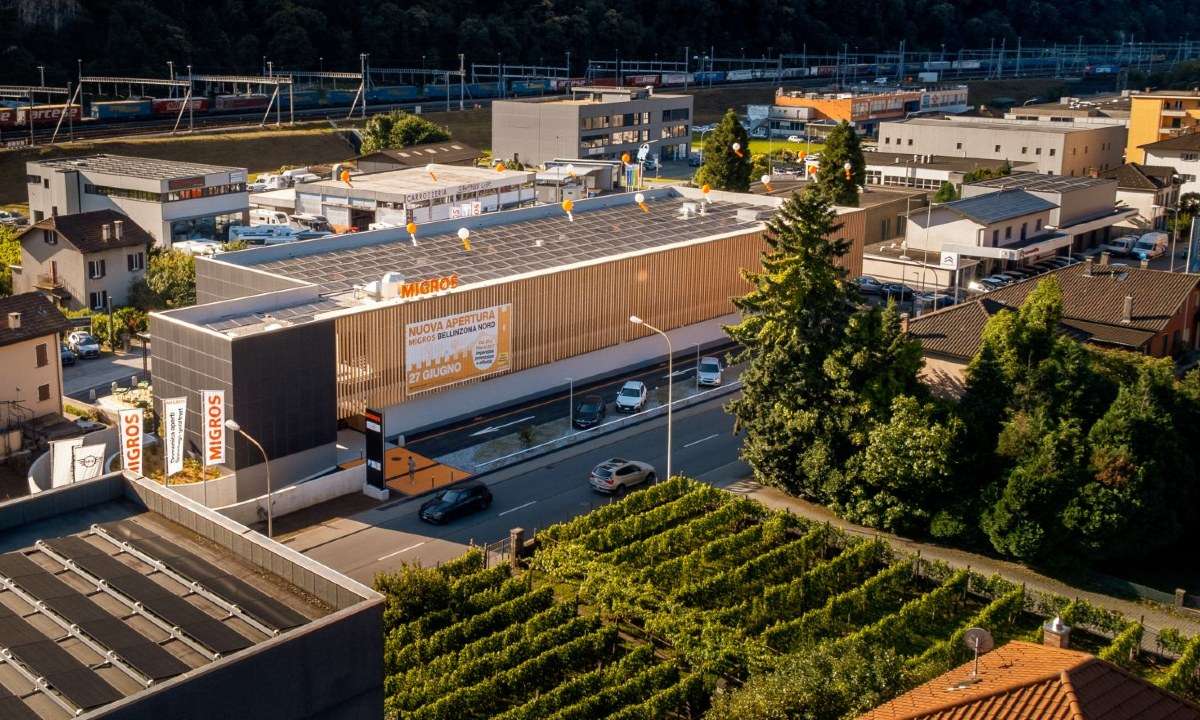
The Migros Group operates more than 600 supermarkets across 10 regional cooperatives in Switzerland, and 80% of its stores, food production and logistics facilities use natural refrigerants, according to the company’s Senior Project Manager for Industrial Refrigeration, Philipp Seibert. Seibert shared the update in an interview on the company’s blog, which included a note that Migros has a goal of only using natural refrigerants by 2040.
The Migros Group is a conglomerate that operates not just supermarkets but also book stores, pharmacies and banks, and the company’s aim to only use natural refrigerants by 2040 extends across its entire business. NaturalRefrigerants.com reached out to Migros to learn more about the use of natural refrigerants in the food retail sector along with the challenges it faces in using naturals across the group more broadly.
This interview has been edited for length and clarity.
We’ve written about the Migros Ticino cooperative and its goal of using CO2-based refrigeration across all of its supermarkets by 2025. Are any other Migros cooperatives using 100% natural refrigerants in their supermarkets?
Migros Group: Our 10 cooperatives have been using refrigeration systems with CO2 [R744] refrigerants for many years. The replacement of existing systems with CO2 refrigeration systems follows the renovation cycle of the stores, which is why we are not yet at 100% natural refrigerants in the stores.
Of the 33 stores Migros Ticino operates, 14 have integrated CO2 systems. How common is it for other Migros cooperatives to use integrated CO2 systems?
“For the stores, we see hardly any hurdles, as CO2 is the standard refrigerant.”
Migros Group
MG: The waste heat from refrigeration systems is almost always used for heating and/or domestic hot water production, so nearly 100% in the stores. Where it makes sense, CO2 refrigeration systems are also operated as air-to-water heat pumps.
How many industrial facilities – food production or cold storage, for example – does Migros operate, and how many of these use natural refrigerants?
MG: Migros Industry operates 50 sites across four companies. All companies use natural refrigerants, primarily ammonia [R717], but increasingly also CO2 and propane [R290].
The Migros Group wants to use only natural refrigerants by 2040. What is the progress toward this goal, and what is the biggest hurdle at the moment to achieving it?
MG: We are quite well on track to reach this goal. For the stores, we see hardly any hurdles, as CO2 is the standard refrigerant. The biggest hurdles for the Migros Group are:
- Availability of solutions with natural refrigerants in the small-capacity range for air-conditioning (e.g., split units with propane or similar)
- Competitive (efficient and affordable) solutions with natural refrigerants for air-conditioning in the medium-capacity range
- Low awareness of available solutions or reservations from contractors (lack of education to promote broader adoption of solutions with natural refrigerants)