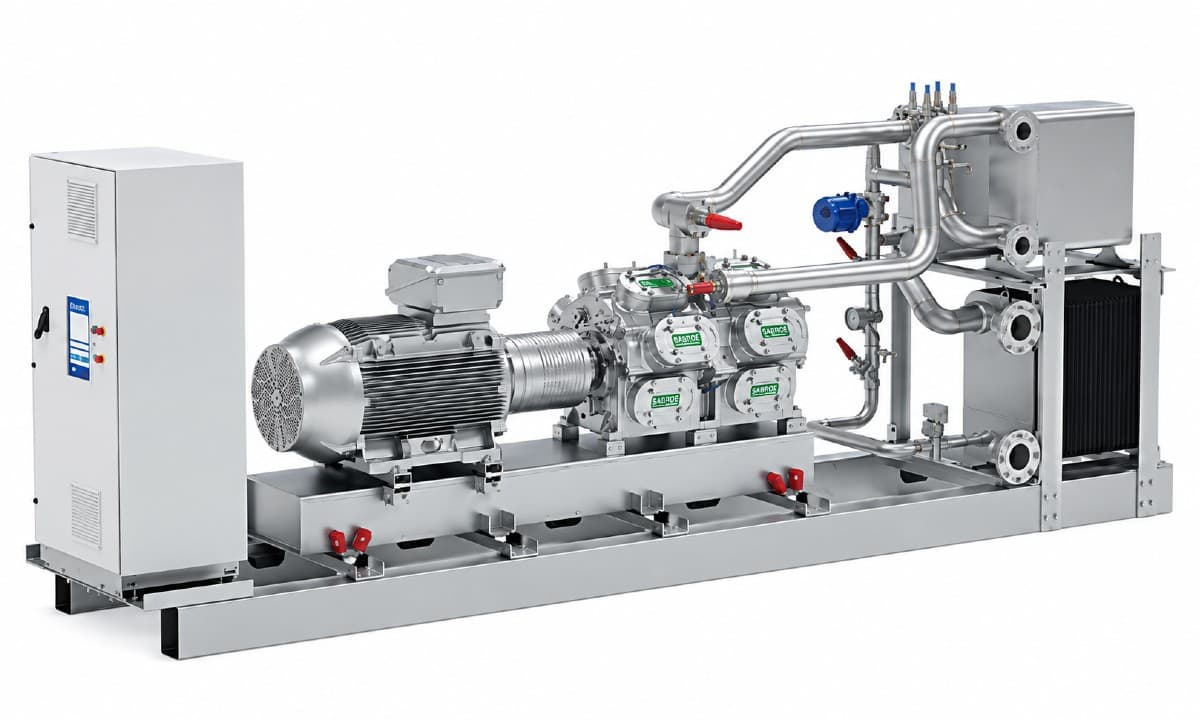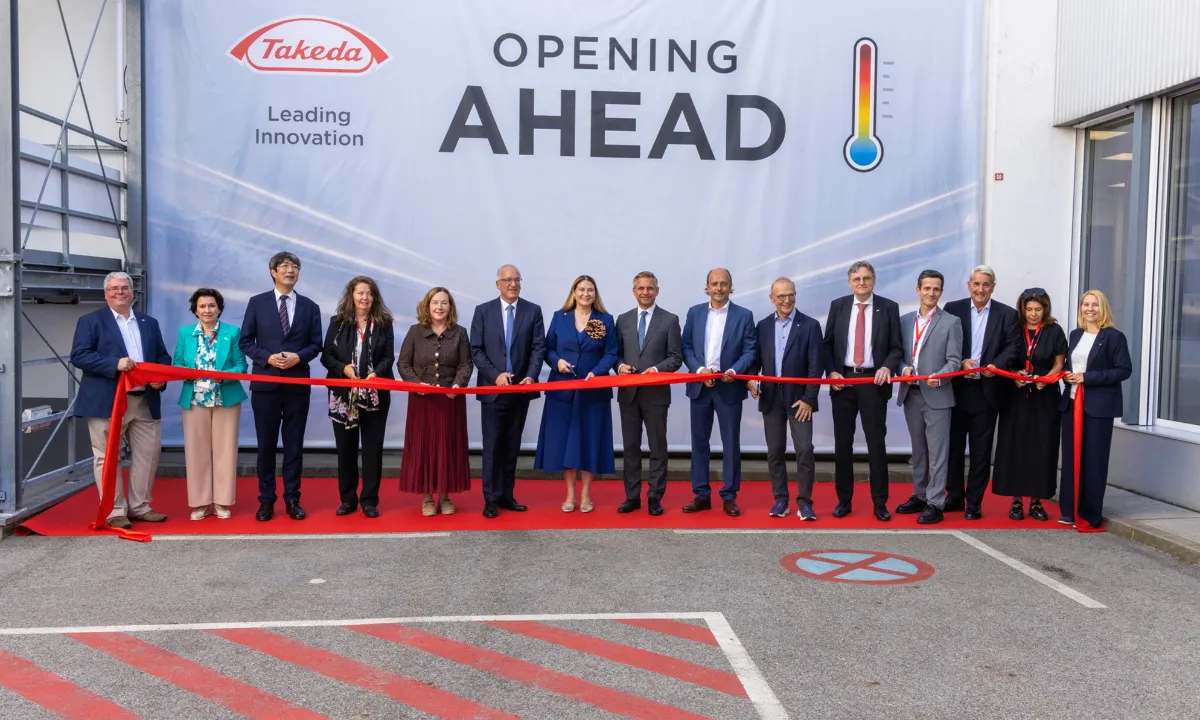
Pharmaceutical company Takeda has announced that its new high-temperature butane–water (R600–R718) heat pump has commenced operation at its manufacturing facility in Vienna, which will “allow the generation of process steam completely without fossil fuel for the first time.”
The high-temperature heat pump (HTHP) has a capacity of 1.2MW (341TR) and will replace an existing fossil fuel boiler at the site. In warmer months it will use waste heat generated by the facility’s existing ammonia (R717) chillers and heat pump as its heat source. Reusing waste heat enables the HTHP to “generate CO₂-free steam for over seven months annually, resulting in potential savings of up to 1,600 [metric] tons of CO2, representing an approximately 80% reduction for the Vienna site.”
The butane–water high-temperature heat pump was built by German manufacturer Sustainable Process Heat (SPH) and can reach process temperatures of 200°C (392°F). Takeda noted this exceeds the 184°C (363°F) at 11bar(a) (159.5psi) required for pharmaceutical production.
How it works: Tim Hamacher, Managing Director at SPH, shared the details on the new HTHP during a presentation at the Industrial Refrigeration Network (IRN) conference held in June.
- The HTHP will work alongside a mechanical vapor recompression (MVR) unit to complement the facility’s existing two ammonia chillers – with a combined cooling capacity of 6MW (1,706TR) – and a 2MW (569TR)-capacity GEA ammonia heat pump.
- Year-round, the ammonia chillers and heat pump generate hot water at up to 70°C (158°F). While this is used for space heating during the winter, it is often wasted during warmer months. The new butane–water heat pump will recover this excess heat and lift it to 115°C (239°F).
- The MVR unit then boosts it further to 195°C (383°F), supplying steam to the facility’s production process. During the seven months a year when the waste heat is not recovered for space heating, the new heat pump will replace the facility’s fossil fuel boiler to produce steam with net-zero emissions, noted Hamacher.
Forging AHEAD: Takeda’s butane–water high-temperature heat pump was built as part of AHEAD (advanced heat pump demonstrator), a research project launched in 2022 by Takeda and the AIT Austrian Institute of Technology.
- The project was announced in spring of 2023 with the goal of reducing CO2 emissions at the plant by up to 90%.
- The plant will undergo “4,000 hours of scientific monitoring” by AIT researchers to evaluate the HTHP’s performance and transferability to other sites and industries.
- Takeda’s production site in Vienna employs approximately 2,500 people and makes more than 20 different types of pharmaceutical products.
Quotable: “With AHEAD, we are setting an important milestone by developing a steam-generating heat pump that operates at 11bar and 184°C using only natural refrigerants,” said Andreas Kugi, Scientific Director of AIT. “Industrial high-temperature heat pumps have enormous potential, as 39% of the process heat demand in European industry is below 200°C.”