Twenty scientists with expertise in per- and polyfluoroalkyl substances (PFAS) have published a statement supporting a definition of PFAS that includes f-gases and f-gas by-product trifluoroacetic acid (TFA) and refuting an effort to change that definition.
The statement, titled “Scientists’ Statement on the Chemical Definition of PFASs,” was published June 10 in Environmental Science & Technology Letters. (PFASs are the same as PFAS.) The corresponding author is Gabriel Sigmund, Assistant Professor, Environmental Technology at Wageningen University in the Netherlands. Other authors include Shira Joudan, Assistant Professor of Analytical Environmental Chemistry at the University of Alberta in Edmonton, Alberta; Cora Young, Professor, Department of Chemistry at York University in Toronto, Ontario; and Rainer Lohmann, Professor at the University of Rhode Island’s Graduate School of Oceanography in Narragansett, Rhode Island.
The statement asserts that the definition of PFAS established in 2021 by the Organization for Economic Co-operation and Development (OECD) – which says that a PFAS contains at least one fully fluorinated carbon atom – “is scientifically grounded, unambiguous, and well suited to identify these chemicals” and does not “prescribe how [PFAS] should be regulated.”
But, the statement notes, “We are concerned that some individuals and organizations are seeking a redefinition of [PFAS] endorsed by the International Union of Pure and Applied Chemistry (IUPAC) to exclude certain fluorinated chemical subgroups from the scope of the existing definition. We are concerned that this effort is politically and/or economically, rather than scientifically, motivated.”
Changing the OECD definition of PFAS “will also cause substantial ambiguity and confusion in international discussions and could lead to unnecessary jurisdictional inconsistencies and contradictions in PFAS regulations and action,” the statement said.
The IUPAC is a U.S.-based organization consisting of chemical societies, national academies of science and chemical company representatives, among others.
“We are concerned that this effort is politically and/or economically, rather than scientifically, motivated.”
Scientists’ statement published in Environmental Science & Technology Letters
The OECD definition of PFAS includes all molecules that contain at least one fully fluorinated methyl or methylene carbon, including f-gases, pesticides, and pharmaceuticals, many of which can degrade to form TFA, an extremely persistent two-carbon PFAS.
The widely used f-gas HFO-1234yf, when leaked into the atmosphere, changes entirely to TFA within a few weeks. The TFA is then absorbed in rainfall and has been found in water sources and soil globally as well as in human blood. Germany recently made an official proposal to the EU to categorize TFA a being reproductively toxic.
Many jurisdictions, including the EU, have adopted the OECD definition of PFAS. The EU is engaged in evaluating the extent to which f-gases would be regulated as PFAS as part of a universal PFAS restriction proposal. In the U.S., while the Environmental Protection Agency (EPA) does not use the OECD definition, many states do. Maine has enacted legislation calling for bans of PFAS f-gases in 2040.
But efforts to create alternative definitions of PFAS may exclude f-gases, TFA and/or polymers, the scientists’ statement said. An IUPAC-endorsed and potentially narrower PFAS definition “could confer undue legitimacy from the endorsement by a recognized global scientific organization and, thereby, influence regulatory bodies and others to adopt less protective policies,” the statement added.
The International Panel on Chemical Pollution (IPCP) is conducting a campaign to collect public signatories in support of the scientists’ statement. As of June 25, 2025, nearly 350 scientists and practitioners from 45 countries had added their names and affiliations as signatories.
ATMO America comment
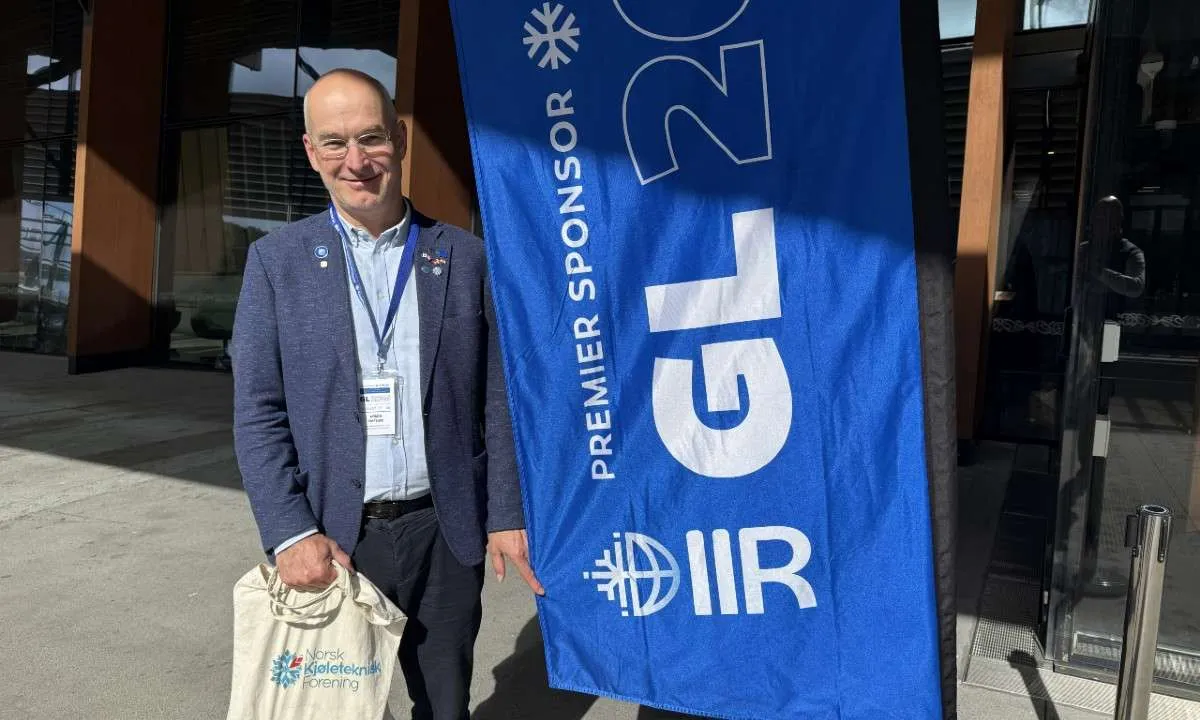
The scientists’ statement came up last week at the ATMOsphere (ATMO) America conference in Atlanta, Georgia, organized by ATMOsphere (publisher of NaturalRefrigerants.com). “We just said, ‘OECD had a big, long discussion. Industry was present. Government was present. Scientists were present. They came up with a very logical chemical definition [of PFAS],’” said Lohmann of the University of Rhode Island and one of authors of the statement, in his PFAS panel presentation at the conference. “There’s no chemical need to change that. There might be regulatory needs, but that’s a different story.”
The message to the IUPAC, added Lohmann, is that “whatever your group is doing is not chemistry-based. So just stick to the chemistry, please.”
Lohmann’s point distinguishing between scientific and governmental aims is underscored in the scientists’ statement. “Governmental and intergovernmental bodies as well as other interested parties should continue to use the unambiguous and effective chemical definition of [PFAS] provided by the OECD to identify [PFAS],” the statement said. “It is a separate question as to what is and is not included by jurisdictions for specific regulatory or policy-making purposes.” As an example, pesticides, pharmaceuticals and f-gases have been regulated or managed separately from other PFAS in many jurisdictions. “This does not exempt them from meeting the chemical definition of [PFAS],” the statement said.
On its website, the IUPAC has listed a project called “Terminology and Classification of Per- and Poly-Fluoroalkyl Substances (PFAS),” which was launched in June 2024. The objective of the project is to “collect, and critically analyze existing information, providing a rigorous definition for PFAS, and standardizing terminology, classification, and nomenclature,” says the IUPAC, adding, “These findings are expected to help national and global regulation and policy decisions, by filling information gaps and allowing targeted education campaigns.”
The IUPAC did not immediately respond to a request for comment on the scientists’ statement.
Last year, more than 150 PFAS scientists from around the world co-signed a similar statement urging governmental bodies to adopt a science-based “at least one fully fluorinated carbon atom” definition of PFAS.
This article was updated on July 3 with information on the signatories campaign by the International Panel on Chemical Pollution (IPCP).