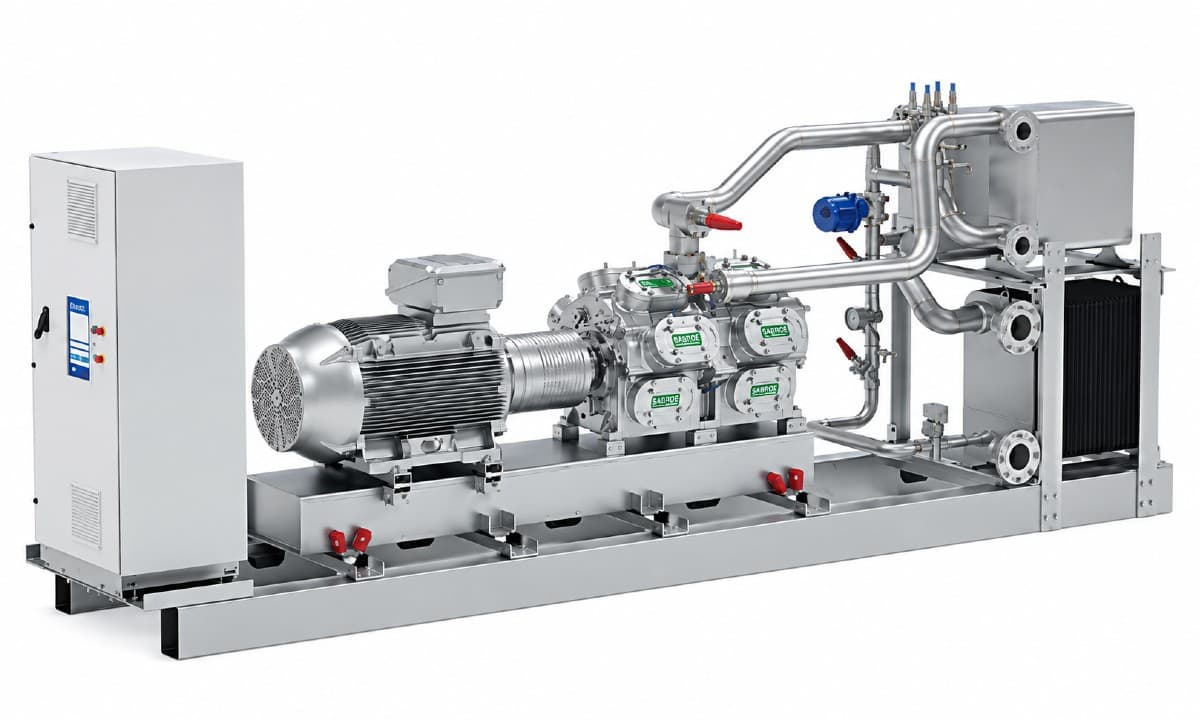
The AdO Arena, an indoor aquatic center in Bergen, Norway, expects to reduce its district heating consumption by around 36% following the installation of a CO2 (R744) heat pump system combined with hybrid solar panels, according to solar panel manufacturer DualSun.
The newly commissioned system features a 170kW (48TR)-capacity TCHP134 CO2 heat pump from Norwegian manufacturer Tequs and 437m2 (4,703ft2) of DualSun hybrid solar panels. Together, they will generate around 700,000kWh of thermal energy annually, supporting both pool heating and comfort heating throughout the facility, Vegard Døssland, Business Development Director at Tequs, told NaturalRefrigerants.com.
Prior to the system’s installation in late April, the arena consumed roughly 3.3 million kWh of heating each year. Given that Norway’s district heating network is largely fueled by waste and biomass incineration, the switch to solar and heat pump technologies is projected to reduce the arena’s CO2 emissions by “several hundred” metric tons annually, DualSun said.
“The AdO Arena has become a benchmark for community swimming pools, proving that aquatic centers can be real players in the energy transition,” the company said.
“The AdO Arena has become a benchmark for community swimming pools, proving that aquatic centers can be real players in the energy transition.”
DualSun
System design
The hybrid solar panels serve as the heat source for the system’s CO2 heat pump, providing an inlet temperature of around 6°C (42.8°F), Døssland explained. The heat pump then raises this temperature internally to 40–45°C (104–113°F), ultimately delivering a final output temperature of 65–75°C (149–167°F) for use in the arena.
Thanks to Bergen’s mild coastal climate, the system is able to produce thermal energy year round.
“It’s exciting to be part of such an ambitious initiative alongside so many forward-thinking partners,” Tequs said in a LinkedIn post.

According to Tequs, it is the first heat pump manufacturer globally to achieve Ecodesign certification for a R744-based high-temperature heat pump for space heating applications.
Beyond thermal energy, the hybrid solar panels are also expected to generate 68,000kWh of electricity annually, which will be used by both the AdO Arena and a neighboring secondary school.
The project’s estimated cost is around NOK 12.5 million (€1.08 million/$1.2 million), and the AdO Arena expects a payback period of less than 11 years. However, rising energy prices in Norway are likely to ensure a faster return on investment, DualSun noted.