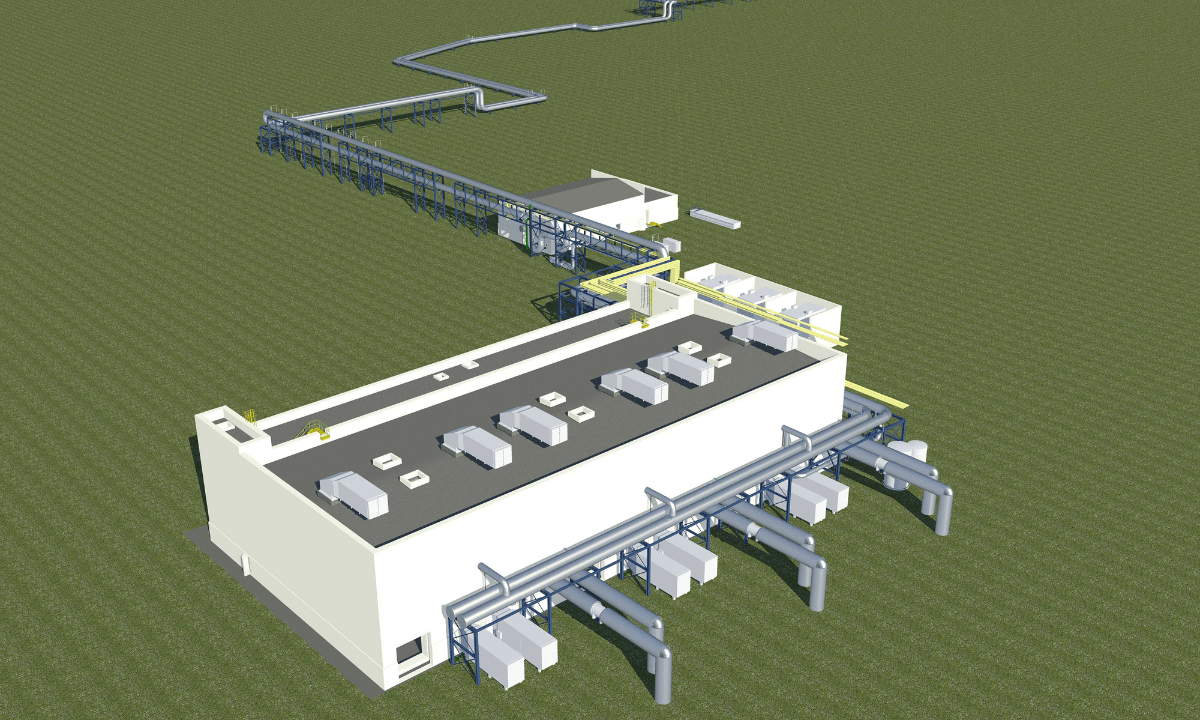
Germany-based MAN Energy Solutions has announced that its new district heating plant along the Rhine in Cologne, Germany, will be Europe’s largest river-based heat pump system with three ammonia (R717)-based heat pumps providing a total heating capacity of 150MW (42,651TR).
By contrast, today’s river-based heat pumps are “mainly limited to a pilot project size” with heating capacities of 50MW (14,217TR) or less, Simon Wächter, Senior Communications Manager, told NaturalRefrigerants.com. The three ammonia heat pumps in Cologne will each have a heating capacity of 50MW and a projected COP of 3. They will lift the Rhine’s river water from 10 to 110°C (50 to 230°F) and supply approximately 50,000 homes with heat.
As only 11.2% of homes are connected to the city’s district heating network – 64,000 homes out of a total of 564,000 – the new plant will decarbonize more than three-quarters of the city’s district heating network. The facility, which is expected to come online in 2027, will replace a fossil fuel-powered district heating plant and is estimated to cut the city’s annual emissions by 100,000 tons.
“This pioneering project marks the first deployment of our innovative, large-scale heat pump technology in Germany,” said Uwe Lauber, CEO of MAN Energy Solutions. “As the fourth-largest city in the country, Cologne is taking a leading role in showcasing how climate-neutral heat supply can succeed at a large scale.”
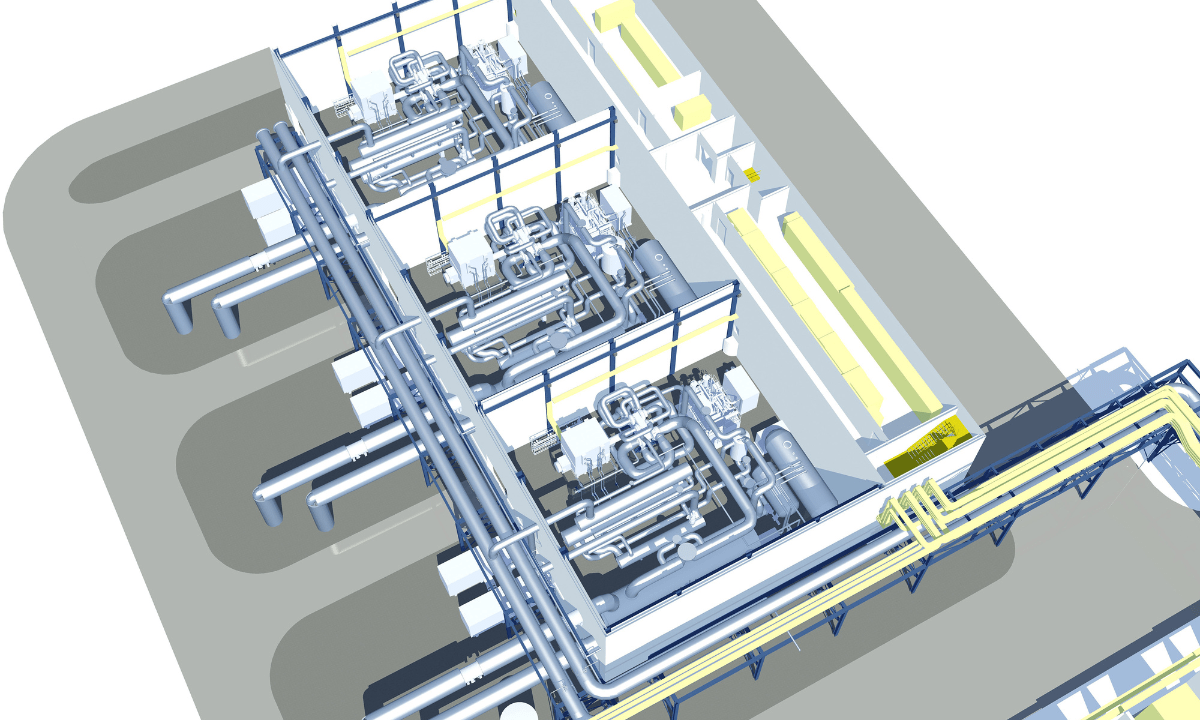
The district heating plant will be operated by utility company Rhein-Energie, which is investing €280 million ($294 million) into the project. In addition to the heat pumps, MAN Energy Solutions is also constructing buildings to house them, building the district heating pump station and supplying much of the onsite river water and district heating pipelines.
“The large-scale heat pump in [the Niehl quarter of Cologne] is a cornerstone of our long-term strategy to decarbonize the heating sector,” said Andreas Feicht, CEO of RheinEnergie. “We are pleased to have found a partner capable of delivering the project entirely from a single source, ensuring the successful realization of our vision.”
In addition to cutting emissions, the new heat pumps can also help stabilize the local energy grid by rapidly ramping up or down their energy consumption.
Bigger and bigger
MAN Energy Solutions has gone all-in on large-scale heat pump projects for district heating networks. The company, which also manufactures other industrial systems, recently announced that one of its 30MW (8,530TR) CO2 (R744) heat pumps at a district heating plant in Esbjerg, Denmark, had come online and was supplying 25,000 homes with heat.
The plant, which will eventually have two CO2 heat pumps and a total heating capacity of 60MW (17,060TR), sits on the North Sea coast and uses seawater from 1–18°C (33–64°F) as its heat source, which is heated to 70–90°C (158–190°F) for use in the district heating network.
This past summer, MAN Energy Solutions said it would supply a fourth 44MW (12,511TR) CO2 heat pump to a district heating plant under construction in Aalborg, Denmark, increasing its total heating capacity to 177MW (50,329TR). Like Esbjerg, the Aalborg district heating plant also uses seawater as its heat source, with the seawater temperature raised from 2–3°C to 98°C (35–37°F to 208.4°F).
The district heating plant in Aalborg was originally set to have three heat pumps, but its modular design enabled it to add a fourth unit to meet higher-than-expected demand. Wächter confirmed that the Cologne district heating plant is built with a similar modular setup and that “if required, further [heat pump] modules can be added.
Rising demand in Germany
In addition to Cologne, other German cities are employing ammonia heat pumps to decarbonize their district heating networks.
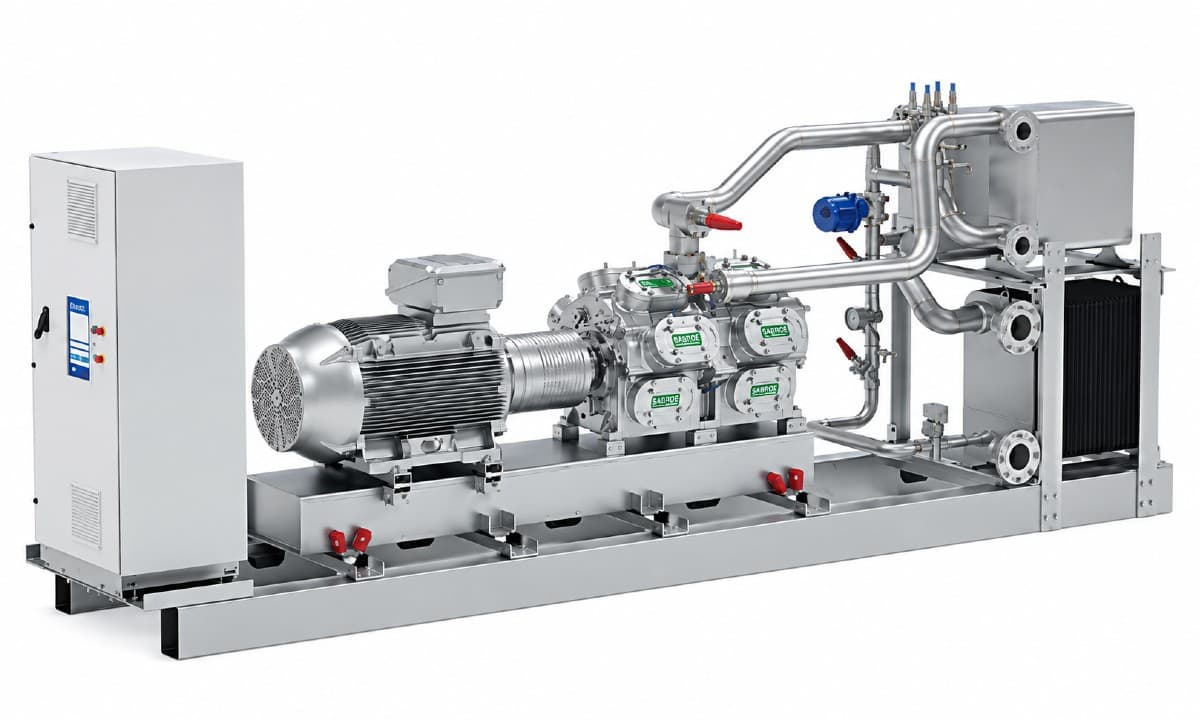
Sabroe, a Danish subsidiary of Johnson Controls, announced in November that it was providing a two-stage ammonia heat pump for use in a district heating plant in Neustadt in Holstein. The heat pump has a heating capacity of 700kW (199TR) and a water flow temperature of up to 72°C (161°F). It’s expected to provide 700–800 households, as well as a hotel and local businesses in the city’s harbor district, with heat when the district heating plant begins operations in mid-2025.
In February, German HVAC&R manufacturer GEA announced it had supplied two ammonia heat pumps to the town of Lemgo, which sourced heat from wastewater, a combined heat and power plant and the city’s river. The two heat pumps have a combined heating capacity of 3.2MW (909TR) and a flow temperature of 82°C (179.6°F).
“This pioneering project marks the first deployment of our innovative, large-scale heat pump technology in Germany.”
Uwe Lauber, CEO of MAN Energy Solutions