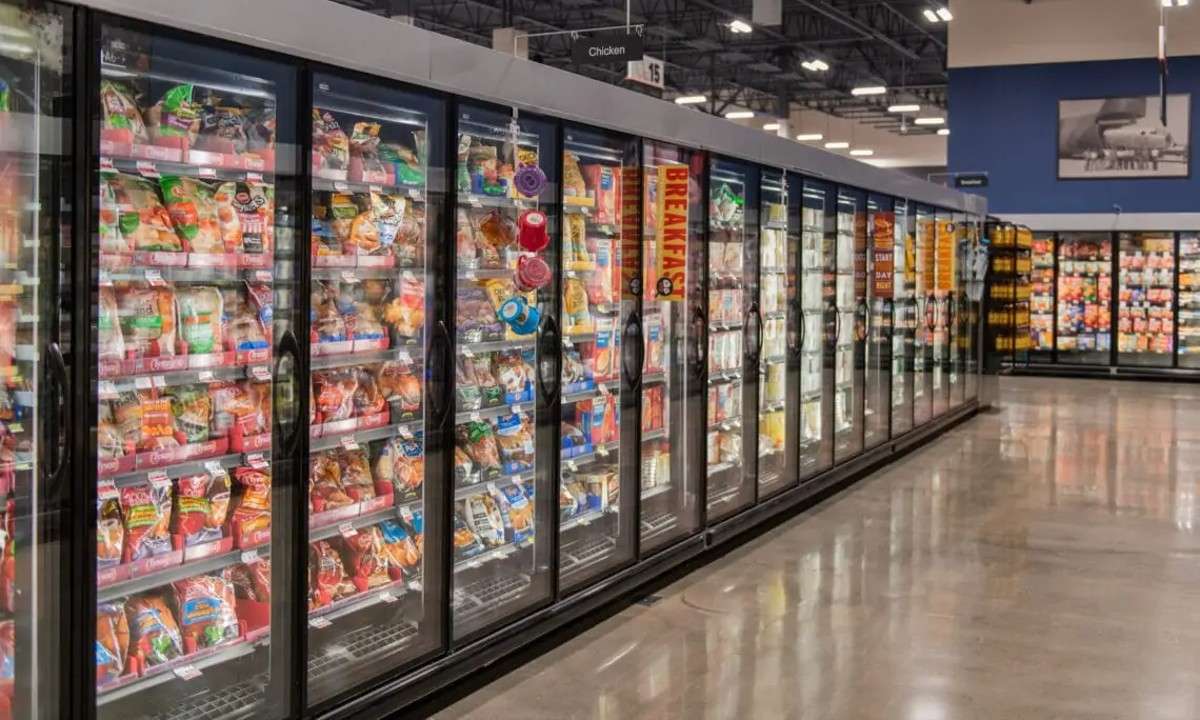
U.S. OEM Zero Zone announced that it is offering 90bar (1305psi)-rated display cases and low-side system components for its transcritical CO2 (R744) systems to reduce the frequency and impact of refrigeration safety relief events.
The pressure rating in a CO2 system for cases and low-side components (everything from the outlet of the high-pressure expansion valve up to the outlet of the compressors) has traditionally been 45bar (653psi), which Zero Zone will continue to offer. High-side components continue to be rated at 130bar (1,885psi).
The 90bar components allows for greater temperature tolerance during downtime events, such as power outages, reducing the likelihood of safety relief events and minimizing refrigerant loss. “Our vision at Zero Zone is to preserve customer valuables through refrigeration,” said Kali Kinziger, Product Manager for the Cases Division, in a statement. “Offering 90bar as a solution helps us achieve that goal. By reducing refrigerant loss, we’re making a sustainable choice with long-term value.”
The higher pressure rating also offers “more safety in cases that use hot-gas defrost,” said Dan O’Brien, President of Zero Zone.
Zero Zone has offered 90bar system components since 2021 but officially announced this offering, along with the 90bar cases, in September at the FMI (Food Industry Association) Energy and Store Development Conference in Baltimore.
The 90bar pressure rating provides “insurance” to end users of transcritical CO2 systems, said O’Brien, who added that the cost premium for the 90bar equipment is 20%. Given that 90bar equipment could prevent venting of CO2 refrigerant in a power failure and other events, “the jury is still out” on the overall cost impact of the pressure-rating increase, he said.
“Some customers are moving in that direction [90bar],” added O’Brien. “Other customers have interest.”
Established in 1961, Zero Zone is a North Prairie, Wisconsin-based manufacturer of refrigerated glass door display cases and commercial refrigeration systems for supermarkets, drugstores, dollar stores and convenience stores. With display case plants in North Prairie and Waukesha, Wisconsin, and refrigeration systems plants in Ramsey, Minnesota and Dyersville, Iowa, Zero Zone also manufactures industrial refrigeration systems for cold storage, food processing, ice arenas and other applications.
According to O’Brien, 50% of Zero Zone’s sales volume is now in CO2 equipment, with more than two-thirds of that transcritical CO2 systems. “As regulations keep coming, that percentage will continue to grow,” he said.
Hillphoenix’s position
Another major U.S. OEM, Hillphoenix, has taken a different approach to the pressure-rating of transcritical CO2 system components, continuing to emphasize traditional ratings.
In an interview in May, Scott Martin, Senior Director Industry Relations and Compliance for Hillphoenix, agreed that liquid-line piping could benefit from a higher-pressure rating – at least 60bar (870psi) and up to 80bar (1,160psi). The liquid line is the most susceptible part of the system to pressure buildup during an outage because the liquid expands to a gas, he noted. By contrast, suction lines already contain mostly gas, which doesn’t increase in pressure nearly as fast.
As a comparison, the majority of European OEMs use 60bar in liquid lines, while 20% employ 80bar. In suction lines, the majority have 60bar for medium temperature and 30bar (435psi) for low temperature.
An important factor is the cost-benefit of going to 90bar, said Martin. He pointed out that raising the pressure rating for all in-store piping to 90bar would require the use of copper-alloy piping, upgraded evaporator coils and medium-temperature compressors for low-temperature applications. All of those would add to costs. Other strategies for minimizing charge loss, such as placing the flash-gas receiver in a walk-in cooler, would also increase the price of a transcritical CO2 installation.
“There are many design options that have various application costs; therefore, we should balance effort versus reward,” Martin said.
“Some customers are moving in that direction [90bar].”
Dan O’Brien, President of Zero Zone