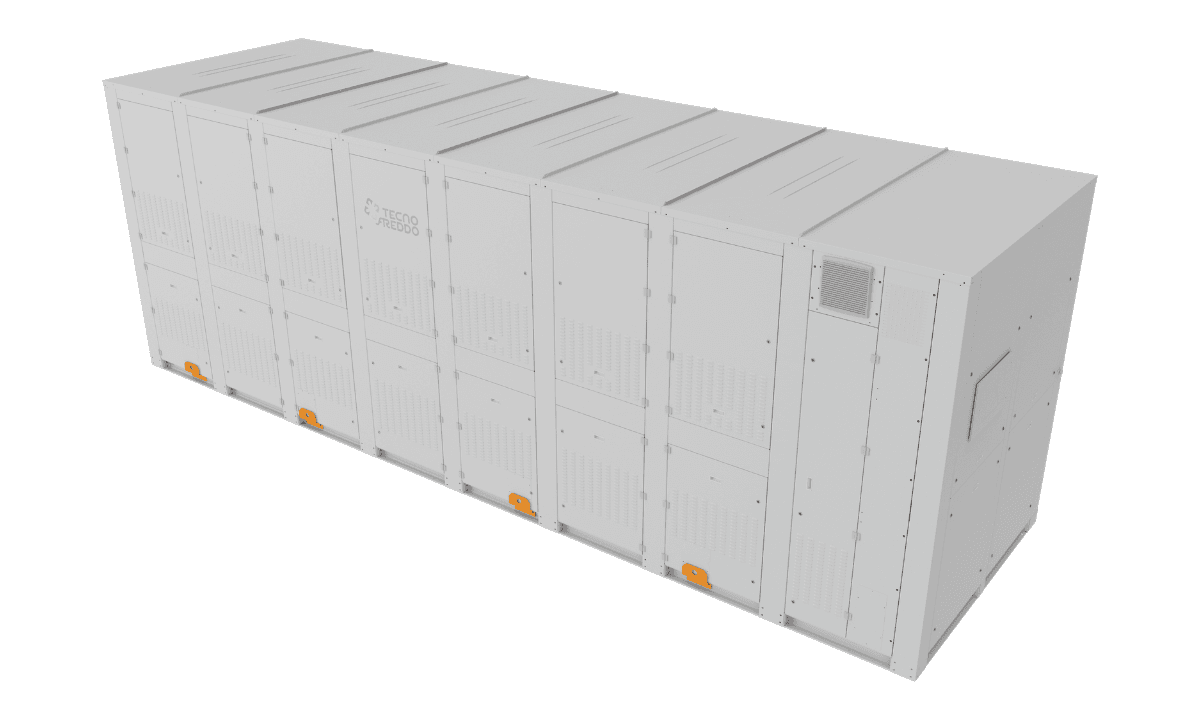
The U.S. National Science Foundation Ice Core Facility (NSF-ICF) in Denver, Colorado, has announced that it is replacing its hydrochlorofluorocarbon (HCFC)-based refrigeration system with a transcritical CO2 (R744) unit.
The Denver facility stores 82,020 feet (25,000 meters) of ice cores harvested from North America, Antarctica and Greenland. In addition to storage, the facility is also used by scientists and academics to cut ice cores for further studies back at their laboratories or universities.
The NSF-ICF is the world’s largest ice core storage facility. Its main storage room measures 55,000ft3 (1,557m3) and is kept at −32.8°F (−36°C). The facility’s examination room, where ice cores are cut, is 12,000ft3 (339m3) and is kept at −11.2°F (−24°C).
Michael Jackson, Program Director for Antarctic Earth Sciences at the NSF and the manager of the refrigeration system update, told Nature the NSF decided to replace its existing HCFC refrigeration system due to its age and poor performance. He said the move to CO2 was driven by a desire for an efficient and future-proof refrigerant.
“[It] is more efficient at low operating temperatures,” said Jackson. “It is difficult to quantify, but CO2 appears to be the most future-proof low-temperature refrigerant.”
The ice cores stored at the NSF-ICF present a window into past climatic conditions, with one of the cores dating back more than 4 million years and some drilled from depths exceeding 2 miles (3.2km). Scientists study the cores, which are formed as layers of snow are compressed one on top of another, to understand everything from past temperatures to atmospheric concentrations of CO2.
The NSF-ICF did not provide Nature with technical details of its new transcritical CO2 refrigeration system. NaturalRefrigerants.com has reached out to the facility seeking more information and will update this story with new information if it becomes available.
Moving to NatRefs
The Environmental Protection Agency (EPA) has established a GWP limit of 150 for many new types of refrigeration equipment under authority granted to it by the American Innovation and Manufacturing (AIM) Act. Compliance dates begin in 2025, and with a GWP of 1, CO2-based equipment is not subject to any restrictions.
Curt La Bombard, Curator of NSF-ICF, said his team has offered assistance to other ice core storage facilities interested in moving to transcritical CO2 refrigeration. Per Nature, a handful of universities are paying close attention to the Denver facility’s refrigeration system upgrade as they consider replacements for their own equipment. “We’re in the same boat,” Ellen Mosley-Thompson, a Paleoclimatologist at Ohio State University in Columbus, told Nature.
The NSF-ICF is not the first large ice core storage facility to opt for natural refrigerants, with Japan’s National Institute of Polar Research using an ammonia (R717) refrigeration system. Two other comparable facilities, one at the University of Alberta in Edmonton and another at the Alfred Wegener Institute in Bremerhaven, Germany, both use HFC-based refrigeration systems.
“It is difficult to quantify, but CO2 appears to be the most future-proof low-temperature refrigerant.”Michael Jackson, Program Director for Antarctic Earth Sciences at the NSF