The National Supermarket Association (NSA), a New York-based trade association for about 1,200 independent supermarkets in the New York Metropolitan Area and other East Coast cities, is seeking support for its members to make the transition from HFC refrigeration to systems using natural refrigerants such as CO2 (R744) and propane (R290).
The NSA, based in Queens, New York, is particularly focused on helping grocery members who operate in New York State, which in December 2024 enacted an ambitious update of its HFC regulations (6 NYCRR Part 494). Under the amended rules, supermarket systems and remote condensing units with refrigerant charge capacity of 50lbs (23kg) or greater have been restricted to refrigerants with a GWP20 (20-year GWP) of 580 or less as of January 1, 2026; beginning January 1, 2034, only refrigerants with a GWP20 of 10 or less will be allowed, effectively meaning natural refrigerants.
The NSA has outlined its concerns and needs regarding Part 494 rules in a position paper aimed at New York policymakers called “Closing the Compliance Gap: Why New York’s Independent Supermarkets Need More Than Mandates to Transition to Natural Refrigerants.” The paper was prepared by the NSA In partnership with ATMOsphere, publisher of NaturalRefrigerants.com, and Ozone Refrigeration, a distributor of Hussmann CO2 refrigeration equipment in the New York Metropolitan Area.
“The current regulatory framework [in New York] creates a compliance crisis for independent supermarket operators who lack the capital, technical workforce and institutional support available to national chains,” said the position paper. “The regulation mandates the destination but does not provide an adequate roadmap – or the resources – for the independent operators who need it most.”
Most NSA members are of Hispanic descent, and their stores are predominantly located in minority neighborhoods.
The position paper identifies four gaps impeding the ability of independent supermarkets in New York to comply with the regulations by transitioning to natural refrigerant systems: cost (the initial cost to purchase and install a natural refrigerant system can be approximately 25–40% more than that of conventional HFC systems), training, financing and incentives.
The paper concludes with policy recommendations that would maintain the regulation’s environmental objectives while enabling independent operators to comply: a green discount program for first-time CO2 equipment buyers, a CO2 workforce development initiative, a green refrigeration financing program and incentives beyond those available for stores in disadvantaged communities.
Working on compliance
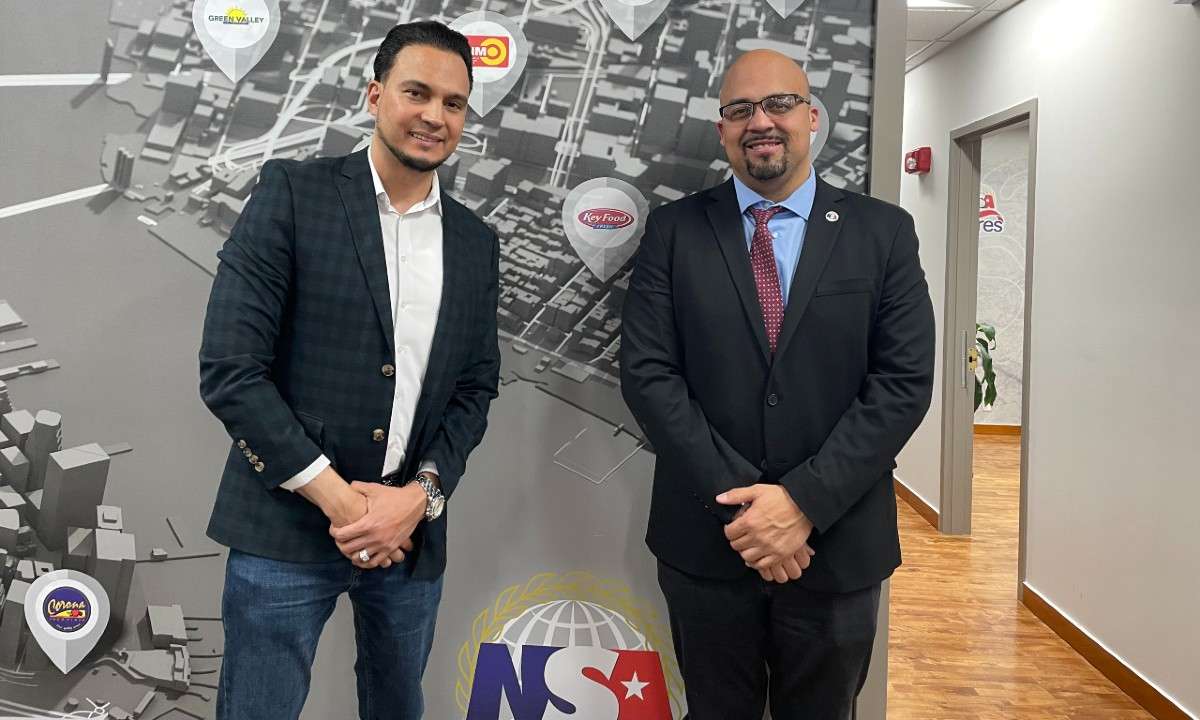
“We’re working on our end to make sure our members are compliant and that we get the resources we need to be compliant,” said Anthony Peña, who was recently elected National President of the NSA and is the owner of seven stores in Connecticut, Rhode Island and Massachusetts. He is considering CO2 systems for four new stores in Connecticut. “We want to have efficient equipment in our stores that are good for the environment and operate at a low cost.”
There are many factors involved in adopting natural refrigerant-based systems, noted Peña. “[Store owners] need funding to do this and trained mechanics.” But some technicians don’t take advantage of training opportunities and “we have to push them to go.”
“We’re working on our end to make sure our members are compliant and that we get the resources we need to be compliant.”
Anthony Peña, President of the NSA
Arturo Payamps, an NSA Board Member and General Manager of New York-based City Fresh Market stores, who is considering CO2 systems, said “we need training on CO2 because we don’t know anything about it.”
The majority of NSA supermarkets that invest in natural refrigerant equipment need to take out loans, noted Peña. Most banks do not offer low-interest financing to small grocery operators, but he is working to change that. He is also interested in obtaining discounts from equipment manufacturers for large numbers of independents that are first-time buyers.
Peña and other NSA supermarket owners will be participating in an end-users panel at the ATMOsphere America 2026 conference, which will take place in Tarrytown, New York (just north of New York City), June 2–3. They will discuss their experience with transcritical CO2 systems and the challenges small operators face in adopting these systems.
Helping overcome obstacles
Ozone Refrigeration, a distributor of Hussmann CO2 refrigeration, has been active in helping independent supermarkets overcome the obstacles to installing natural refrigerant systems.
Over the past year, Ozone has been running hands-on CO₂ and natural refrigerant training for service technicians and store operators in the New York Metropolitan market. “The program covers system fundamentals, safety protocols and operational differences between transcritical CO₂ and HFC-based systems – all tailored to the realities of NYC independent supermarkets,” said Krissy Lerner Co-Owner and Corporate Manager at Ozone. “We see technician readiness as one of the real bottlenecks to scaling natural refrigerant adoption in our market.”
She added that Hussmann has dedicated an installation team that does startup and commissioning for independents.
Ozone has also started helping qualified independents secure grants for New York independent stores that serve disadvantaged neighborhoods. These grants – $750,000 (€650,850) in the 2026 budget – come from the New York State Department of Environmental Conservation (NYDEC) and are administered by the North American Sustainable Refrigeration Council (NASRC). Last year two Key Food stores in the Bronx, New York, each received approximately $175,000 (€151,900) for R290 self-contained systems through the NYDEC/NASRC grant program; the contractor for those projects, Lynbrook, New York-based Empire Refrigeration, helped the stores obtain the grant money.
However, Ozone believes that incentives program should be expanded and available to all independent stores, not just those in disadvantaged communities. “Every store has the same compliance mandate so every store should qualify,” said Lerner.
Ozone is also working to identify green lending options for its customers. “We’re advocating for loans to be guaranteed below market rate, specifically for independent operators,” she said.
Lerner noted that Con Edison, a utility that serves New York City and Westchester County, New York, offers energy-efficiency rebates for CO2 refrigeration systems that demonstrate energy savings.
Lerner believes that policymakers should know that NSA supermarket operators, many of whom are second-generation owners, “don’t want to inherit a pollution problem – they want to be part of a solution.” The NSA position paper added that NSA and its members “are driven by more than regulatory obligation – they are committed to being active partners in ending the cycle of chemical pollution that has defined commercial refrigeration for decades.”