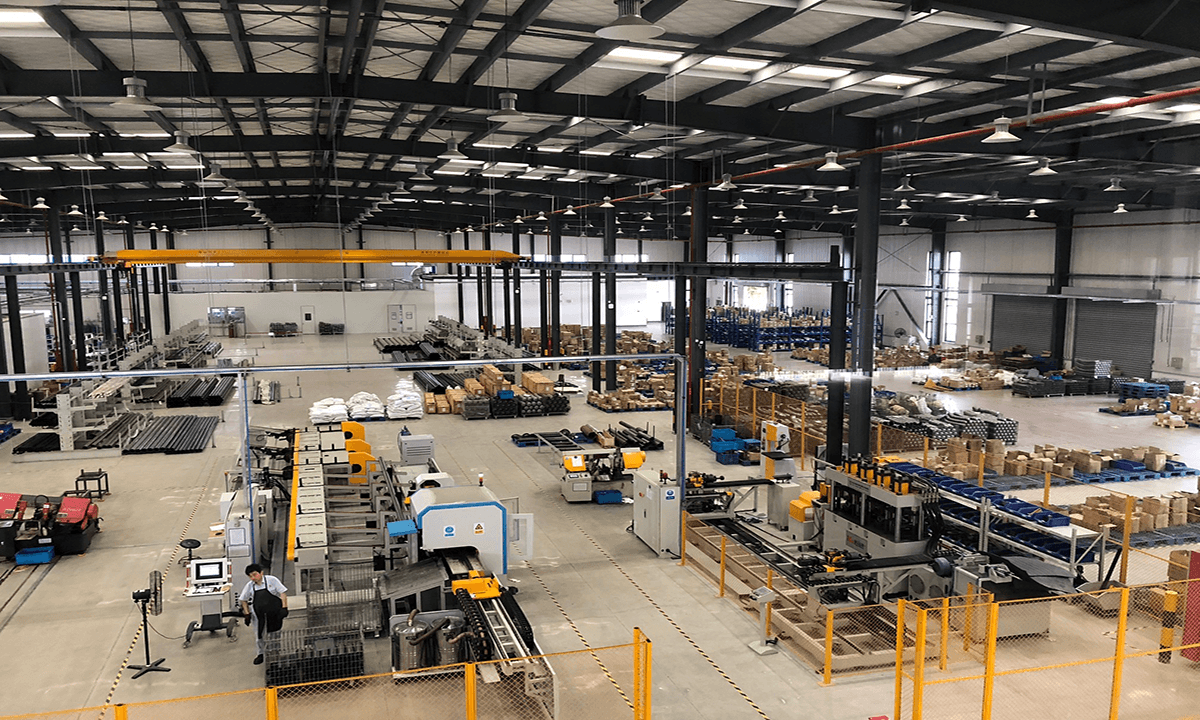
In December 2024, Henry Group Industries posted on LinkedIn about the delivery of a new CNC machine that would enable it to double the production capacity for its 57 series transcritical CO2 (R744) pressure relief valve (PRV). The addition of the CNC machine was crucial to meet the needs of the U.S. market, which is driving demand for Henry’s natural refrigerant products, according to CEO Julian Parker.
“The current major growth area for Henry Group is in the Americas, particularly the USA,” Parker told NaturalRefrigerants.com. “The move to naturals, triggered by the AIM [American Innovation and Manufacturing] Act, has driven significant demand for Henry products.”
The Hong Kong-based company manufactures components for the commercial refrigeration and air-conditioning sectors that are compatible with products using a wide range of natural refrigerants, including propane (R290), isobutane (R600a) and ammonia (R717). It has operations in Australia, China, Singapore, the United Kingdom and the United States.
In addition to growth opportunities, NaturalRefrigerants.com also spoke with Parker about the Henry Group’s R&D work, the trends the company is keeping an eye on and why it decided to join the NaturalRefrigerants.com marketplace as a gold partner.
This interview has been edited for length and clarity.

What natural refrigerants does the Henry Group develop products for, and when did the company enter the sector?
Julian Parker: Henry Group has developed products for all natural refrigerants in the mechanical cycle; specifically, it has an extensive range for R290, R744, R600a and also R717. Henry Valve Company, founded in 1914, began in the ammonia refrigeration sector, which was the industry norm at the time, as well as early CO2 systems. So, you could say we’ve been working with natural refrigerants for over 110 years.
Where is the company seeing the most growth at the moment for its natural refrigerant products and what is driving this?
JP: The current major growth area for Henry Group is in the Americas, particularly the USA. The move to naturals, triggered by the AIM Act, has driven significant demand for Henry products, which are already globally certified and have UL, ASME and CRN approvals certification. Key growth areas in the USA are manufactured customised pressure vessels – including flash tanks, receivers, oil separators, accumulators and oil reservoirs – as well as our high-pressure PRV range produced in Glasgow. We’re also seeing an increased demand in 80-bar-rated replaceable core driers.
The Henry Group describes itself as “cultivating a culture of discovery.” What new products are under development related to natural refrigerants, or what research is the company conducting?
JP: Henry Group has a number of products in the advanced design phase. Our continuing commitment to the development of energy efficient solutions drives us to innovate. Our current focus is developing our already proven range of products for naturals to meet all global certification requirements. We’re also developing several new safety valve designs, one of our signature product lines.
“Key growth areas in the USA are manufactured customised pressure vessels as well as our high-pressure PRV range produced in Glasgow.”
Julian Parker, CEO of the Henry Group
What are some emerging trends in natural refrigerants the company is keeping its eye on, and how do you expect those to impact the HVAC&R industry?
JP: We’re closely watching the growth of limited charge ammonia systems, which offer a great solution to the challenges of using this excellent refrigerant in more applications. We are also excited by the take up of R744 in smaller-kilowatt CDUs and heat pumps, as well as the transition to R290 in VRF heat pumps.
Why did the Henry Group decide to join the NaturalRefrigerants.com marketplace?
JP: Henry has a long history of producing products for naturals, but we haven’t always promoted this as actively as we could have. We see NaturalRefrigerants.com as an ideal platform to both showcase our capabilities and engage with others as we collectively work toward a cleaner, healthier and more sustainable planet.