Colombia and Ecuador have implemented regulations and pilot projects to increase the uptake of natural refrigerants in commercial and industrial refrigeration, with Colombia also offering tax-benefit incentives.
“With small actions, we can have great results,” said Luis Bedoya Jaramillo, National Consultant at the United Nations Industrial Development Organization (UNIDO) in Ecuador.
“We introduced subcritical CO2 [R744] technology in Colombia roughly 12 years ago, and now we have 150 supermarkets using transcritical CO2,” said Edwin Dickson, Specialized Technical Professional of the Ozone Technical Unit at the Colombian Ministry of Environment and Sustainable Development. “In our pilot projects, we demonstrate something tangible to show end users and the government that these systems work.”
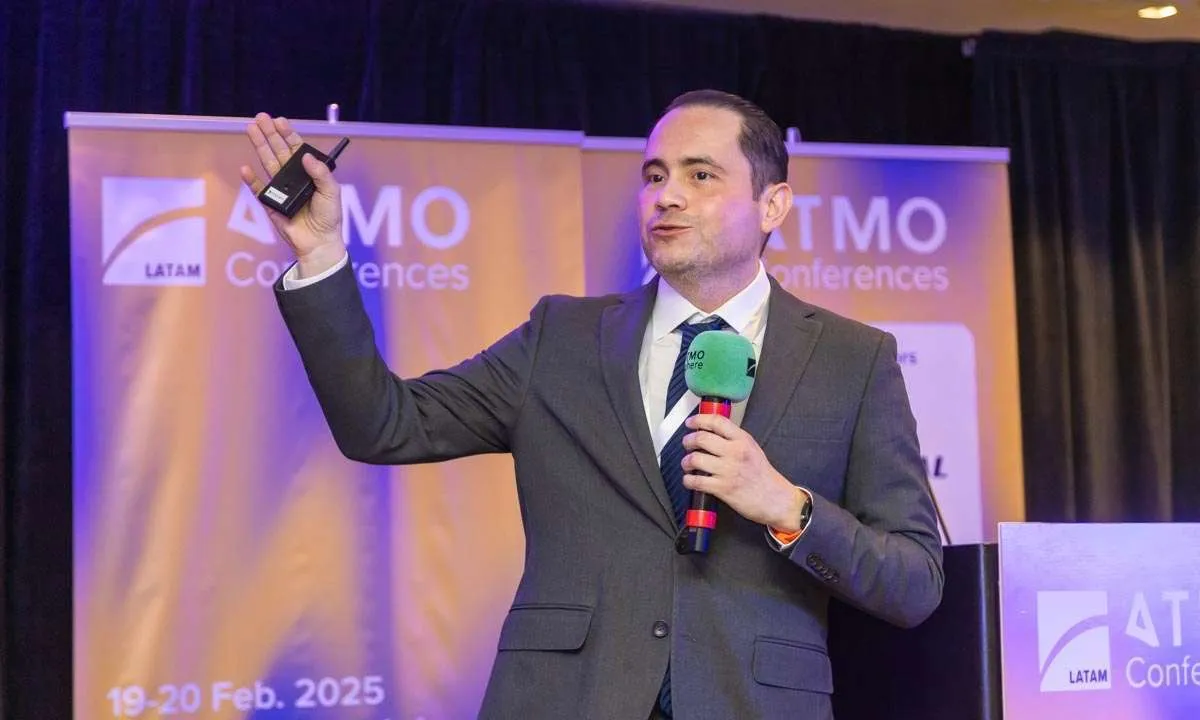
Bedoya Jaramillo and Dickson participated in a policy panel at ATMOsphere (ATMO) LATAM 2025. The event was held February 19‒20 in Mexico City and was organized by ATMOsphere, publisher of NaturalRefrigerants.com.
Financial incentives
Both countries recognize that financial support and other funding incentives are needed to support the market’s move toward adopting natural refrigerants.
According to Dickson, Colombia offers financial support from two angles: purchase incentives and energy-efficiency benefits. There are government incentives for purchasing refrigerant-based equipment with a GWP of less than 100, including tariff exemptions for imported products, exclusion of the 19% value-added tax, an income-tax deduction of 50% of the equipment’s value and an accelerated depreciation rate. End users can also apply for an additional tax benefit related to the equipment’s energy efficiency.
So far, funding for pilot projects in Ecuador has come from both local sources and international development organizations as part of the Montreal Protocol, with local funding covering 60% of the costs and supporting countries contributing the remaining 40%. However, to scale up local natural refrigerant resources and production, Bedoya Jaramillo indicated that Ecuador is seeking to work with the International Finance Corporation – an arm of the World Bank focused on the private sector – and international manufacturing companies.
“We don’t want the investment of new centers and buildings to consider only intermediate solutions,” said Bedoya Jaramillo. “We want definitive solutions with natural refrigerants.”
“We want definitive solutions with natural refrigerants.”
Luis Bedoya Jaramillo, National Consultant at UNIDO in Ecuador
Pilot projects
In Colombia, past projects have shown the efficiency of propane (R290) in commercial and industrial applications, with installations built in compliance with international safety standards. “We have R290 chillers with 5kg of charge meeting medium-temperature loads in stores and 25HP [equipment] in cold storage warehouses with R290 charges up to 25kg,” said Dickson.
When it comes to CO2 systems, Colombia finds large-scale applications efficient. However, the country has yet to see the same efficiency in small-format stores. “People say that the power efficiency is not enough for small-scale CO2 applications, but we will see,” Dickson remarked, adding that a pilot project is underway
In Ecuador, a 2020 cold storage project for an Irish florist facility replaced an R22 system with an R290 one. “The new system cut energy consumption by 37% and reduced the equipment operation time from 15 hours a day to seven,” said Bedoya Jaramillo. “It improved the potency of the operation by 20%, with the average 2.5°C [36.5°F] working temperature of the R22 system improved to 2.0°C [35.6°F] with R290 without freezing issues.”
Ecuador has two additional retrofit pilot projects in progress that will see synthetic chillers swapped out for R290 ones: a La Fabril fish processing center in Manta replacing its 30TR (106kW) R22 chiller and a food bank in Quito swapping out its R507 chiller.
The food bank requires a storage temperature between 0 and 4°C (32 and 39.2°F). “We store up to [17 metric tons] of recovered food at the bank,” Bedoya Jaramillo said. “It’s an interesting social project using natural refrigerants, with installation set to start next week.”
Regulations/training
Bedoya Jaramillo and Dickson also outlined regulatory steps to cut carbon emissions related to refrigerants and highlighted the need for technician training.
According to Dickson, Colombia has outlined HFC import restrictions and regulations for the handling, reuse and disposal of synthetics. However, he added, if toxic, flammable or high-pressure refrigerants are the replacement, the systems must be safe and technicians appropriately trained.
Bedoya Jaramillo said that Ecuador faces an energy crisis, with air-conditioning accounting for 41% of its energy consumption. The country has updated its energy efficiency regulations for new AC equipment to be on par with EU standards. It also requires registration for importers of equipment with a refrigerant, which allows Ecuador to link refrigerant volumes to waste-management targets.
To support the uptake of sustainable refrigerant options, Ecuador has initiated several technician training initiatives in the past two years, including ammonia (R717) training days and the opening of hydrocarbon technician training centers in Quito and Guayaquil. Ecuador only has 2,000 HVAC&R technicians, according to Bedoya Jaramillo.
“In our pilot projects, we demonstrate something tangible to show end users and the government that these systems work.”
Edwin Dickson, Specialized Technical Professional at the Colombian Ministry of Environment and Sustainable Development