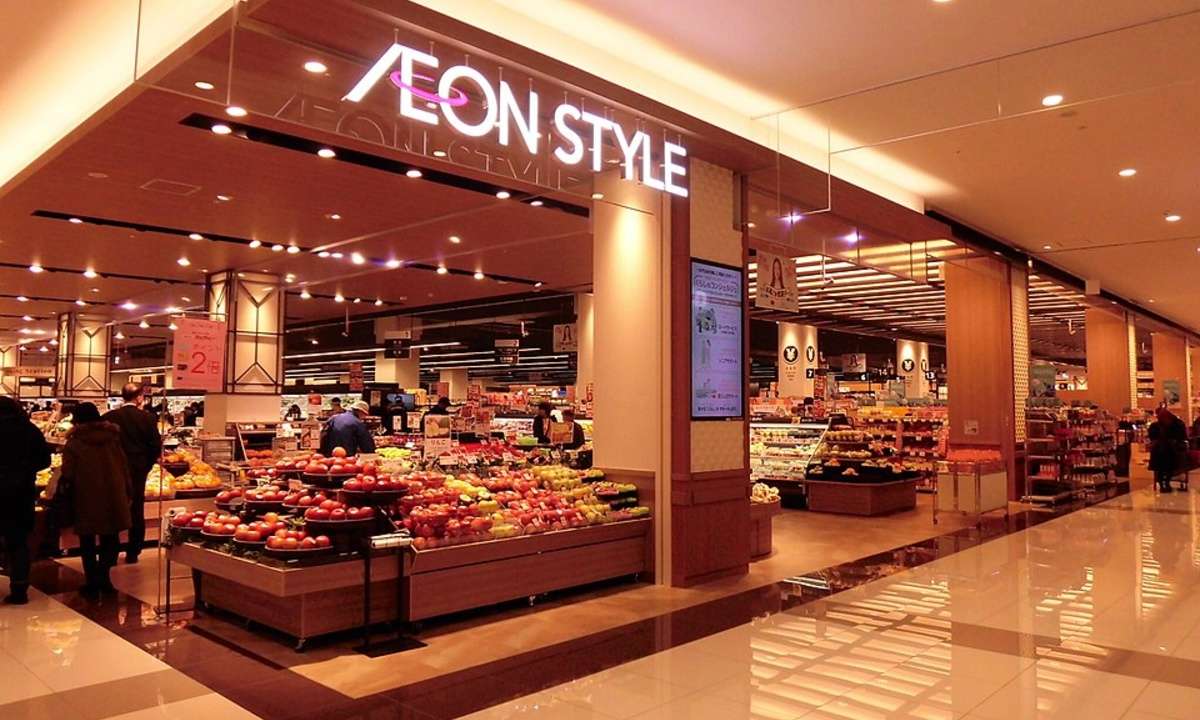
Multinational retailer AEON has announced plans to transition all refrigeration and freezer units in its Japanese stores to natural refrigerants by the end of fiscal year 2040 as part of its broader efforts to cut carbon emissions and promote sustainable operations.
The company, which has been installing CO2 (R744)- and hydrocarbon-based refrigeration units at its new stores since 2015, is now working to gradually replace f-gas equipment at its existing stores, prioritizing older units. AEON aims to convert 4% of its systems by the end of this fiscal year and 30% by 2030. The rollout will be coordinated with store renovation schedules.
“Fluorocarbons used in refrigeration and freezer units have very high GWP, and their leakage into the atmosphere has become a serious concern, prompting calls for a transition to natural refrigerants,” the company stated.
As of February 2024, around 22% of AEON’s 7,788 general merchandise, supermarket, convenience and drug stores in Japan used natural refrigerant-based systems, according to the company’s annual report. However, it is unclear whether these stores operate entirely on natural refrigerants or if only certain equipment has been installed. By February 2025, the number of natural refrigerant units in operation had reached approximately 5,300.
AEON’s adoption of natural refrigerants began in 2009, when it said it became the first retailer in Japan to install such systems. In 2011, the company issued a Natural Refrigerant Declaration, though it had not previously committed to specific transition targets until now.
AEON has emphasized that the “phased elimination” of high-GWP refrigerants is a core component of its 2040 net-zero emissions goal, outlined in its Decarbonization Vision. The company also expects the shift to help reduce long-term maintenance costs.
“Fluorocarbons used in refrigeration and freezer units have very high GWP, and their leakage into the atmosphere has become a serious concern, prompting calls for a transition to natural refrigerants.”
AEON
Overcoming barriers
Only about 20% of Japan’s convenience stores and 3.5% of its supermarkets had adopted transcritical CO2 refrigeration by December 2024, according to ATMOsphere’s “Natural Refrigerants: State of the Industry 2024” report. ATMOsphere is the publisher of NaturalRefrigerants.com. In contrast, approximately 30% of food retailers in Europe had already made the switch.
AEON has said that high costs and limited equipment availability have been key obstacles in its transition to natural refrigerants.
At the ATMOsphere Asia-Pacific Summit 2024, Masafumi Okuda, AEON’s Manager of Corporate Social Responsibility Department, emphasized the critical role of government subsidies in accelerating Japan’s adoption of natural refrigerant technologies. In its latest statement, AEON has said it intends to continue “leveraging available subsidies” to support its transition. In June 2023, the Japanese Ministry of the Environment declared it will continue its natural refrigeration equipment installation subsidy project through fiscal year 2027.
To further address industry-wide challenges, AEON said it will collaborate with the national government and manufacturers to develop new construction standards, ease regulatory barriers and help bring down installation costs.