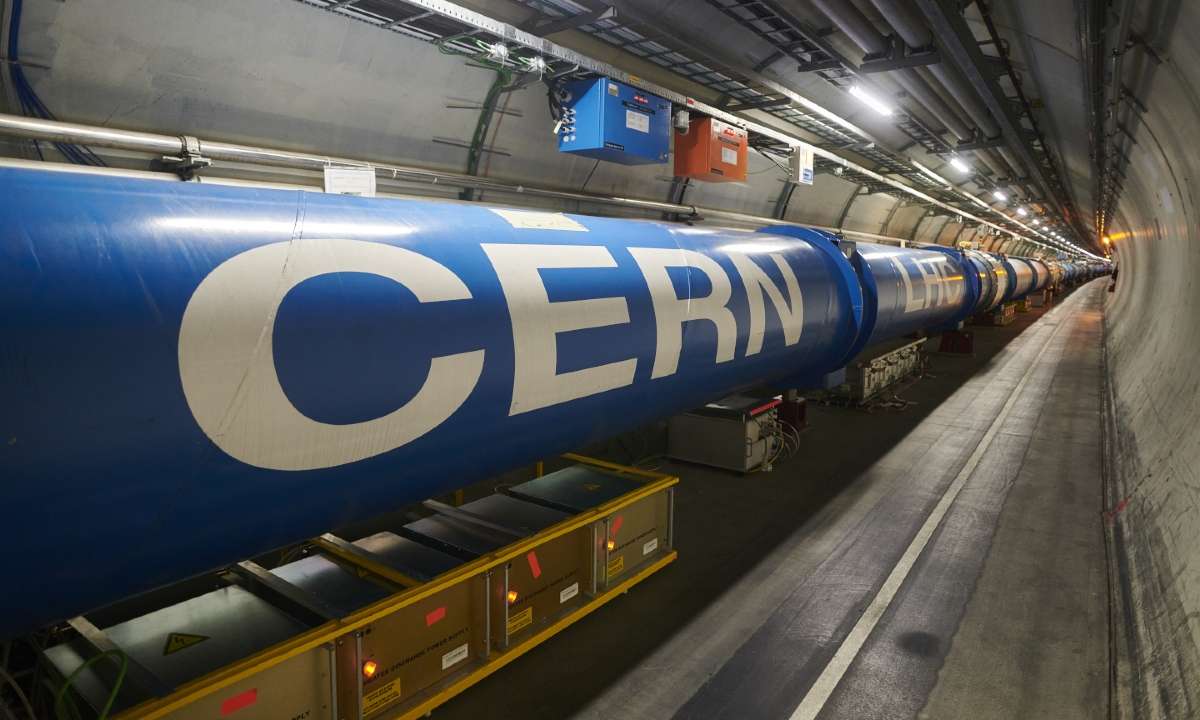
CERN is installing two new CO2 (R744)-based cooling systems at its Large Hadron Collider (LHC) – located on the France–Switzerland border – that are expected to reduce the facility’s greenhouse gas emissions by 40,000 metric tons of CO2e per year.
The chillers will help regulate the temperature of particle detectors at the facility’s ATLAS and CMS sites during its fourth operational run, scheduled to begin in 2030. Positioned at surface level, the systems will cool the CO2 to −53°C (−63.4°F) before it is piped 90m (295ft) underground to heat exchangers in cavern-based cooling plants that then cool the detector equipment.
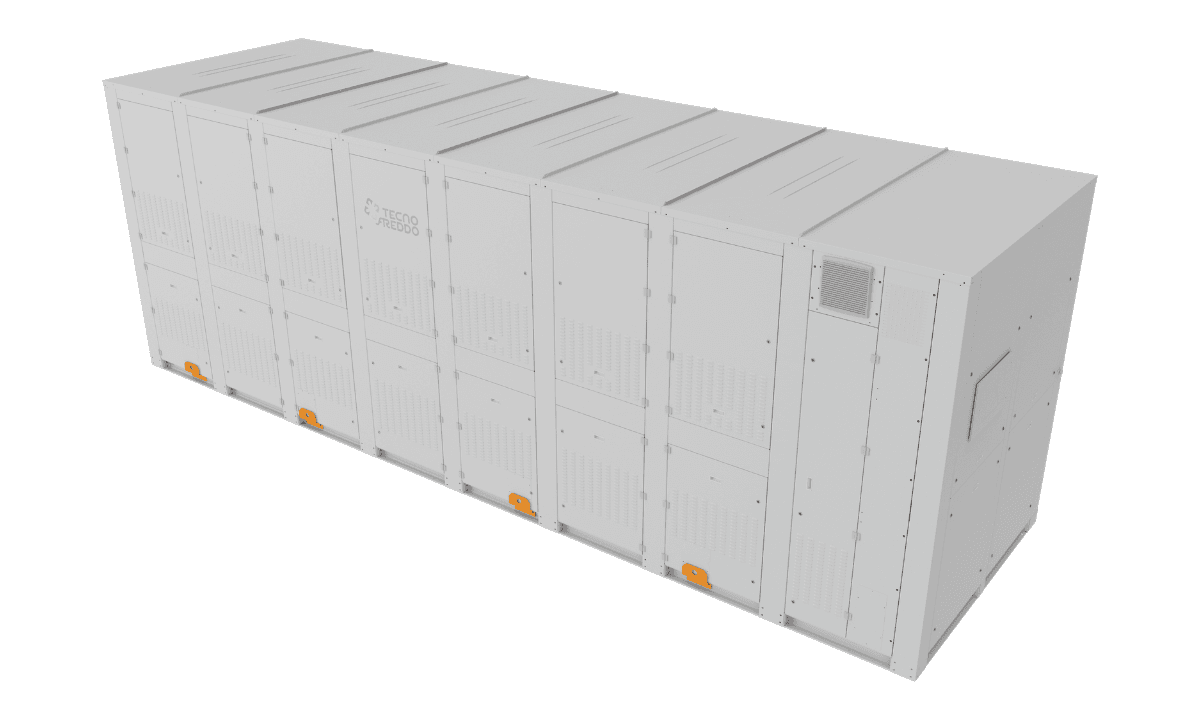
In total, 18 70kW (20TR)-capacity cooling modules will be installed across the two sites – seven at ATLAS and 11 at CMS – offering a combined capacity of 1.3MW (370TR).
The cooling systems, under development since 2020, represent a novel combination of subcritical and transcritical CO2 technologies, explained Dirk Leuteritz, Head of Sales at Compact Kältetechnik – the German company that helped develop the solution. This concept was not available anywhere on the market before the project, he noted.
“This is a unique concept of cooling,” he said during a presentation on the project at the Industrial Refrigeration Network (IRN) conference alongside Robert Funcke, International Sales at German technology company InfraSolution.
The IRN conference was organized by Bitzer and held June 6–7 in Rottenburg am Neckar, Germany.
“This is a unique concept of cooling.”
Dirk Leuteritz, Head of Sales at Compact Kältetechnik
The technology
The system was designed to prioritize reliability and safety by leveraging proven components from commercial and industrial HVAC&R systems.
Each compact module is designed as a two-stage transcritical CO2 compression circuit, with two low-pressure compressors and one medium-pressure compressor, all from Bitzer. To help ensure flexible capacity control, each compressor has been fitted with a frequency drive. They also contain many heat exchangers, two liquid receivers, mounted middle- and high-pressure valves and the second and third stages of oil separation.
CERN specified that the new cooling systems must use natural refrigerants. Given its safety profile, favorable thermodynamic properties and proven reliability at CERN and in broader HVAC&R applications, CO2 was deemed the most suitable option.
“Over and above environmental considerations, the choice of the new cooling system will equip the ATLAS and CMS detectors to cope with the increased ionizing radiation associated with high luminosity,” explained Paolo Petagna, Section Leader at CERN. “In this hostile environment, it’s crucial that we provide the collaborations with the lowest possible temperatures.”
Fourth run
Between July 2026 and June 2030, CERN will shut down the LHC to allow for refurbishment and installation work in preparation for its fourth run, which will be a high-luminosity run, involving significantly more particle collisions. The new CO2 systems will help maintain ultra-low detector temperatures, which are critical for managing both heat dissipation and radiation damage.
Installation of the CO2 systems at ATLAS and CMS are already underway and are expected to conclude in September 2025. Underground work will take place during the LHC’s shutdown.
Renovating the cooling systems at the ATLAS and CMS detectors will help to “drastically reduce” the facility’s direct emissions, CERN said. The project could also accelerate a broader transition to CO2-based systems across the facility, much of which still depends on high-GWP refrigerants like perfluorocarbons. Beyond CERN, the initiative can support the adoption of CO2 refrigeration in other cooling-intensive sectors.
“The development of these large-scale CO2 cooling systems is a striking example of the transfer of CERN’s own know-how to European industry,” said Roberto Bozzi, Project Engineer at CERN, in 2023. “Partner companies will be able to reproduce this solution and disseminate it in cooling-intensive sectors such as the food and pharmaceutical industries, thereby contributing to the green transition of those industries.”
“The development of these large-scale CO2 cooling systems is a striking example of the transfer of CERN’s own know-how to European industry.”
Roberto Bozzi, Project Engineer at CERN