On March 23, 2005, a hydrocarbon vapor cloud ignited and violently exploded at a BP-owned oil refinery in Texas City, Texas. It resulted in the death of 15 workers, 180 injuries and severe damage to the refinery.
In response, the U.S. Chemical Safety and Hazard Investigation Board recommended that the petrochemical industry develop performance indicators for process safety. The American Petroleum Institute (API) created the Recommended Practice (RP) 754 Process Safety Performance Indicators for the Refining and Petrochemical Industries, now in its third edition. They incorporate Title 49 of the Code of Federal Regulations (CFR), the Department of Transportation (DOT) rules that include hazardous materials transportation regulations.
The RP 754 document says it “may also be applicable to other industries with operating systems and processes where loss of containment has the potential to cause harm.”
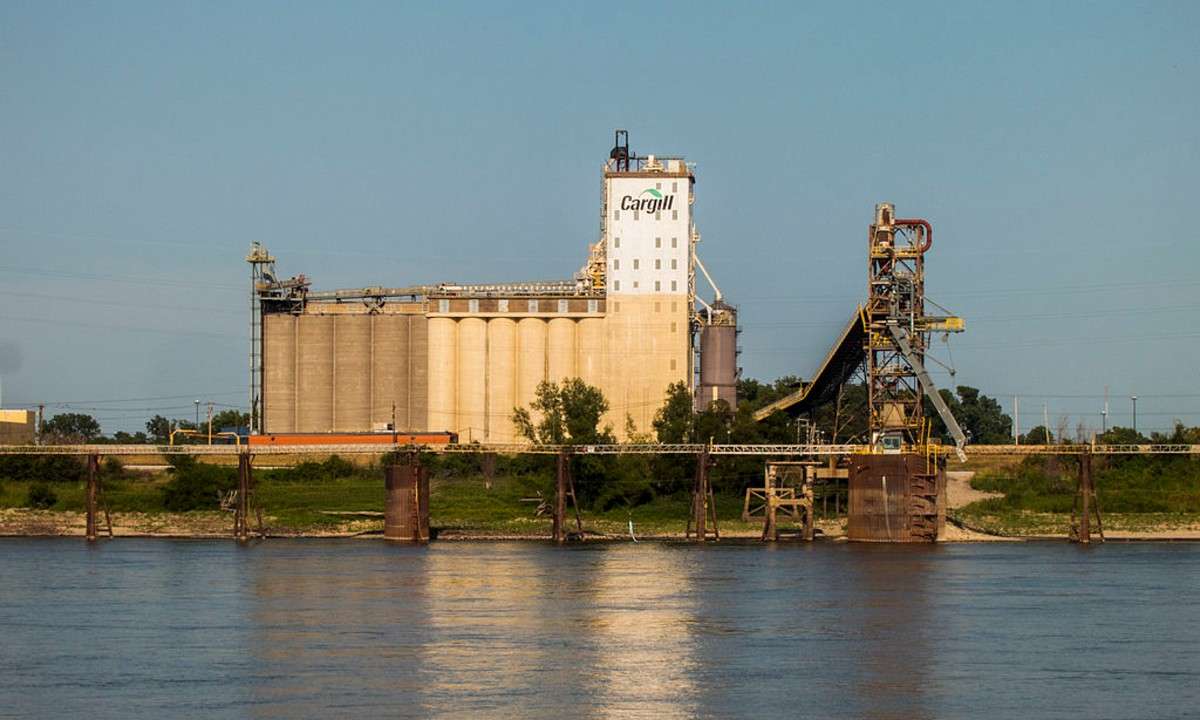
U.S.-based multinational food processing company Cargill has used the API’s RP 754 performance indicators as the basis for creating something similar for ammonia (R717) refrigeration, explained Michael Lamers, Regional Process Safety Specialist at Cargill Kitchen Solutions, at an end-users forum at the 2025 IIAR Natural Refrigeration Conference and Heavy Equipment Expo on March 5 in Phoenix, Arizona.
These performance indicators, organized in a dashboard, can be used to help users of ammonia refrigeration to comply with federal regulations – the Process Safety Management (PSM) set by the Occupational Safety and Health Administration (OSHA) and the Risk Management Program (RMP) established by the Environmental Protection Agency (EPA). PSM and RMP regulations apply to facilities that use 10,000lbs (4,536kg) or more of ammonia.
“We don’t really have an ammonia industry standard for performance metrics but we can use [RP 754] to point to potential failure of refrigeration equipment, said Lamers, adding that performance data is key to securing upper-level management buy-in for making safety improvements.
RP 754 classifies process safety indicators into four tiers of “leading and lagging indicators.” Lagging indicators (Tiers 1 and 2) describe incidents that have occurred, while leading indicators (Tiers 3 and 4) are warning signs for potential accidents. “Lagging indicators are good, they show past trends, but they’re retrospective,” he said. “Leading indicators show us where we’re going versus where we’ve been.”
Coming up with numbers
Tier 1 indicators, which describe the highest impact incidents, are “based on how dangerous we think it is,” said Lamers, adding that they can be adjusted. He suggested a release of at least 44lbs (20kg) of ammonia indoors, and 440lbs (200kg) outdoors, and monetary values such as $1 million or $2 million for fatalities or lost-time injuries for employees and public protective measures such as closing a road or having to “evacuate the McDonald’s across the street.”
Tier 2 indicators would be incidents of lesser severity such as a release of at least 22lbs (10kg) indoors and 44lbs outdoors, and a lower dollar amount. Tier 3 are broader indicators that describe a “challenge to a safety system,” he said, including safeguards found to be non-operational during an inspection or process hazard analysis [PHA].
“We all calibrate our [leak] detectors and test our flow switches and our compressor cutouts, and if they don’t work, we hopefully fix them,” Lamers said. “But how do we document that that happened? How often does that happen at your plant? How often does that happen across your entire company? Do we know what that number is?”
A PHA, for example, would document that there are enough safeguards to protect the plant in the event of a malfunction in a compressor that causes an ammonia release.
Tier 4 indicators cover lapses in operational discipline, such as overdue pressure release valve (PRV) change-outs. “Maybe you built a plant and you put a bunch of relief valves in, and you’re having issues getting them from a certain relief valve manufacturer,” he said.
Tiers 1 and 2 are reflective of industry trends while tiers 3 and 4 are related to internal trends. In the discussion following Lamers presentation, it was suggested that the IIAR formalize industry standards for tiers 1 and 2.
Telling a story
By documenting a plant’s leading and lagging indicators, “we can tell a story of how healthy our programs are right now,” said Lamers, who previously performed this function in the aviation industry. It is particularly important in the ammonia refrigeration industry, where refrigeration is a utility that is often “on the periphery” of upper management’s concerns.
Added Lamers: “If you had an elevator ride with your top management, or if you had five minutes of their attention – because lots of times that’s all we get – what do they need to know about where the risks are?”
In monthly reports about performance, top management should obviously be informed about tier 1 and 2 events, and investigations related to those. But tier 3 past-due compliance actions “are good to put in there,” he said. “Because if you have past-due compliance actions, and you want to close those as soon as possible, there’s usually a hefty price tag involved.”
Other questions that could be addressed in a tier 3 and 4 dashboard, using Microsoft Excel or Power BI:
- Do we aggressively pursue fixing our mechanical integrity issues?
- How good are we at closing audit findings?
- Do we close PHA recommendations in a timely manner?
- How many management of change (MOC) actions are implemented without proper approval?
“We want to show the health of our PSM programs in just four tiers of information,” said Lamers. “Just not having incidents isn’t necessarily a true indicator of how good your PSM programs are.”
“If you had an elevator ride with your top management, or if you had five minutes of their attention – because lots of times that’s all we get – what do they need to know about where the risks are?”
Michael Lamers, Regional Process Safety Specialist at Cargill Kitchen Solutions
Cargill has a wide range of cooling and heating needs across its operations, including deep freezing for its meat and poultry processing, medium-temperature cooling for its chocolate and animal feed production, and cold storage facilities, as well as heating for various production processes and spacing heating in its offices.
The company has a long history with ammonia, with more than 75 of its factories using ammonia-based refrigeration systems. The company is now choosing packaged units and cascade systems to ensure that the ammonia is fully confined to the machinery room, according to a presentation at ATMO Europe in 2023, organized by ATMOsphere, publisher of NaturalRefrigerants.com. For smaller applications, it is considering CO2 (R744) systems.