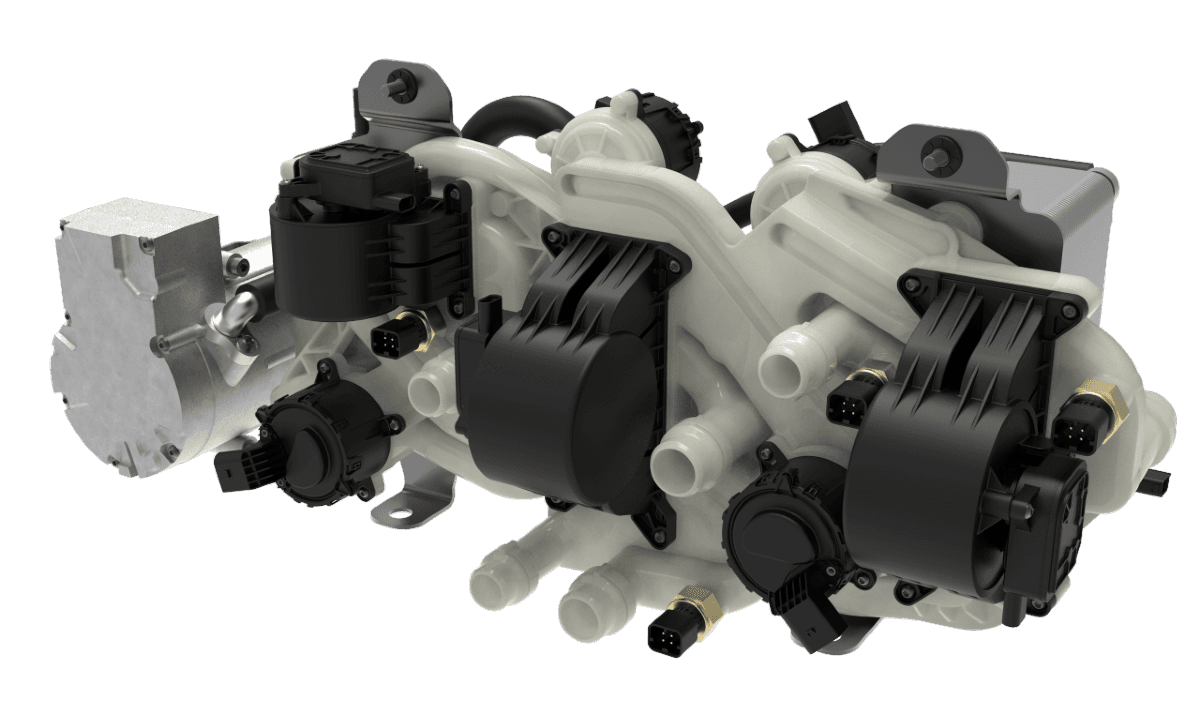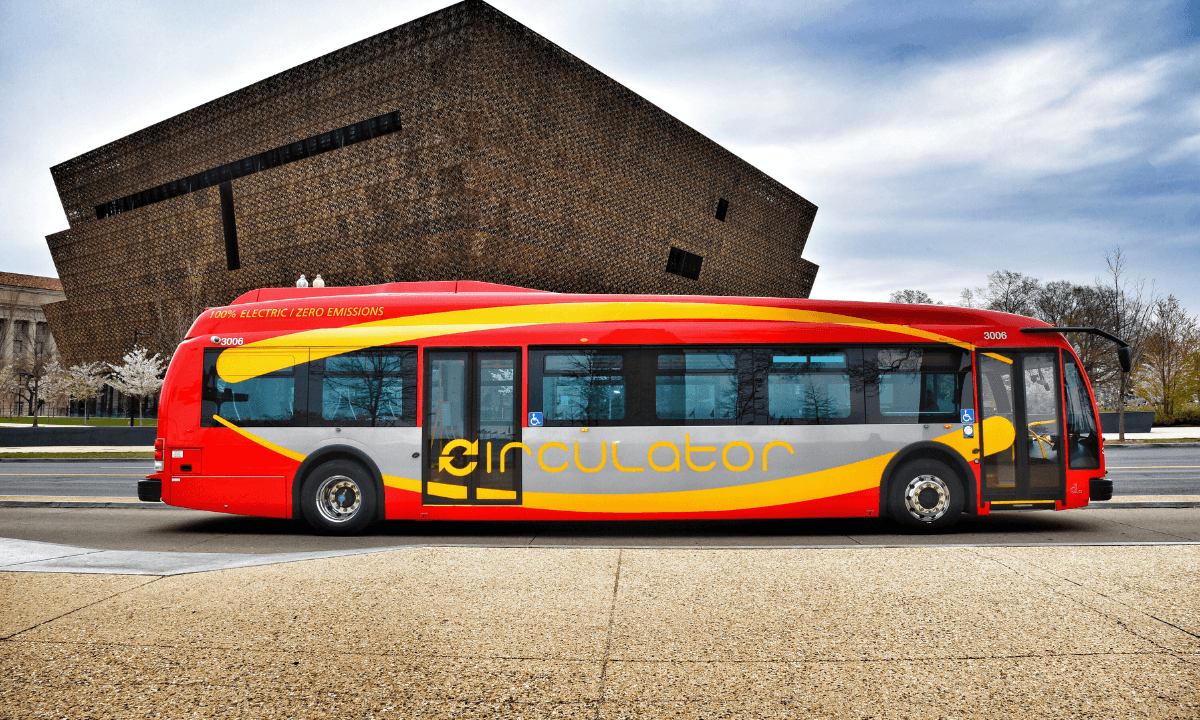
Aurora Netherlands, a vehicle HVAC manufacturer, has developed and tested a dual secondary loop propane (R290) heat pump HVAC system for electric buses with the involvement of the German technical inspection association TÜV Süd in the safety approach, according to Aurora’s Sales Director, Paul van Rooijen.
In 2019 Dutch-based VDL Bus Group initiated the development of the R290 system, Van Rooijen said. He explained the safety measures taken to mitigate the risks associated with the flammable refrigerant in a presentation at the ATMO MAC Summit 2025 × TU Berlin.
The event was hosted by ATMOsphere, publisher of NaturalRefrigerants.com, in partnership with Technische Universität (TU) Berlin’s Department of Heat Transfer and Heat Conversion. It took place September 23–24 on the university’s campus.
“TÜV Süd proposed 19 specific measures to sufficiently control the identified hazards,” Van Rooijen said. “We have a detection system with an infrared R290 sensor linked to a safety box, which can immobilize the heat pump.”
The roof-mounted hermetically sealed heat pump contains 1,250g of R290, which cools or heats the cabin through a secondary 50/50 water/glycol mixture via a heat exchanger. The system, with a Copeland scroll compressor, provides a cooling capacity of 23kW (6.5TR) at an ambient temperature of 38°C (100.4°F) with an EER of 1.7 and a heating capacity of 13kW (3.7TR) at an ambient temperature of −15°C (5°F) with an EER of 1.5.
Safety measures: Aurora’s calculations indicated the near impossibility of effectively ventilating the refrigerant compartment and evacuating the gas in the case of a leak, according to Van Rooijen. Instead of ventilation, the company focused on a sealed ATEX–proof refrigerant compartment with a leak detection system.
- In case of a leak the system shuts down the heat pump through a series of relays and notifies the bus operator. The system only resumes operation when manually reset, which requires that a technician verify the leak.
- “The rigid design of the heat pump prevents it from breaking apart in a crash due to the G forces,” Van Rooijen said, adding that the refrigerant model can be easily swapped out from the system.
- “The refrigerant circuit itself is designed to be maintenance-free,” he explained. “A pressure relief valve located after the compressor discharges refrigerant to the outside air if a thermal incident causes excessive pressure. On the water side, an overpressure valve protects the heat exchanger.”
System advantages: “Compared to R407C, propane offers a broader temperature range with the same reliability,” Van Rooijen said, with the developed R290 unit capable of operating in ambient conditions from −15 to 49°C (5 to 120.2°F). R407C typically condenses at around 60°C (140°F), whereas R290 can reach up to 70°C (158°F).
- Another advantage comes from the secondary loop design, which Van Rooijen said allows the addition of thermal battery storage, both cooling and heating.
- With the system mounted outside the vehicle, no modifications to the bus are required when installing the R290 HVAC unit compared with conventional systems.
Manufacturing status: Aurora began large–scale production of the R290 HVAC system for buses in August 2024, Van Rooijen said, adding that the company has produced 165 systems in the last six months.
- Van Rooijen indicated that Aurora has already started developing the system’s next generation, seeking to make it easier to install and increase the cooling capacity to 30kW (8.5TR) and the heating to 15kW (4.3TR).
Quotable: “We are convinced that we offer the best product on the market in terms of capacity and efficiency, especially for extra hot countries,” Van Rooijen said. “Even though we are still at the beginning of this process, we need to help the market and operators understand that it is possible to safely climatize vehicles with R290.”
“The rigid design of the heat pump prevents it from breaking apart in a crash due to the G forces.”
Paul van Rooijen, Sales Director at Aurora