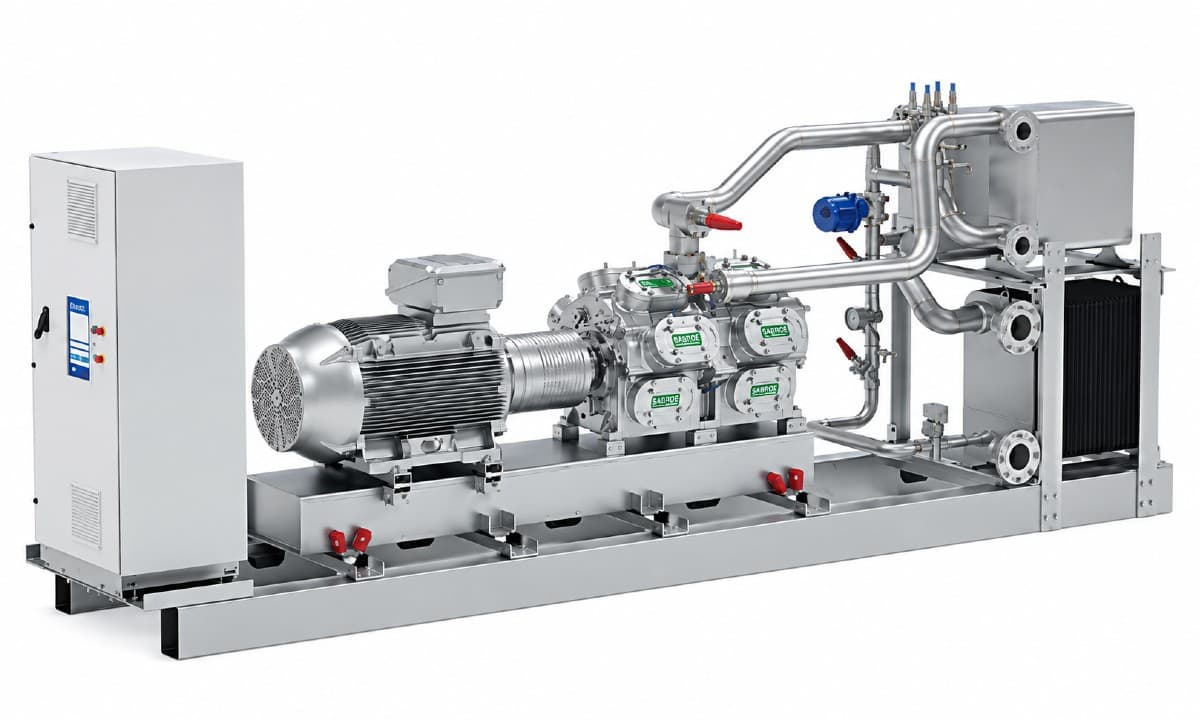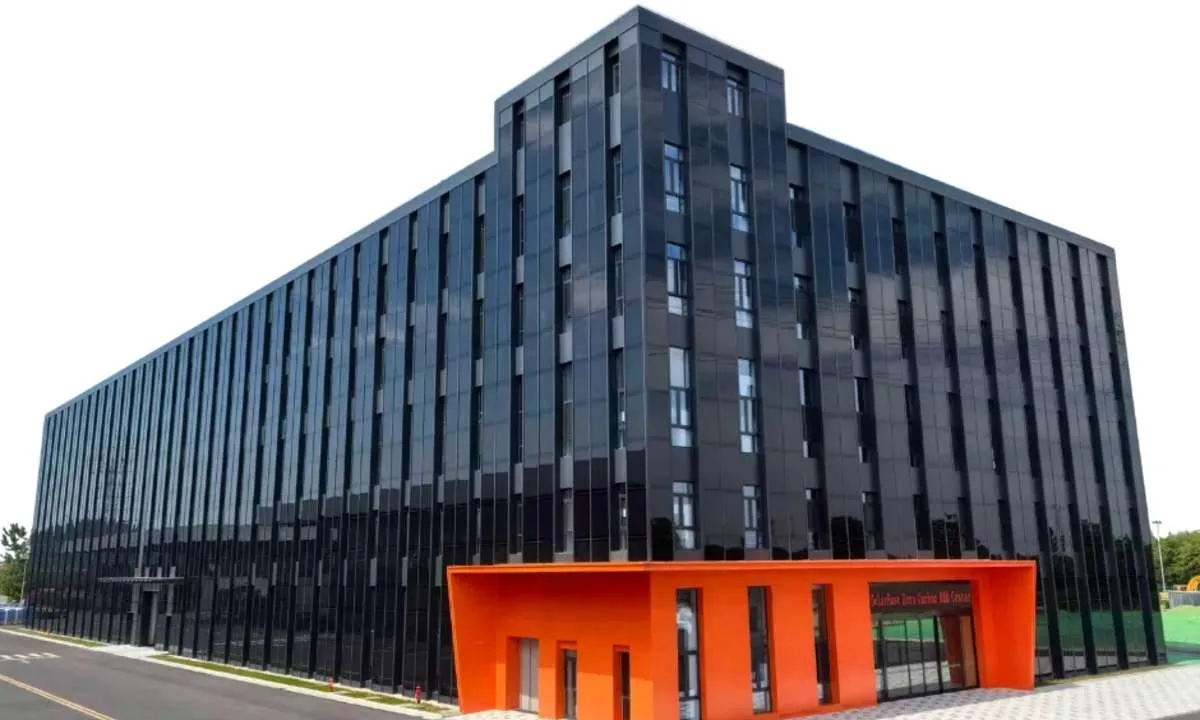
Chinese heat pump manufacturer SolarEast has opened a new R&D facility at its headquarters in Lianyungang, specializing in testing propane (R290)-based air-to-water heat pumps for the global market.
The 32,000m2 (345,000ft2) complex, which cost around $17 million (€14.7 million) to build, has become China’s first net-zero carbon heat pump testing facility, according to the manufacturer.
“The investment comes at a time of global heat pump acceleration, particularly in Europe, where cold-climate performance and R290 refrigerants are key procurement drivers,” SolarEast said. “Industry analysts expect the global heat pump market to surpass $200 billion [€172.3 billion] by 2030.”
Founded in 2012, SolarEast manufactures over 85% of its key components in-house. The company also produces solar thermal solutions and residential and commercial energy storage.
“The investment comes at a time of global heat pump acceleration, particularly in Europe, where cold-climate performance and R290 refrigerants are key procurement drivers.”
SolarEast
Testing facility
SolarEast’s new facility, which includes 30 advanced testing laboratories, is designed to support rigorous heat pump validation and development, from extreme weather simulation to acoustic optimization.
“By synchronizing the testing of our self-made evaporators, condensers, PCB control boards and copper piping, we can optimize every interaction within the heat pump,” said Yin Yaling, Chief Technology Officer at SolarEast. “That’s what makes our R290 units truly field-ready.”
Among its features is a 1.2MW (341TR) ultra-low temperature lab, capable of testing system performance in temperatures down to −60°C (−76°F). It also includes labs that can simulate the climates of Europe, Asia and North America and long-duration reliability chambers to simulate years of wear and tear.
“This lab gives [OEM partners, installers and contractors] validated assurance, faster project approvals and fewer post-installation surprises,” explained Jiao Qingtai, Director of International Sales at SolarEast.
The company plans on publishing verified test data and case summaries on a regular basis, Zoe Leong, Marketing Specialist at SolarEast, told NaturalRefrigerants.com.
To support the facility’s net-zero status, SolarEast has installed combined ground- and air-source heat pump systems that “primarily use” propane, along with photovoltaic panels, lithium battery storage and a stratified tank for thermal storage.
“We chose R290 for its ultra-low GWP, strong thermodynamic performance and growing regulatory alignment across markets,” explained Leong. “This aligns with our ongoing effort to develop future-ready, environmentally responsible solutions.”
“We chose R290 for its ultra-low GWP, strong thermodynamic performance and growing regulatory alignment across markets.”
Zoe Leong, Marketing Specialist at SolarEast
Heat pump production
SolarEast produces between 150,000 and 200,000 propane-based heat pumps annually, supplying a mix of international OEM partners and its own branded product line. The company declined to disclose specifics about its OEM manufacturing agreements.
Overall, SolarEast has a production capacity of up to 500,000 heat pump units per year, spanning a variety of refrigerants, including R290, R410A and R32. Its product portfolio supports residential, commercial and light-industrial applications.
Currently, residential systems account for 85–90% of the company’s production, but SolarEast said it is actively expanding its presence in the commercial heat pump market. Although it’s still in the early stages, the company has already delivered “several” reference projects in Germany, France and Poland. Its largest R290 heat pump model delivers up to 120kW (34TR) of heating capacity, targeting applications such as schools, hotels and supermarkets.
More than 100,000 SolarEast heat pumps have been installed across Europe – the company’s leading region for R290 sales – with 10% around involving natural refrigerant-based commercial systems. Beyond Europe, SolarEast said it is positioning itself as a leader in the global transition to natural refrigerants, with a focus on emerging markets in Asia and Africa.
The company says it aims to “steadily guide” adoption of technologies in these regions. For example, SolarEast has implemented a project in northern China where its R290 technologies are replacing fossil fuel-based heating systems. It also has plans to “actively expand” into both North and South America.