Brazil has completed the training of 700 HVAC&R technicians in the safe handling of flammable refrigerants in split air-conditioning systems as part of the second stage of its national HCFC Phase-Out Management Plan (PBH), which concluded in December 2025.
Led by Brazil’s Ministry of Environment and Climate Change (MMA) and implemented by the German development agency, the GIZ (German Agency for International Cooperation), the program was designed to strengthen the country’s technical workforce to support the growing adoption of natural refrigerants like propane (R290). Courses were delivered through SENAI (the National Service for Industrial Training) – Brazil’s largest private technical and vocational training network – in the states of Goiás, Paraná, Rio Grande do Norte, Rondônia and São Paulo. A dedicated class for female technicians was offered in São Paulo.
“Thanks to the excellent work by our partner schools and instructors, we will meet our goal of training 700 professionals in this phase,” said Frank Amorim, Environmental Analyst at the MMA.
Building on this momentum, Phase III of the PBH is set to begin in 2026 and aims to train an additional 5,000 technicians nationwide by the end of the decade.
Hand-on training
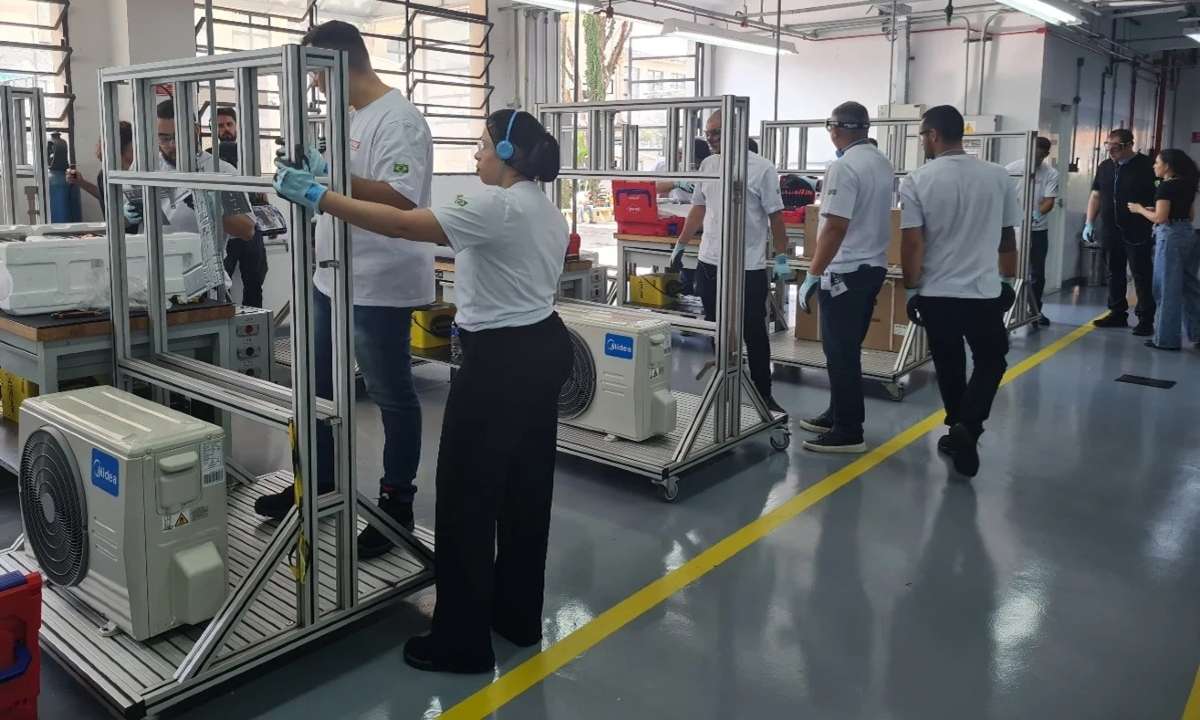
The courses combined classroom instruction with practical exercises designed to challenge misconceptions about the safety of natural refrigerants and equip technicians with the skills required for a changing market.
“It’s no longer business as usual,” explained Marcelo Hegele, one of the instructors at the Paraná course. “Working with flammable refrigerants requires greater attention and updated procedures.”
“The students realized that although flammable refrigerants require caution, following safety protocols makes the work manageable and secure,” noted Arnaldo Dantas de Moura, an instructor at the course in Rondônia.
To support the practical component of the training, several facilities were upgraded in advance. In Rio Grande do Norte, a new R290 laboratory was developed, while SENAI Toledo in Paraná adapted its existing infrastructure to accommodate propane-based systems.
“The students realized that although flammable refrigerants require caution, following safety protocols makes the work manageable and secure.”
Arnaldo Dantas de Moura, Instructor
Safety manuals
In parallel with technician training, the PBH supported the development of two new manuals focused on the safe application of natural refrigerants in air-conditioning and commercial refrigeration.
The publications –“Guidelines for Safe Applications of Flammable Refrigerants in Air-Conditioning Systems” and “Training and Capacity Building for the Safe Use of CO2 and HC-290 in Commercial Refrigeration Systems” – were prepared by national and international experts with support from the Brazilian Association for Refrigeration, Air Conditioning, Ventilation and Heating (ABRAVA). Both manuals incorporate real-world examples to promote best practices, highlight environmental benefits and support professional development.
The first manual supports the PBH’s flammable refrigerants training program and provides technical guidance on safe practices during installation, maintenance and repair. The second underpins a new national training course of the same name, which aims to train 3,300 technicians by 2030, offering internationally aligned guidance on the safe handling of CO2 (R744) and propane, particularly in commercial refrigeration maintenance and repair.
“We hope these manuals will facilitate and promote the accumulation, improvement and exchange of knowledge among hundreds of professionals in the sector,” explained Stefanie von Heinemann, Consultant and Project Manager at the GIZ.