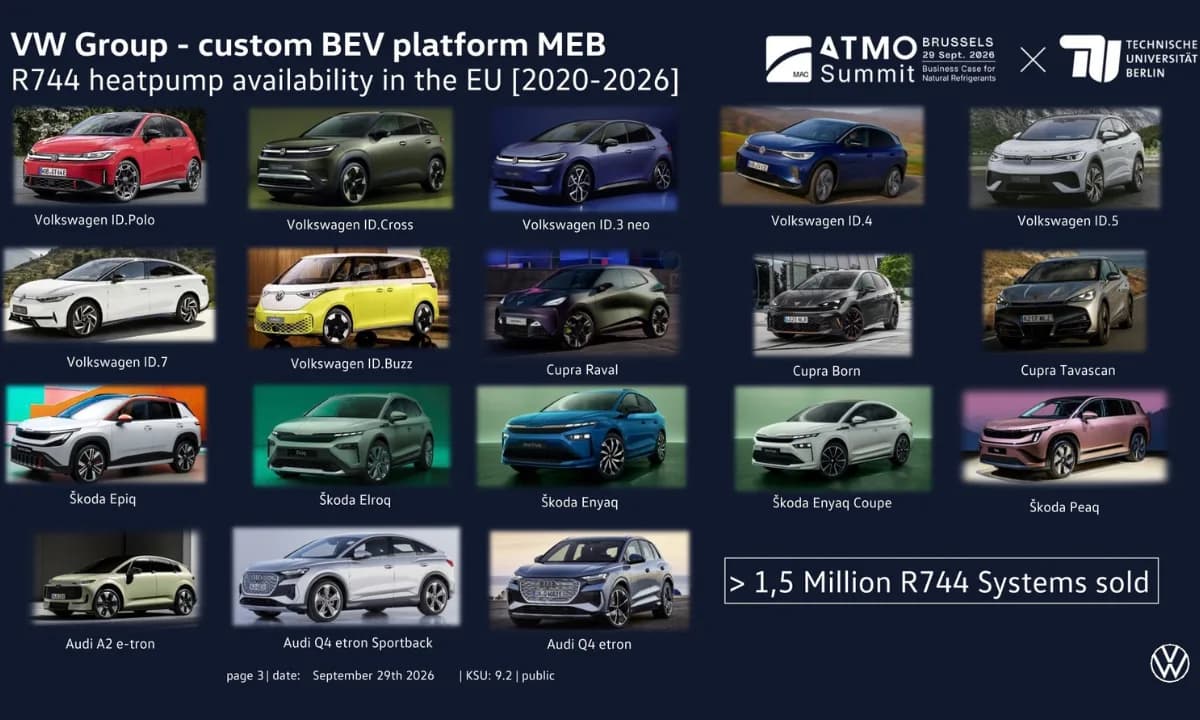
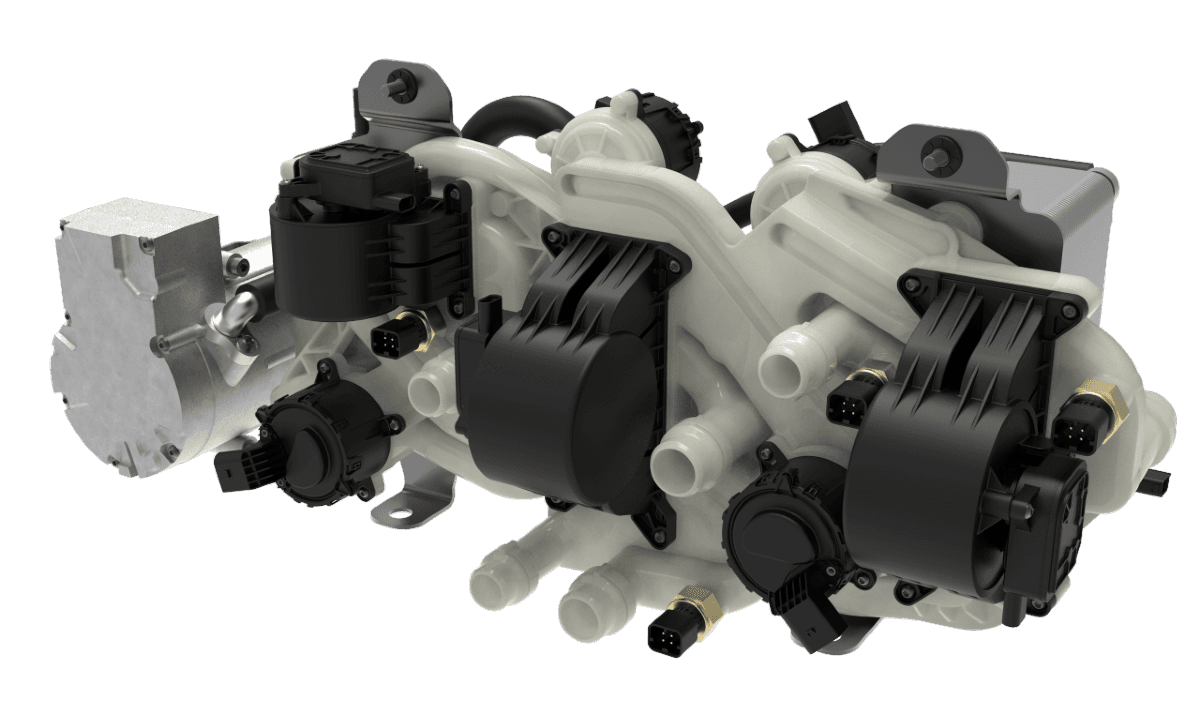
Motorized vehicles like buses transitioning from fossil fuels to electric batteries can enhance their efficiency and driving range by employing CO2 heat pumps for heating and cooling passengers, according to German manufacturer Konvekta.
Konvekta has installed its CO2 heat pumps them in more than 1,300 electric buses and rail vehicles since introducing them in 2018, with its Germany as its main market. The CO2 heat pumps from Konvekta can switch from heating to cooling, and consist of an air-to-air circuit and an air-to-water circuit.
According to Konvekta, electric heaters are “energy guzzlers” that uses 1.1 to 1.23kWh of battery energy to generate 1kWh of heating energy, the. Up to 50% of the energy available in vehicle batteries is used for heating on cold days, the company said.
By contrast, Konvekta’s CO2 heat pumps ideally require only 0.21kW of battery energy for 1kW of heating output, the company said. The units obtain 75% of their heat energy from the environment. This results in savings of about €1,700 per year per vehicle and up to 4,800kg (10,582lbs) of CO2e emissions, depending on the vehicle, the company said. For the year 2021, that would amount to a reduction of about 4,500 metric tons of CO2e emissions for all vehicles using the Konvekta heat pump.
The ambient- temperature range of the Konvekta units encompasses -20°C to 43°C (-4°F to 109.4°F).
A test conducted in February 2021 compared two e-buses in Berlin, one with the Konvekta system installed, and one with a regular AC unit and an electrical heater. The bus with the Konvekta system used 0.38kWh/km (0.61kWh/mi) for the heating system, while the bus with the traditional system employed 0.9kWh/km, Kern said.
For these two e-buses, the difference meant that the bus with the Konvekta unit had a range of 151km (94mi) on a charge, whereas the traditional bus managed a range of 114km (71mi).
“In order to achieve optimum efficiency and environmental protection, it is worth taking a long-term view for the future bus generation,” said Konvekta in a statement. “Not only the vehicle and the drive are decisive, but also the type of air conditioning and heating.”
“In order to achieve optimum efficiency and environmental protection, it is worth taking a long-term view for the future bus generation.”
Konvekta