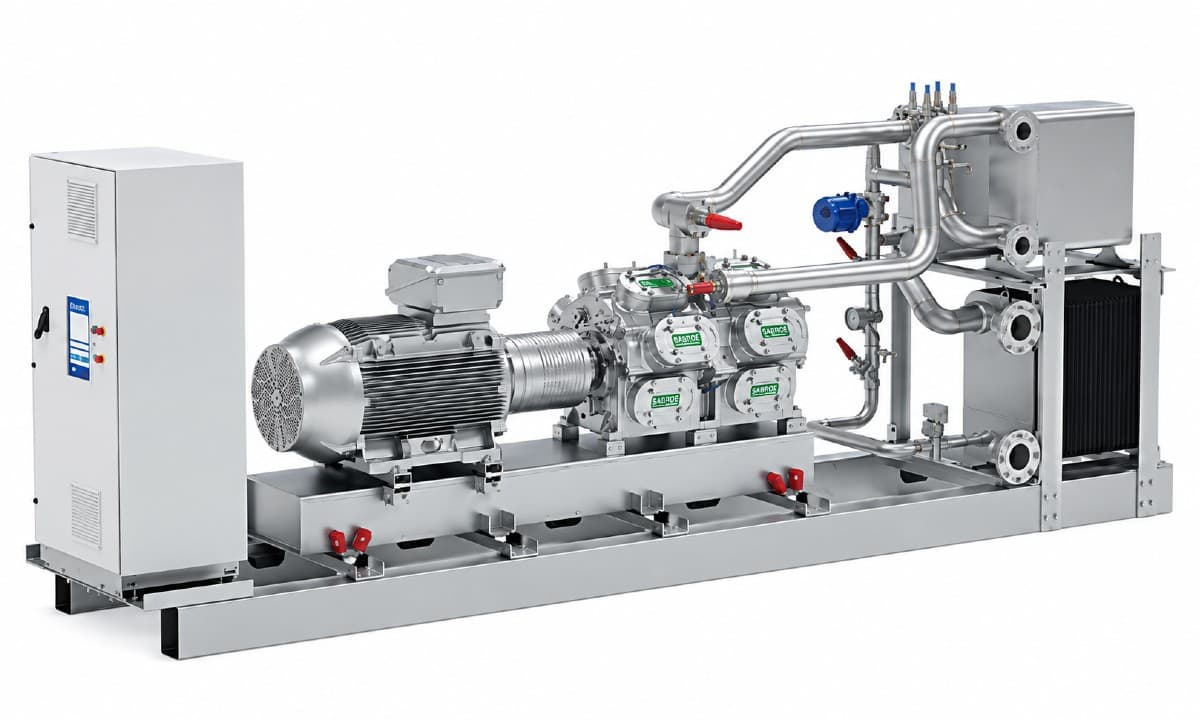
Danish heat pump and chiller manufacturer Fenagy has developed a CO₂ (R744) heat pump with an integrated isobutane (R600a) subcooler for use in district heating, and it reports that the combination of technologies can improve efficiency by up to 10% and increase capacity by 20–30%.
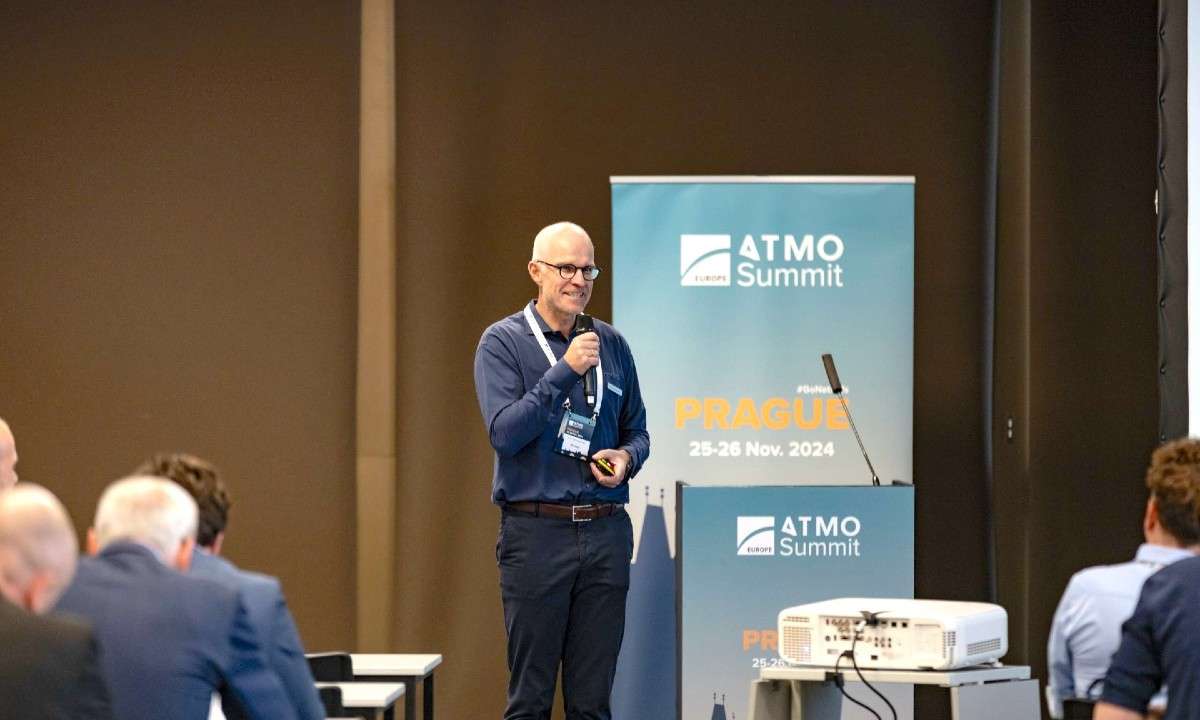
Kim Christensen, Managing Director and Co-Founder of Fenagy, shared the update during a presentation at the ATMOsphere (ATMO) Europe Summit 2024, which was held in Prague, Czech Republic, November 25–26 and organized by ATMOsphere, publisher of NaturalRefrigerants.com.
During his presentation, Christensen outlined how adding a mechanical subcooler – an R600a high-temperature heat pump – to a CO₂ heat pump addresses key performance bottlenecks in district heating networks with high return-water temperatures.
High return-water temperatures in district heating systems can reduce the efficiency of CO₂ heat pumps. Fenagy’s solution introduces an isobutane subcooling module, which lowers the return-water temperature before it enters the CO₂ system.
“Return-water temperatures above 50°C [122°F] are a bottleneck for CO₂ systems,” said Christensen. “By integrating subcooling, we allow CO₂ heat pumps to perform efficiently even in these challenging scenarios.”
Fenagy won a 2024 ATMO Award/Europe in the “Innovation of the Year/Heat Pumps” category for its R600a high-temperature heat pump.
Recent project: In Jægerspris, Denmark, Fenagy installed three air-to-water CO₂ heat pumps with a total heating capacity of 8MW (2,274TR) for a district heating network serving 1,500 households.
- An isobutane-based subcooling unit reduced return water temperatures from 50°C to approximately 40°C (104°F). The system has a COP of 3.
- The system uses a glycol-based defrosting method to ensure stable operation in cold climates. For larger industrial heat pumps, Fenagy employs flatbed evaporators to improve air distribution, minimize cold air recirculation, and enhance condensate drainage, with this design facilitating more effective defrosting.
- A 10,000m³ (10,000,000L) hot water storage tank supports consistent heating delivery and accommodates fluctuating demand.
Economic benefits: “Subcooling not only improves system performance but also makes economic and environmental sense, addressing both short-term and long-term goals for utility companies,” said Christensen.
- Although the initial investment cost for heat pumps is high, the Jægerspris’s system has a five-year payback period, making it a practical investment for utility companies, Christensen noted.
Quotable: “By designing systems with flexibility, we can adapt CO₂ heat pumps for diverse applications, from large-scale industrial processes to urban installations,” said Christensen.