CoilPod, a U.S. developer of coil-cleaning systems, has announced a partnership with Oak Ridge National Laboratory (ORNL) to test CoilPod’s patented “air precleaning redesign” for HVAC&R cooling condensers, which is designed to automatically prevent air-borne particles from entering and clogging condenser coils.
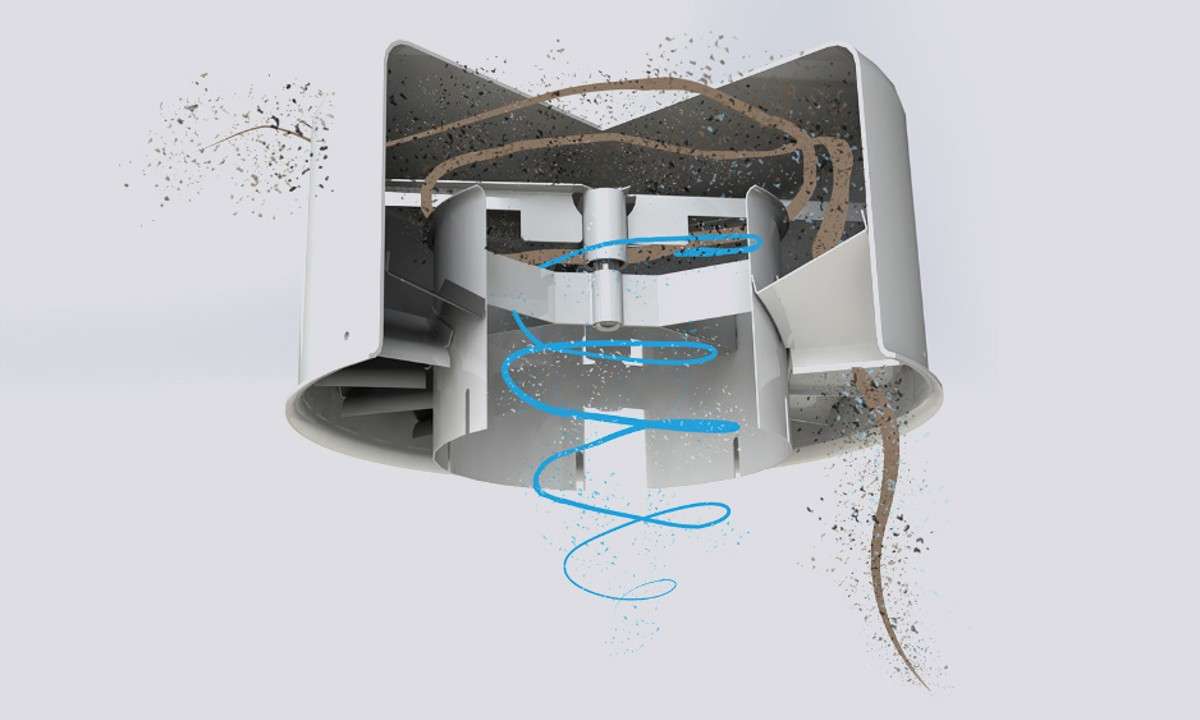
According to the patent on the precleaning system, it consists of an enclosure encompassing a cooling or heat pump system’s condenser coils, with an opening fitted with an air-cleaning blower apparatus. The blower removes and expels contaminants from the incoming air stream before it contacts the condenser coils, preventing the coils from becoming dirty over time.
The precleaning concept – which Yorktown, New York-based CoilPod has dubbed the “coilscrub initiative” – “is broadly applicable across the entire HVAC&R cooling sector,” said Richard Fennelly, CoilPod’s Chief Operating Officer, who has become a global advocate of maintenance for cooling equipment. “Condensers in transport refrigeration and all AC, since they operate outdoors, might gain the biggest benefit although commercial and residential refrigeration would benefit too.” More than one precleaner blower could be used, depending on the size of the condenser.
The precleaning system is an automated version of CoilPod’s original invention, the eponymous COILPOD dust hood, in effect a dust containment bag; it facilitates “no-mess” compressed-air condenser-coil cleaning for commercial refrigeration condensing units, such as those using propane (R290) or isobutane (R600a) in self-contained cabinets. The patented COILPOD dust hood – about 25in (64cm) wide, 13in (33cm) deep and 20in (51cm) high — fits over a typical condenser coil and has two ports, one to let in compressed air that blows dust and debris off a clogged coil, and a second to vacuum it out. In 2021, CoilPod’s invention enabled it to be selected as a promising new technology innovator by the U.S. Department of Energy (DOE) IMPEL+ program.
As optional features, the enclosure of the pre-cleaning system may also have ports for introducing compressed air into the enclosure and for applying a vacuum to the enclosure, as well as an patented indicator for signaling the need for cleaning the condenser coils.
This collaboration between ORNL, a federally funded R&D center in Oak Ridge, Tennessee, and CoilPod addresses “a pressing and large challenge in the HVAC&R industry – the widespread fouling of condenser coils in cooling apparatus,” said CoilPod in a statement. “Fouled condenser coils lead to increased energy consumption, higher maintenance costs, compromised equipment performance and truncated equipment life.”
The air precleaning redesign “has the potential to substantially mitigate these issues by preventing the build-up of debris and contaminants on condenser coils,” CoilPod said.
“We are thrilled to partner with Oak Ridge National Laboratory on this innovative project,” said Jacob Steinmann, CEO of CoilPod. “This collaboration underscores our commitment to advancing HVACR technology and delivering sustainable, energy-efficient solutions to our partners, stakeholders and customers.”
Test on a heat pump
The ORNL test, focusing on overall effectiveness and energy efficiency, will include a commercially available, non-motorized precleaner blower from Baraboo, Wisconsin-based Centri Precleaners; this has been used, for example, to protect the engine intakes of motor vehicles in dirty environments like construction, mining and agriculture.
The test, slated to run till about the end of November 2025, will be on a heat pump system with its outside coil unit modified with a structure containing one or more precleaner blowers. This redesign will force air through the pre-cleaners, which will “spin out dust and debris before it can transition into the enclosure and reach the coils to cause fouling over time,” said Fennelly, adding, “we are hoping for an energy savings of at least 15%.”
According to Fennelly, HVAC&R cooling equipment, in general, now often suffer an average increased electricity consumption of about 15% to 30% due to condenser coil fouling because most units and systems have no means to intercept incoming dust and debris in the airflow used to bathe the coils to promote heat transfer. A 2018 study by the Clean Cooling Collaborative (formerly K-CEP) estimated that better optimization, monitoring, and maintenance of cooling equipment on a global basis has the potential to save 30Gt of CO2e emissions by 2050.
“We are testing something radically different from any other approach at mitigation of coil fouling,” said Fennelly. An alternative approach could be to install filter media over the current condenser openings but “the industry counsels against that approach due to airflow reduction as the media captures the dust and debris.” Other methods include condensing units have been modified to include automated brushing or designed so that the direction of rotation of the fan reverses periodically. The prerecleaner blowers aim for minimal airflow reduction as well as minimal restriction on an existing fan’s performance. “The ORNL test will measure all these things,” he said.
Fennelly envisions the precleaning system being “an easy retrofit in addition to the much smaller market for new units yet to be made.” Meanwhile, CoilPod is also inviting established manufacturers to do parallel testing of the system in other types of refrigeration and AC. “We are trying to take humans out of the equation in regard to the persistent need for repetitive coil cleanings, which are actually almost never done now,” he said.
Fennelly noted that precleaning is an existing sector that includes companies like Centri Precleaners, Air Cleaning Blowers and EPE (Engine Protection Equipment). CoilPod’s invention resides in “moving this particular apparatus into the HVAC&R cooling sector to solve what we realized was an analogous problem of dust and debris intrusion,” he said. “While the test at ORNL will use the Centri product we are open to using others down the road.”
The Centri Precleaners blower is a simplified non-motorized product that relies upon the existing fan inside the condenser coil to activate the precleaning. Motorized precleaners, made by, for example, Air Cleaning Blowers, “could be a second-generation opportunity,” said Fennelly; these could possibly eliminate the need for fan in existing condenser units.
“We are testing something radically different from any other approach at mitigation of coil fouling.”
Richard Fennelly, Chief Operating Officer, CoilPod