SNG (Sovereign Network Group), a U.K. social-housing provider managing more than 84,000 homes across London and southern England, is conducting a pilot to test propane (R290)-based heat pumps in up to 60 of its existing properties, according to Robert Hicks, Innovation and Sustainability Specialist at SNG.
The units are being monitored throughout 2025 with the aim of demonstrating that high-flow temperature, weather-compensated heat pumps can operate efficiently and affordably using existing radiators and pipework. SNG hopes to find a “sweet spot” where they can deliver affordable warmth for residents while optimizing installation, capital and operational costs.
If successful, the trial could pave the way for a wider rollout of the technology in 40,000 SNG homes over the next decade and become the standard approach across the company’s property portfolio, said Hicks.
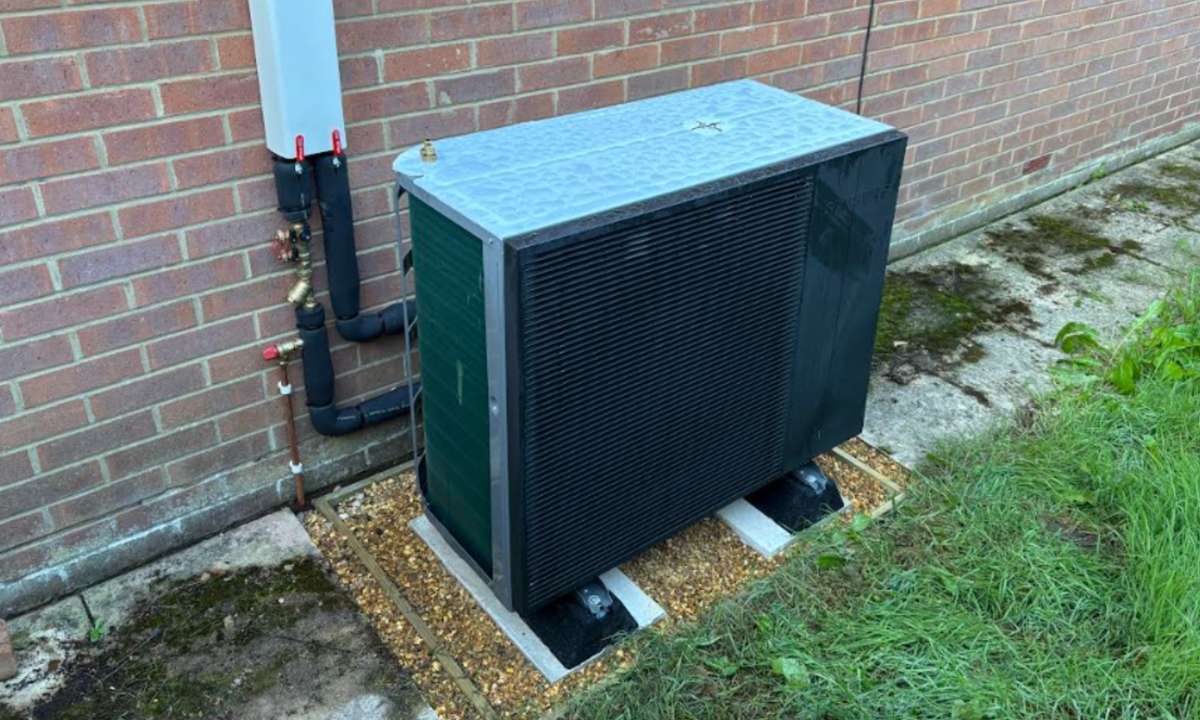
An initial pre-pilot using Mitsubishi’s Ecodan R290 monobloc air-source heat pump was completed in six vacant homes, all of which are now inhabited. Building on positive results, the main pilot is now underway in an additional 24 occupied properties.
“Mitsubishi instantly saw the opportunity with R290,” Hicks explained. “Together we’ve been leading this innovative approach, which looks to significantly reduce installation cost, disruption and redecoration while significantly increasing resident engagement.”
In August, SNG also began a pre-pilot with Samsung’s EHS Mono R290 air-source heat pump in another six vacant homes, with plans to expand to 24 occupied properties if results prove successful.
The properties selected for the pilot encompass a diverse range of buildings representative of SNG’s housing portfolio. These include houses, bungalows and maisonettes with one to four bedrooms. All previously used gas-based heating systems and comply with defined standards for insulation and air-tightness, Hicks noted.
For the pre-pilot phase, all properties are located in Wiltshire and Berkshire. However, the company plans to achieve a broader geographical distribution in the full pilot program, he added.
“Mitsubishi instantly saw the opportunity with R290. Together we’ve been leading this innovative approach, which looks to significantly reduce installation cost, disruption and redecoration while significantly increasing resident engagement.”
Robert Hicks, Innovation and Sustainability Specialist at SNG
Cheaper and faster retrofits
Over the next decade, the company plans to upgrade roughly 15,000 of its existing properties to replace all fossil fuel-based heating systems in its portfolio.
Both the Mitsubishi and Samsung heat pump models were selected for their ability to act as near-direct replacements for the gas boilers currently installed in many U.K. homes.
Thanks to flow temperatures of up to 75°C (167°F), these heat pumps can often use existing radiators and 8–10mm (0.3–0.4in) microbore pipework, which means less re-piping, less disruption and fewer days spent on-site.
“In essence it’s no different to how we’d replace a gas boiler at the end of its working life,” explained Hicks.
A typical air-source heat pump installation can cost twice as much as a gas boiler replacement, largely because of radiator and pipework upgrades, which can cost approximately £2,500 ($3,370/€2,880) per home, he noted. Avoiding these upgrades can also halve installation time, reducing work from five days to just two or three. As such, technicians can deliver installations at twice the current rate, he added.
SNG is also expecting to build 25,000 new homes over the next 10 years, all of which must meet its Homes and Place Standard, requiring low-carbon electric heating. R290 heat pumps can provide heating and hot water much more efficiently than fossil fuel-based systems and can be connected to underfloor heating or standard radiators, allowing for design flexibility, according to SNG.
Weather compensation
To maximize efficiency, the pilot systems use weather compensation control, which automatically adjusts flow temperature based on outdoor conditions.
SNG believes that the SCOP of a 75°C system will be “marginally less” than a lower-temperature one, with an anticipated reduction of up to 0.4.
“For a £900 [$1,200/€1,040] heating and hot water bill, the variance is £125 [$167/€144] per year,” noted Hicks. “This will be more than offset by using the cost saving of our approach to help pay for each home’s electrical generation and storage.”
Overcoming barriers
SNG is working with Mitsubishi, Samsung and U.K. regulators to address the policy challenges that affect the rollout of high-flow temperature heat pumps in residential applications.
Current building regulations and the Microgeneration Certification Scheme were written for gas boilers and low-temperature heat pumps, typically capped at 35–55°C (95–131°F). SNG is advocating for updates that recognize higher-temperature systems and their efficiency under weather-compensated operation.
SNG also pointed to broader policy measures that can accelerate progress, including the planned phase out of gas boilers, financial support programs such as the Warm Homes: Social Housing Fund and rebalancing the cost of electricity and gas. The U.K.’s Climate Change Committee has recommended removing policy levies from electricity bills to help lower operating costs and speed up the transition to low-carbon heating.
Decarbonizing social housing
Homes account for roughly 17% of the U.K.’s total carbon emissions, making housing decarbonization a core part of the country’s net-zero goals. Social housing – totalling around 5.3 million homes – offers one of the biggest opportunities to cut emissions at scale.
Efforts to decarbonize focus not only on replacing heating systems but also on improving energy efficiency through better insulation, air tightness and ventilation.
“Without a balanced approach to each home, changing just the heat source could be detrimental,” said Hicks. “The unintended consequence could be potentially higher fuel bills and decreased warmth.”
Improving insulation and air tightness first helps lower the size and cost of the required heat pump and ensures residents have access to reliable and affordable warmth.
Affordability remains a key concern. Around 18% of households in social housing spend more than 10% of their income on heating, while residents in the least efficient homes can spend up to 15.5%, five times the national average. Decarbonizing heating and hot water is essential to reducing fuel poverty in the long term, according to the National Housing Federation.